

This weekend, I stepped into a firestorm of political commentary on Bluesky, and it left me feeling depressed and more than a little frustrated.
No, I’m not talking about MAGA trolls telling me that school shootings aren’t caused by guns. (Okay, in truth there was a little of that… but since that’s “business-as-usual” for the cult, I’m used to their BS.)
No, this firestorm of attacks actually came from the Far Left, after I disagreed with this post:

I explained my reasoning by saying: “Newsom’s methods aren’t perfect, but he’s out there, every day, actively fighting. I respect that and am not going to waste my time criticizing those who are trying to oust MAGA, simply because their priorities don’t align with mine 100% of the time.”
NOTE THE FOLLOWING TWO ADMISSIONS IN MY STATEMENT ABOVE:
- I acknowledged Newsom’s methods aren’t perfect.
- I said his priorities don’t align with mine 100%.
Nonetheless, my comment led to an incredible number of accusations: That I’m “Blue MAGA,” anti-trans, anti-homeless and pro-genocide! Despite the fact that I never stated that I thought Newsom should be the next candidate for president, just that I appreciated how he was getting under Trump’s skin. And then, when I explained to a self-identified communist that I had a daughter from a communist country and was therefore not a fan of communism, I also got branded as a ”child trafficker” as well… Fun times on the interwebs!
First, I want to address the “We didn’t vote for Harris because she supports genocide” crowd, since they came at me in full force. I’ll summarize my take on that as briefly as I can by saying that most Americans don’t pay very close attention to foreign conflicts and are generally pretty illiterate about global affairs. So when Hamas attacked Israel and took hostages, the general population’s immediate reaction was that Israel was justified in retaliating.
Now over time, I believe more and more people have come to realize that Israel’s relentless attacks on innocent Palestinians have waaay overstepped any semblance of a justifiable response, and many now understand that what’s happening in Gaza is genocide. However, I don’t think that distinction was widely understood by the voting public in the months leading up to the election.
So, knowing that Trump had many pro-Israel supporters, Biden/Harris were walking a fine line with a country that has historically been considered a long-time ally. They understood that if Trump was elected, he would give free rein to Israel, because he was best buds with Bibi and had made previous comments about how the Gaza strip was ripe for real estate development.
Consequently, it should have been clear that Harris was somewhat hamstrung during the election. However, it also should have been clear that after defeating Trump, she would have begun negotiating with Netanyahu to end the conflict. Everything about Kamala Harris and her documented past, shows her to be an intelligent, reasonable and compassionate person vs. someone who would condone genocide. But Harris’s first priority was to get elected and secure democracy—so that she would have the necessary power to enact those other priorities.
As I tried to explain this, one Bluesky poster commented, “You’re advocating the lesser of two evils… Why do we have to choose evil at all?” But this is an erroneous assumption: Trump is evil. Kamala Harris is not. She is a good person, although admittedly not perfect. And if the choice is between “Evil” and “Good-but-Imperfect,” we should choose the latter every time.
Unfortunately, those who didn’t understand the complexity of the situation opted not to vote for her and influenced others not to as well. In my opinion, they are largely responsible for the current mess we’re in—whether they care to own that fact or not—but pointing fingers isn’t helping anyone at this stage in the game.
And that brings me back to my main point.
While nearly all rational, compassionate people are in agreement that MAGA is bad and Trump is evil (not only dangerous for Palestinians, but also everyone else); there is very little agreement about how best to replace him. From my perspective, there seems to be two lines of thinking:
The Burn The Whole Thing Down Crowd – Those who think we need to support a leader who can lead the charge to abolish any semblance of our former government and create an entirely new system, one that more closely resembles socialism/communism. They are big on imposing purity tests, but not in agreement about what’s “pure.”
The Bring Back Democracy Crowd – Those who think we need to support whichever Democratic leader is most electable, so we can shore up our democracy and continue to move in a more progressive direction from there.
It’s probably obvious to you that I’m in the latter camp. Here’s why… In the current administration all of the following are under attack:
- Black and brown people
- Immigrants (documented and undocumented)
- Women (particularly those of child-bearing age)
- Victims of sexual assault/pedophilia
- Poor people
- LGBTQ individuals
- Those who rely on food assistance
- Those who rely on healthcare subsidies
- Those with conditions reliant on medical research
- Children who are exposed to measles and other preventable diseases
- Children who are exposed to gun violence (another preventable “disease” in this country)
- Those susceptible to another pandemic (aka: everyone)
- Anyone who relies on science-based healthcare (aka: everyone)
- Organizations dependent on govt. funding
- State programs dependent on govt. funding
- Employees of the Federal Govt. who have been fired or are currently working in a hostile environment
- Those whose business interests are impacted by tariffs and the economy (such as farmers)
- Those who business interests are impacted by immigrant labor (such as farmers)
- Those whose purchasing power is impacted by tariffs and inflation
- Students dependent on financial aid
- Those seeking affordable housing/the homeless
- People directly impacted by climate-change related events (wildfires, flooding)
- Free speech
- Documented history
- Literature
- Our planet
- … I’m sure I missed some others, but I think I’ve made my point.

But even with this non-comprehensive list, you can see that literally EVERYONE is under attack in this country and the negative impacts are global. (Ironically, even the tech-bros and billionaires are at risk from things like pandemics and climate change, but apparently they think they can avoid them by building rocket ships, as in the movie Don’t Look Up.)
Yet, it’s undeniable that some people are more impacted than others. Personally, I am fortunate—privileged—to be less impacted than a lot of people. But the fact that I’m less impacted than some others doesn’t make me the enemy. And this is what frustrates me about my conversations with the Far Left this weekend. We all know that once MAGA is ousted, there will be a lot of things to fix. But they don’t seem to realize that it won’t happen all at once. As much as we’d all like an instantaneous fix, issues will need to be prioritized—and not everyone will agree on that prioritization.
And it’s absolutely critical that we don’t confuse a lack of consensus, as it relates to priorities, with a lack of support. Those who aren’t severely impacted by any single issue themselves may approach recovery based on what policies impact the most people—and prioritize things like healthcare, food assistance, global war and climate change as a result. Like doctors in an ER, I think of recovery in terms of triage. Yet, others may look at their immediate situation and prioritize the issues that directly impact them or their loved ones: gun control, immigration, immunization, LGBTQ rights, cancer research, etc.
One of these approaches isn’t more “correct” than the other. It’s natural for people to focus on their survival as well as their loved ones. And any activities that protect people’s rights and safeguard our planet are valid and worthy of support.
I was especially hurt by those who branded me as anti-trans, because I consider myself an ally and won’t hesitate to speak out against trans bigotry. However, will prioritizing trans rights be my number one criterion in choosing a political candidate? Likely no. Mainly because the numbers impacted are so small compared to some of the others that are also under attack. But even more urgent, from my perspective, is ensuring Democrats have the power to enact change, which is why electability will be my first priority, and shoring up democracy will be second. By definition, Democrats believe in protecting the rights of all Americans. So, I trust that that commitment will extend to trans individuals and all other targeted groups, once we are back in control of policy-making… But getting back in control is Job #1.
Here’s one last analogy that I hope will illustrate my point: As readers of this blog know, my husband Oskar has had Parkinson’s Disease for many years (23, to be exact). It’s a difficult disease for him to live with, especially at this advanced stage, and I wouldn’t wish it on anyone. Because of the impact this disease has on our lives, my husband and I donate money to the Michael J. Fox Foundation to support research and we would love to see a cure.
Now, do I demand that everyone else contribute to Parkinson’s research? No. I realize that there are other diseases or medical conditions that other people may feel more strongly about, depending on what they or their loved ones are experiencing. Alzheimer’s, cancer, heart disease—all of these receive more research funding than Parkinson’s. Why? Because they impact more people. And likewise, Parkinson’s receives more funding than scores of other, more obscure diseases. Is that fair? Not really. Do people with those rare diseases also deserve to find a cure? Of course they do!
That’s why if someone chooses to prioritize donating to another cause over Parkinson’s research, I would never accuse them of being “anti-Parkinson’s” or think that they want my husband to suffer. That would be ridiculous. If MJF researchers discovered a cure tomorrow, I’m sure most people would rejoice right alongside me.

Yet, when it comes to our political environment, there are far too many people giving “purity tests” to other opposing MAGA to gauge their commitment to a particular cause. And then they’re interpreting a difference in how someone prioritizes the issues as evidence of being indifferent to their suffering—or even worse, as being responsible for their suffering. Purity tests are useless because human beings will rarely agree on the same prioritization of complex issues. Insisting on alignment is self-sabotaging because it blurs the distinction between those who simply want to address another important issue before your cause, with those who actively want to do us harm. Let’s stop the in-fighting and focus on what really matters. We must work together to replace the current administration with a functioning Democracy before this most deadly disease—MAGA ideology—kills us all.
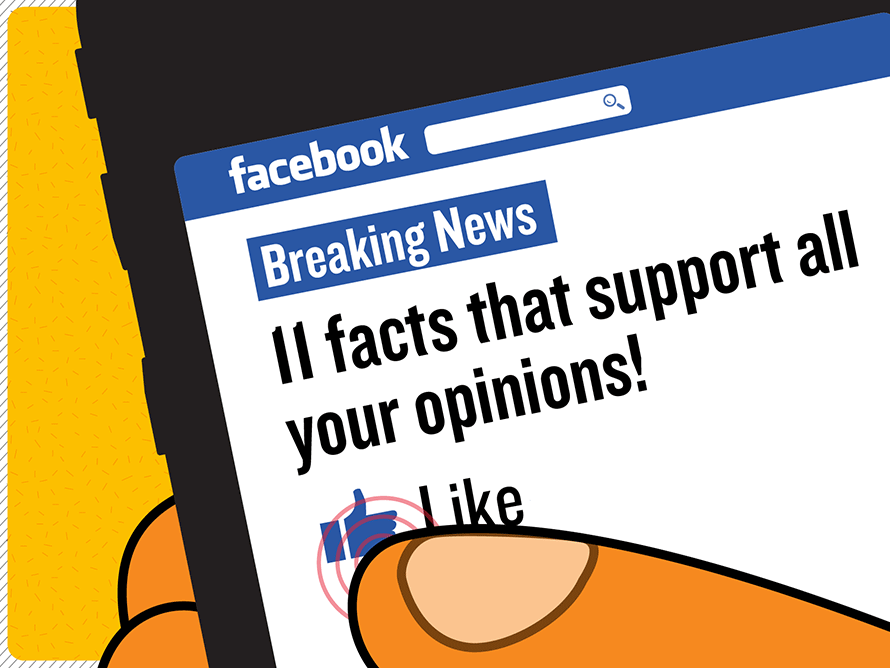 Given our contentious political climate, I expected lots of push-back from my post, but I didn’t get any comments from Trump supporters. This was disappointing, since I was interested in understanding their perspective. My social following tends to include many like-minded people (what Republicans would call the DNC Echo Chamber), so it’s not surprising that I did hear from numerous liberals. They nearly all agreed with my overall assessment of the situation and expressed a similar feeling of helplessness about how to reason with people who were supporting 45 in light of so much damning evidence against him.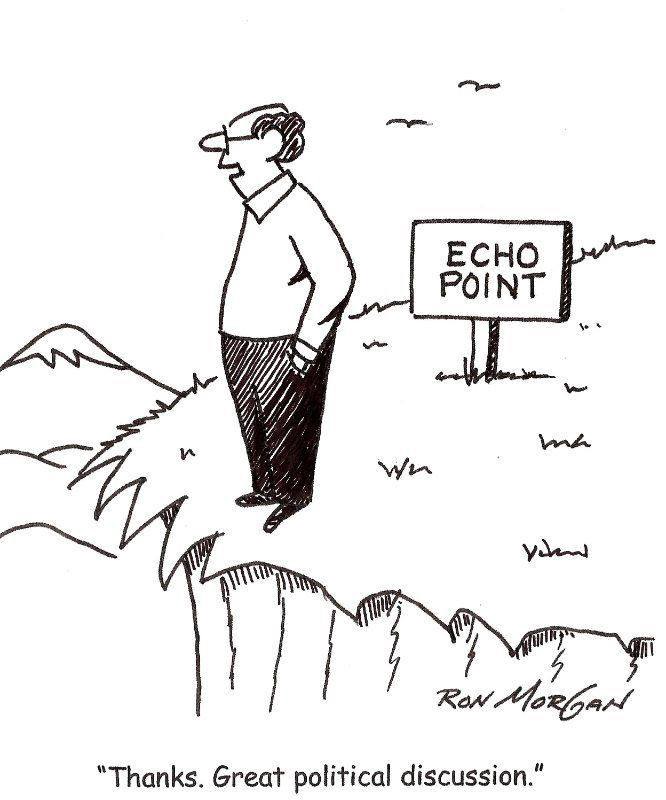

 I think we all inherently understand that others have to prioritize their beliefs. You could take any issue Democrats collectively care about: immigration, healthcare, climate change, gun control, etc., and you would find the same varying levels of support and prioritization among voters. For example, it makes sense that the face of climate change, Greta Thunberg, is a 16-year-old activist. Her generation will have to live with devastation that won’t as directly impact your average retiree.
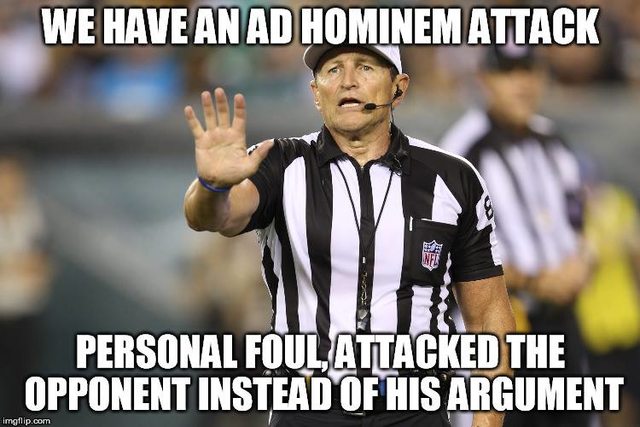 For example, while Democrats brand themselves as the compassionate party—the ones who are tolerant and care about others—many Republicans reject that branding because it goes against what they have experienced in their conversations at Thanksgiving Dinner or while scrolling through their Facebook feed. They see widespread condemnation of anyone who voted for Trump and consider the Democrat’s self-branding as the caring, tolerant party to be the height of hypocrisy.
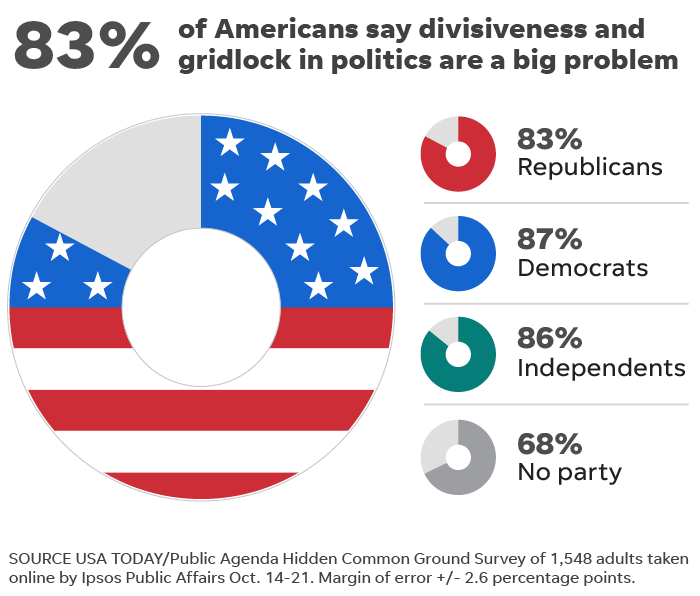 After all, if we’re going to live in a democratic society, we have to trust in the process. That means sometimes Democratic priorities will move forward and other times Republican priorities will prevail. At the same time, we still have a duty to protect the democratic process—so keep the spotlight on Trump’s impeachable offenses and on the victims of his policies. But do it without implicating or condemning those who—in their minds—were just choosing the lesser of two evils when they voted him into office. Even if you believe they deserve that condemnation, it simply won’t move us toward the end game of getting rid of Trump. So, with the new election year just a couple of short weeks away, we need to ask ourselves: Is it more important to get Trump and his minions out of office or is it more important to “punish” family and acquaintances that voted for him?
 Easier Said Than Done