

Have you ever known something but also not known it at the same time? That is, you intellectually know the facts around a subject, but emotionally or philosophically it takes you a while to connect the dots? I had that experience last week and when the realization hit me it was a revelation, so I thought I would pass it along to anyone else who might be struggling with this same issue.
Social Engineering via Social Media
I’ve had a love/hate relationship with social media since its inception. I have a very large family, as well as a network of friends and acquaintances that span the globe, so I love the ability to stay in touch via a simple and cheap communications tool. Cute baby photos, friends on vacation, funny memes from old classmates… that’s all lovely. I’ve also created group pages for my church, my condo association, and other families who have adopted from Blossom’s orphanage in China. I enjoy having a way to communicate with members of these various groups on topics of mutual interest. Lastly, as a marking professional, I also appreciate social media as an inexpensive advertising medium that lets you target specific audiences with ease.
However, what I HATE about social media is the way it turns seemingly rational human beings into abusive bullies and allows horrible people to connect with like-minded dirtbags who validate each other’s twisted views. And, when you add in Russian trolls and others who are actively and intentionally stirring up trouble in our country to divide the populace…well, let’s just say that checking one’s newsfeed becomes an exercise in blood pressure management.

If you click on the Haha emoji in response to anything but an obvious joke, chances are, you’re a Troll.
Tips by Stormy
Thankfully I have naturally low blood pressure, but the anger and vitriol spewed forth on Facebook have caused me to abandon my account several times in the past. I find it very difficult to not confront those spreading misinformation or abusive, racist statements, so I often find myself in a protracted online debate with someone whose mind I know will never be open to reason or facts. Yet despite this, I feel compelled to try. (Nevertheless, she persisted!) I feel that to leave these statements unchallenged is to appear to agree with them—the last thing I want.
These online conversations usually end with the other party giving me the “Haha” emoji (which I’ve concluded is the universal response for ignorant trolls who can’t think of any other way to counter a sensible argument). Invariably, these exchanges always leave me feeling drained, discouraged and, frankly, hopeless about the state of our country. At times it seems like the bad people far outnumber the decent people, which is a very depressing thought indeed.
And of course, that’s the point.
It was during one of these threads—about whether to mandate masks in our state—when a commenter posed a seemingly innocent question, “Who decides which comments are ‘most relevant’?” I believe they were noticing the default Facebook setting that displays relevant comments and implying that relevancy was determined by the “liberal elites” who manage our governor’s Facebook page. So, I ignored the implication and replied literally: “The Facebook algorithms.” This was followed by another baiting question, “But who designs those?” So I went into a high-level explanation of how the algorithms work. Now granted, algorithms are more complex than the explanation that follows, but I think it’s important for all Facebook users to understand the basics:
They’re in it for the money, honey…
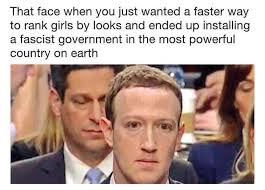
Facebook is not free to use because Mark Zuckerberg is a philanthropist. The company makes money by selling ads to marketers (like me) to get them in front of potential customers (users like you). The beauty of the platform is it lets marketers target certain personality profiles and keywords based on information provided by the users—the groups you belong to, the pages you follow, the businesses or locations you “check-in” to, hashtags you use, things you post about, the comments you make on others posts, etc. The more specific the targeting, the more effective it is (and the more valuable it is for the advertiser).
If this strikes you as an invasion of privacy, you really shouldn’t be on Facebook. It exists to monetize your personal information. I know that and it doesn’t bother me. I don’t post truly private info, and if I’m going to be bombarded with ads online anyway, I would rather they be relevant.
Wallflowers need not apply
In order for Facebook to understand who you are, it needs you to engage. In other words, if you log on to Facebook and scroll through your feed, but never join a group, never like or comment, etc., Facebook has no real way to know who you are and subsequently can’t market effectively to you. (In other words, it won’t know what kind of ads to show you.) It’s the social equivalent of standing in the corner at a party.
Some people—KitKat for one—take this wallflower approach (ironically, in real life she is the first one on the dance floor). Because KitKat is also a marketer, she needs to understand Facebook, but she’s chosen to only observe on Facebook and never engages personally. Consequently, KitKat doesn’t stress out over social media the way I do. 😉
How to be relevant
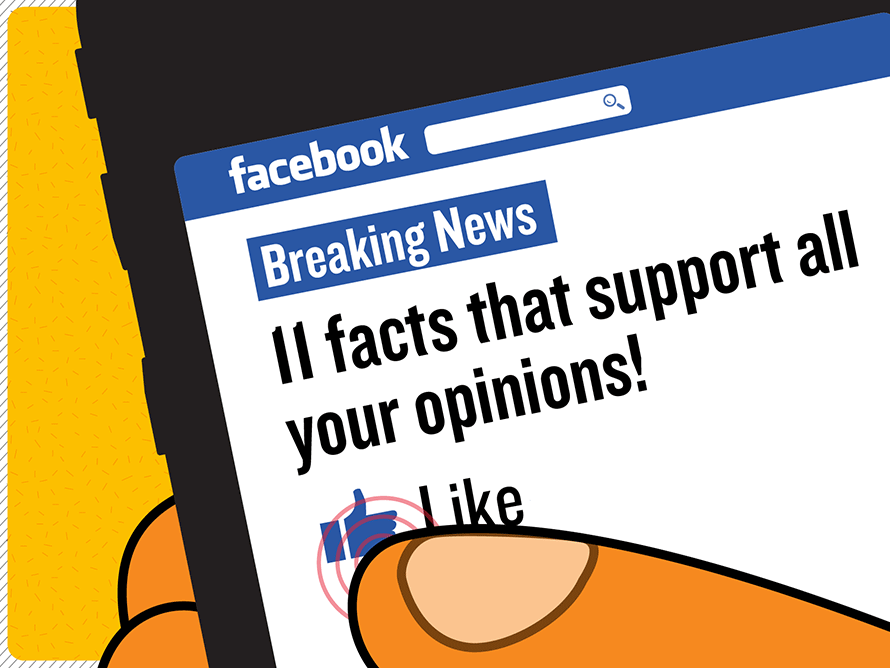
Facebook wants and needs you to be an active participant in order to create the targeting data it needs to feed the algorithms. One way it does this is by trying to serve up the most interesting information, so you keep coming back for more. This is where the “Relevant Comments” come in. Although my troll friend wouldn’t believe it, there is no Democrat sitting in a Facebook cube that is marking every left-leaning comment as “relevant.” However, each time someone “likes” a comment, replies to a comment or tags the poster of a comment, it increases the relevance of that particular comment.
As I mentioned in the intro, I knew all of this already. But when I was explaining it to the online troll the understanding suddenly hit me like a ton of bricks: I had been making the problem worse!
Each time I replied to a negative comment or misinformation, I actually increased the relevance of that comment. In other words, I was directly contributing to the process that prompts the Facebook algorithms to deem a comment “relevant.” As a result, I was causing it to be shown to more people via their newsfeeds—which is the exact opposite of what I wanted to be doing.
If you’re an 80s kid, you might understand this analogy: “Feeding the trolls” is like feeding your Gremlins after midnight. It causes all hell to break loose.
But as the lightbulb went off in my brain, an even brighter realization occurred: I was overestimating the number of bad guys! There were far more “good guys,” but the nature of our collective interactions were giving the bad guys more visibility than they deserve! So, the question then became: Should I be addressing trolls at all? And if so, how? It turns out there’s an easy way to work around the relevancy algorithms and still fight for truth and democracy…
Slaying Medusa
Never directly comment on a negative post. (I would make an exception for dangerous misinformation, but then only comment to discredit it—by linking to accurate information—not to start a debate.) If you see a negative comment on an otherwise positive or neutral thread (particularly if it’s a news source), don’t click on the angry face, sad face or the aforementioned “Haha” emoji. Also important: Don’t tag the person who made the negative comment so you are replying directly to them. All that will do is increase their comment’s relevance. Instead, click like/love on as many of the positive comments you can to increase their relevance and thereby drown out the negative voices.
Here’s a simple example:
Misinformation Marvin: Masks don’t prevent COVID-19. They increase transmission by 50%! Health experts agree!
Concerned Carly (clicks angry face on Marvin and tags him in reply): Misinformation Marvin, They actually DO help reduce the spread…Do you have a source for that statistic?
Having participated in conversations similar to the above, I can tell you that chances are Marvin’s next comment will cite a blog post by some obscure ex-professor who was fired from his teaching job for being a rabble rouser. Then, Carly will try to point out that it isn’t a credible source, and the exchange will go downhill from there until Marvin ultimately resorts to clicking on the “Haha” emoji.
A better approach…
Misinformation Marvin: Masks don’t prevent COVID-19. They increase transmission by 50%! Health experts agree!
Concerned Carly (does not click on Marvin’s comment or reply, but posts a new comment): I see that some people on here (like Marvin) are spreading misinformation; however, here’s a legitimate source that explains how masks actually DO help reduce the spread…[Links to reputable source]
As mentioned earlier, in addition to not commenting directly to Marvin, Carly should also click on every comment that supports her argument and/or cites credible sources. This will raise the relevance of those comments which, in turn, will increase the likelihood that they will show up in others’ feeds.
I call this approach “slaying Medusa” because the essence of it is to attack from the sidelines and not look directly into the eyes of the troll. It may be true that “eyes are the window to the soul.” But in the case of the typical troll, that soul is a black void—and you don’t want to view it directly, lest it turn your heart to stone. Commenting indirectly to trolls and reinforcing the positive posts directly is a simple way you can keep the focus of the conversation on fact-driven, compassionate, democracy-loving people and take the microphone away from those who are trying to damage our country and sew divisiveness.
By elevating the positive conversations and shining a light on true, factual information, we can inspire those who are on the fence about the next election to do the right thing for America. There are three critical months left before November 3rd. Let’s do everything we can to control the trolls—and particularly to get the “Troll in Chief”—out of office!
 The name “Karen” peaked in popularity in 1965 (the year I was born). As a result, I know a fair number of Karens and, truly, none of the ones I know embody the Let-me-speak-to-your-manager, anti-vaxxer/essential oil, racist soccer mom stereotype. So, when the trend toward labeling these women as “Karen” emerged, I would cringe a little each time I heard it—feeling bad for my friends that shoulder the burden of that moniker while thanking God for my own boring name.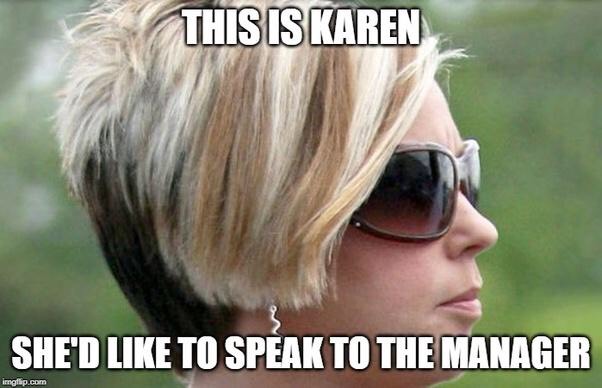
 Given our contentious political climate, I expected lots of push-back from my post, but I didn’t get any comments from Trump supporters. This was disappointing, since I was interested in understanding their perspective. My social following tends to include many like-minded people (what Republicans would call the DNC Echo Chamber), so it’s not surprising that I did hear from numerous liberals. They nearly all agreed with my overall assessment of the situation and expressed a similar feeling of helplessness about how to reason with people who were supporting 45 in light of so much damning evidence against him.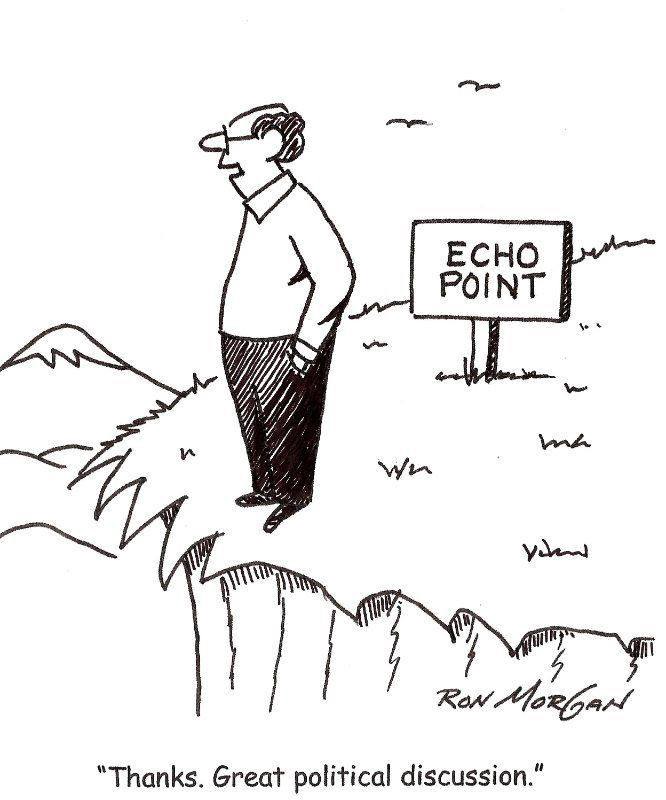

 I think we all inherently understand that others have to prioritize their beliefs. You could take any issue Democrats collectively care about: immigration, healthcare, climate change, gun control, etc., and you would find the same varying levels of support and prioritization among voters. For example, it makes sense that the face of climate change, Greta Thunberg, is a 16-year-old activist. Her generation will have to live with devastation that won’t as directly impact your average retiree.
 For example, while Democrats brand themselves as the compassionate party—the ones who are tolerant and care about others—many Republicans reject that branding because it goes against what they have experienced in their conversations at Thanksgiving Dinner or while scrolling through their Facebook feed. They see widespread condemnation of anyone who voted for Trump and consider the Democrat’s self-branding as the caring, tolerant party to be the height of hypocrisy.
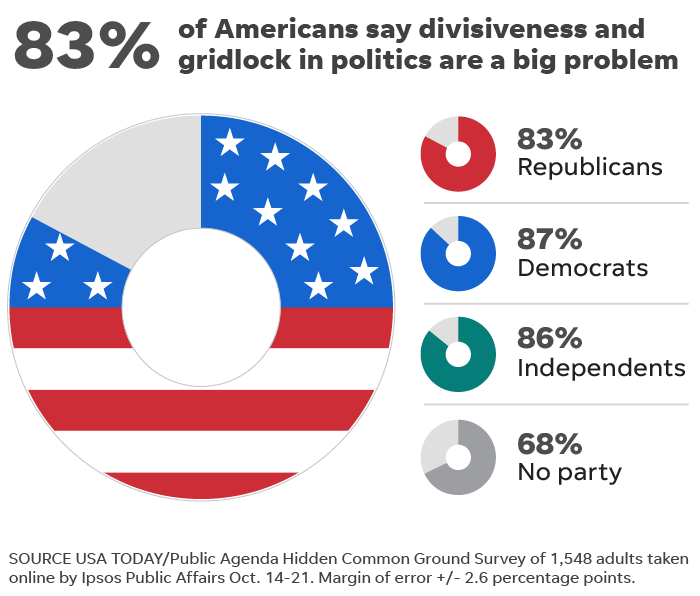 After all, if we’re going to live in a democratic society, we have to trust in the process. That means sometimes Democratic priorities will move forward and other times Republican priorities will prevail. At the same time, we still have a duty to protect the democratic process—so keep the spotlight on Trump’s impeachable offenses and on the victims of his policies. But do it without implicating or condemning those who—in their minds—were just choosing the lesser of two evils when they voted him into office. Even if you believe they deserve that condemnation, it simply won’t move us toward the end game of getting rid of Trump. So, with the new election year just a couple of short weeks away, we need to ask ourselves: Is it more important to get Trump and his minions out of office or is it more important to “punish” family and acquaintances that voted for him?
 Now Stormy has been prolife for as long as she has been aware of the issue. In grade school, back in the post-Roe v. Wade late-70s, a women’s group visited our parochial school classroom to tell us about the issue of abortion. But they didn’t just bring pamphlets and rhetoric, they brought “visual aids” in the form of embryos and fetuses in glass jars preserved in formaldehyde. (Were they aborted? miscarried? I don’t know the details, I was only about 10 or 11 at the time.) All I can tell you is that peering at their tiny features in different stages of development affirmed to me that 1) they were tiny people 2) it was impossible to tell at what stage they went from being “a blob of cells” to tiny people. One of them even had a bruise where his/her head was hitting the glass—a very “human” reaction that I could relate to as a fairly rough-and-tumble girl who was usually sporting a few bruises and scrapes herself.
 So, as a prolife Christian who has voted on this issue myself in the past, I’m not experiencing any such conflict. Why? It’s simple. Trump is not prolife. Being prolife extends far beyond appointing conservative judges or regulating against abortion. It means respecting life. It means working to ensure that everyone has health insurance and access to affordable birth control. It means fathers stepping up to
  Ultimately, being prolife means

 Easier Said Than Done