We’re not all on the same page, but we should be on the same side.

This weekend, I stepped into a firestorm of political commentary on Bluesky, and it left me feeling depressed and more than a little frustrated. 

No, I’m not talking about MAGA trolls telling me that school shootings aren’t caused by guns. (Okay, in truth there was a little of that… but since that’s “business-as-usual” for the cult, I’m used to their BS.)

No, this firestorm of attacks actually came from the Far Left, after I disagreed with this post: 

Bluesky post that reads, "Newsom is proof that if Trump was more clean cut and well spoken liberals wouldn't have a problem with Trump

I explained my reasoning by saying: “Newsom’s methods aren’t perfect, but he’s out there, every day, actively fighting. I respect that and am not going to waste my time criticizing those who are trying to oust MAGA, simply because their priorities don’t align with mine 100% of the time.”

NOTE THE FOLLOWING TWO ADMISSIONS IN MY STATEMENT ABOVE:

  • I acknowledged Newsom’s methods aren’t perfect.
  • I said his priorities don’t align with mine 100%.

Nonetheless, my comment led to an incredible number of accusations: That I’m “Blue MAGA,” anti-trans, anti-homeless and pro-genocide! Despite the fact that I never stated that I thought Newsom should be the next candidate for president, just that I appreciated how he was getting under Trump’s skin. And then, when I explained to a self-identified communist that I had a daughter from a communist country and was therefore not a fan of communism, I also got branded as a ”child trafficker” as well… Fun times on the interwebs!

First, I want to address the “We didn’t vote for Harris because she supports genocide” crowd, since they came at me in full force. I’ll summarize my take on that as briefly as I can by saying that most Americans don’t pay very close attention to foreign conflicts and are generally pretty illiterate about global affairs. So when Hamas attacked Israel and took hostages, the general population’s immediate reaction was that Israel was justified in retaliating.

Now over time, I believe more and more people have come to realize that Israel’s relentless attacks on innocent Palestinians have waaay overstepped any semblance of a justifiable response, and many now understand that what’s happening in Gaza is genocide. However, I don’t think that distinction was widely understood by the voting public in the months leading up to the election. 

So, knowing that Trump had many pro-Israel supporters, Biden/Harris were walking a fine line with a country that has historically been considered a long-time ally. They understood that if Trump was elected, he would give free rein to Israel, because he was best buds with Bibi and had made previous comments about how the Gaza strip was ripe for real estate development. 

Consequently, it should have been clear that Harris was somewhat hamstrung during the election. However, it also should have been clear that after defeating Trump, she would have begun negotiating with Netanyahu to end the conflict. Everything about Kamala Harris and her documented past, shows her to be an intelligent, reasonable and compassionate person vs. someone who would condone genocide. But Harris’s first priority was to get elected and secure democracy—so that she would have the necessary power to enact those other priorities. 

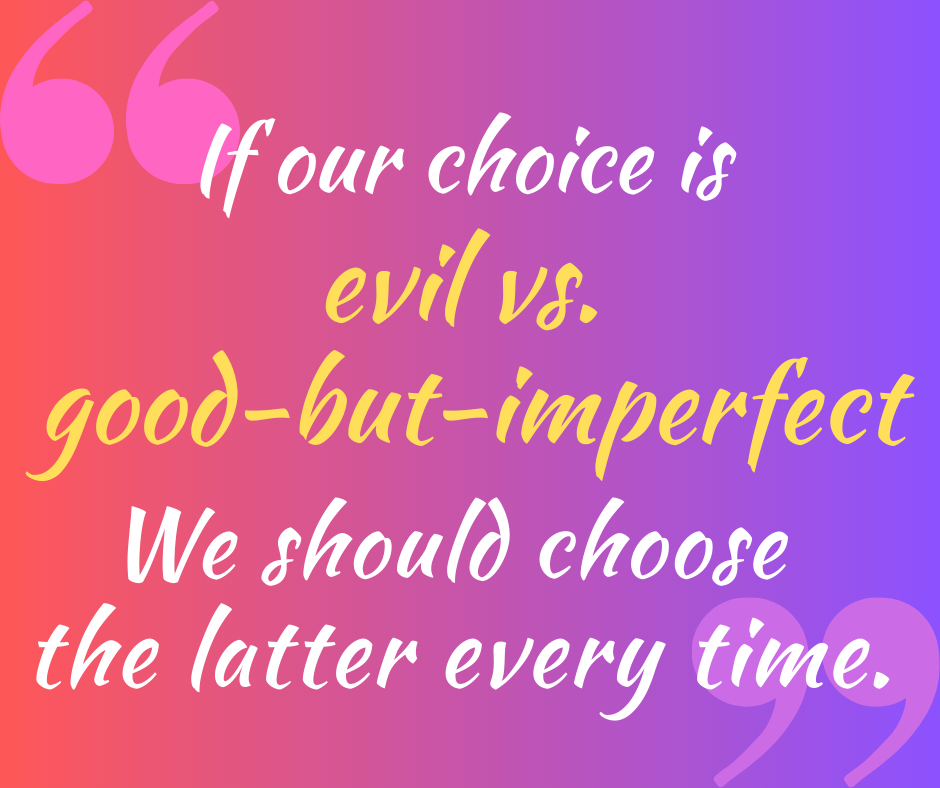
As I tried to explain this, one Bluesky poster commented, “You’re advocating the lesser of two evils… Why do we have to choose evil at all?” But this is an erroneous assumption: Trump is evil. Kamala Harris is not. She is a good person, although admittedly not perfect. And if the choice is between “Evil” and “Good-but-Imperfect,” we should choose the latter every time. 

Unfortunately, those who didn’t understand the complexity of the situation opted not to vote for her and influenced others not to as well. In my opinion, they are largely responsible for the current mess we’re in—whether they care to own that fact or not—but pointing fingers isn’t helping anyone at this stage in the game.

And that brings me back to my main point. 

While nearly all rational, compassionate people are in agreement that MAGA is bad and Trump is evil (not only dangerous for Palestinians, but also everyone else); there is very little agreement about how best to replace him. From my perspective, there seems to be two lines of thinking:

The Burn The Whole Thing Down Crowd – Those who think we need to support a leader who can lead the charge to abolish any semblance of our former government and create an entirely new system, one that more closely resembles socialism/communism. They are big on imposing purity tests, but not in agreement about what’s “pure.”

The Bring Back Democracy Crowd – Those who think we need to support whichever Democratic leader is most electable, so we can shore up our democracy and continue to move in a more progressive direction from there. 

It’s probably obvious to you that I’m in the latter camp. Here’s why… In the current administration all of the following are under attack:

  • Black and brown people
  • Immigrants (documented and undocumented)
  • Women (particularly those of child-bearing age)
  • Victims of sexual assault/pedophilia
  • Poor people
  • LGBTQ individuals
  • Those who rely on food assistance
  • Those who rely on healthcare subsidies
  • Those with conditions reliant on medical research
  • Children who are exposed to measles and other preventable diseases
  • Children who are exposed to gun violence (another preventable “disease” in this country)
  • Those susceptible to another pandemic (aka: everyone)
  • Anyone who relies on science-based healthcare (aka: everyone)
  • Organizations dependent on govt. funding
  • State programs dependent on govt. funding
  • Employees of the Federal Govt. who have been fired or are currently working in a hostile environment
  • Those whose business interests are impacted by tariffs and the economy (such as farmers)
  • Those who business interests are impacted by immigrant labor (such as farmers)
  • Those whose purchasing power is impacted by tariffs and inflation
  • Students dependent on financial aid
  • Those seeking affordable housing/the homeless
  • People directly impacted by climate-change related events (wildfires, flooding)
  • Free speech
  • Documented history
  • Literature
  • Our planet
  • … I’m sure I missed some others, but I think I’ve made my point. 
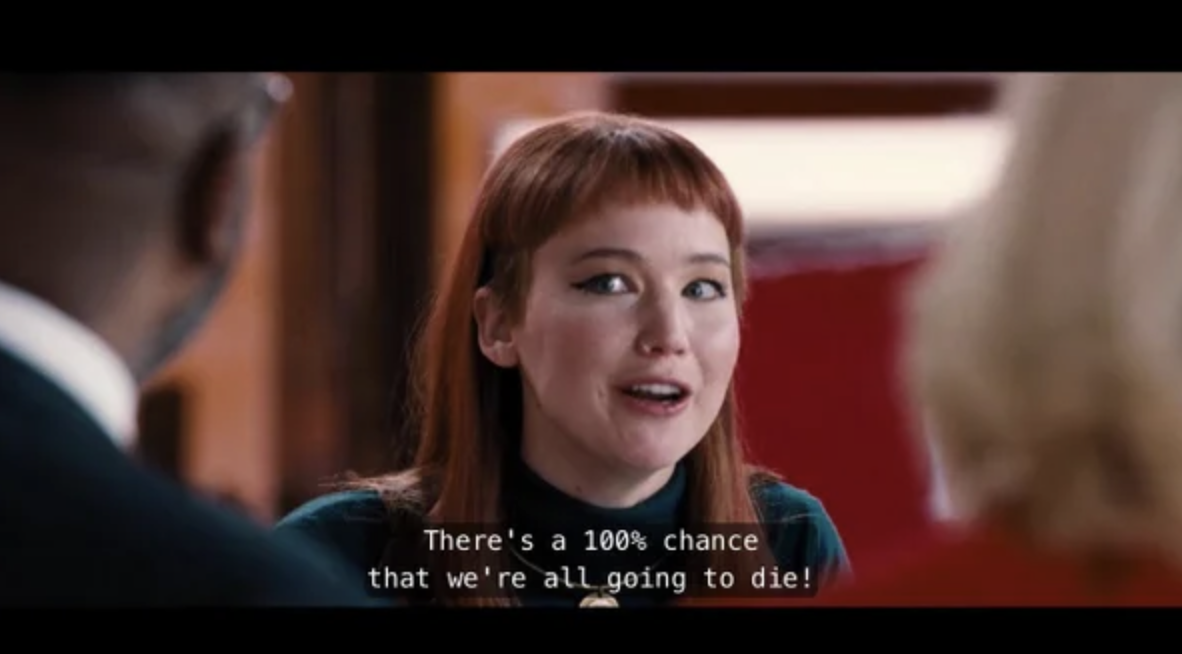
Meme graphic from the movie "Don't Look Up" where Jennifer Lawrence is saying, "There's a 100% chance that we're all going to die!"

But even with this non-comprehensive list, you can see that literally EVERYONE is under attack in this country and the negative impacts are global. (Ironically, even the tech-bros and billionaires are at risk from things like pandemics and climate change, but apparently they think they can avoid them by building rocket ships, as in the movie Don’t Look Up.)

Yet, it’s undeniable that some people are more impacted than others. Personally, I am fortunate—privileged—to be less impacted than a lot of people. But the fact that I’m less impacted than some others doesn’t make me the enemy. And this is what frustrates me about my conversations with the Far Left this weekend. We all know that once MAGA is ousted, there will be a lot of things to fix. But they don’t seem to realize that it won’t happen all at once. As much as we’d all like an instantaneous fix, issues will need to be prioritized—and not everyone will agree on that prioritization.

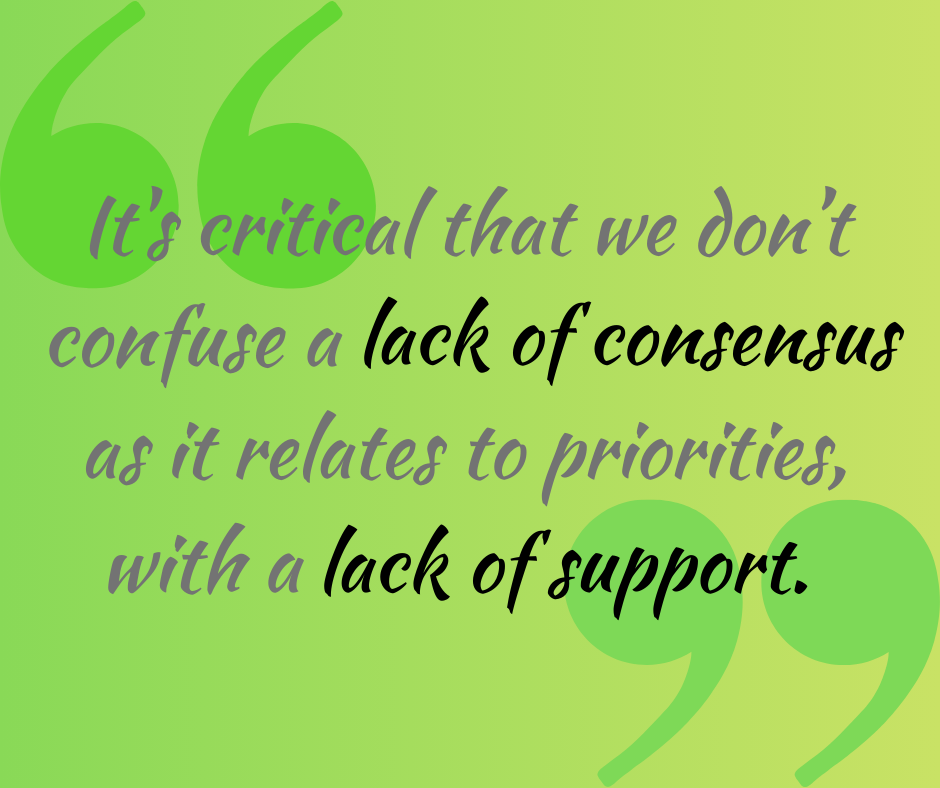
And it’s absolutely critical that we don’t confuse a lack of consensus, as it relates to priorities, with a lack of support. Those who aren’t severely impacted by any single issue themselves may approach recovery based on what policies impact the most people—and prioritize things like healthcare, food assistance, global war and climate change as a result. Like doctors in an ER, I think of recovery in terms of triage. Yet, others may look at their immediate situation and prioritize the issues that directly impact them or their loved ones: gun control, immigration, immunization, LGBTQ rights, cancer research, etc. 

One of these approaches isn’t more “correct” than the other. It’s natural for people to focus on their survival as well as their loved ones. And any activities that protect people’s rights and safeguard our planet are valid and worthy of support. 

I was especially hurt by those who branded me as anti-trans, because I consider myself an ally and won’t hesitate to speak out against trans bigotry. However, will prioritizing trans rights be my number one criterion in choosing a political candidate? Likely no. Mainly because the numbers impacted are so small compared to some of the others that are also under attack. But even more urgent, from my perspective, is ensuring Democrats have the power to enact change, which is why electability will be my first priority, and shoring up democracy will be second. By definition, Democrats believe in protecting the rights of all Americans. So, I trust that that commitment will extend to trans individuals and all other targeted groups, once we are back in control of policy-making… But getting back in control is Job #1.

Here’s one last analogy that I hope will illustrate my point: As readers of this blog know, my husband Oskar has had Parkinson’s Disease for many years (23, to be exact). It’s a difficult disease for him to live with, especially at this advanced stage, and I wouldn’t wish it on anyone. Because of the impact this disease has on our lives, my husband and I donate money to the Michael J. Fox Foundation to support research and we would love to see a cure. 

Now, do I demand that everyone else contribute to Parkinson’s research? No. I realize that there are other diseases or medical conditions that other people may feel more strongly about, depending on what they or their loved ones are experiencing. Alzheimer’s, cancer, heart disease—all of these receive more research funding than Parkinson’s. Why? Because they impact more people. And likewise, Parkinson’s receives more funding than scores of other, more obscure diseases. Is that fair? Not really. Do people with those rare diseases also deserve to find a cure? Of course they do!

That’s why if someone chooses to prioritize donating to another cause over Parkinson’s research, I would never accuse them of being “anti-Parkinson’s” or think that they want my husband to suffer. That would be ridiculous. If MJF researchers discovered a cure tomorrow, I’m sure most people would rejoice right alongside me. 

Graphic drawing of a man sitting on a tree, cutting the branch he is sitting on (illustrating the concept of "self-sabotaging behavior").

Yet, when it comes to our political environment, there are far too many people giving “purity tests” to other opposing MAGA to gauge their commitment to a particular cause. And then they’re interpreting a difference in how someone prioritizes the issues as evidence of being indifferent to their suffering—or even worse, as being responsible for their suffering. Purity tests are useless because human beings will rarely agree on the same prioritization of complex issues. Insisting on alignment is self-sabotaging because it blurs the distinction between those who simply want to address another important issue before your cause, with those who actively want to do us harm. Let’s stop the in-fighting and focus on what really matters. We must work together to replace the current administration with a functioning Democracy before this most deadly disease—MAGA ideology—kills us all.

Is the problem guns or mental illness?

The answer is “Yes”!

KitKat lives down the street from the horrific shooting at Annunciation School and Church yesterday. We were scheduled to play pickleball at 11, and she texted me in the morning to tell me there was a live shooter at the school. Since KitKat works from home, she could hear constant sirens as multiple cop cars and ambulances were racing to the scene. 

View of Annunciation School and church with multiple police cars and officers outside.
Courtesy NBC News

I had just called her to learn more when her phone started blowing up with messages from friends and family calling to see if she was okay. She told me all her doors were locked, blinds drawn, etc., and said she’d call me back.

I hung up and immediately went to BlueSky to see if I could find out more as the shooting was happening in real time. One post caught my eye. It said something like, “Another school shooting. This time in Minneapolis. Just another Wednesday in America.”

Very soon thereafter, it was confirmed that the shooter was dead. I breathed a sigh of relief that KitKat wasn’t in danger. But for the families involved, the tragedy was still unfolding as parents arrived at the school to learn whether their child had been shot.

An hour or two later, I drove over to KitKat’s house (four miles from my home) to see how she was doing. KitKat’s youngest is a senior at a private school and her school went into lockdown as well. Meanwhile, my three kids have all made it safely through school and college—something that I don’t take for granted. (Well, Blossom is currently in vet school, but she’s in another country where shootings aren’t routine.) 

KitKat was still shaken to her core, even though she and her daughter were both “safe.” She worried about which of her neighbor kids may have been injured or worse. She felt the terror the other parents were going through. Of course, her reaction was totally normal, since this kind of incident could trigger PTSD for any parent. 

Me, I didn’t feel sadness, so much as anger. This trauma and pain is avoidable. We are the ONLY country in the world that has this issue. Every other civilized country has figured it out. The solution for eliminating mass shootings is not rocket science. Other countries have done it successfully, and all we have to do is follow their example. The solution is sensible gun control. We can still allow citizens to have hunting rifles and handguns to protect their homes and property, but in a controlled and monitored way so that instruments of mass death don’t fall into the hands of the wrong people. It’s a no-brainer, and yet we continue to make excuses while more children die.

Which brings me to my next point: Excuses. Online, a gun-rights advocate was telling me that guns aren’t the issue, mental illness is. Specifically, he posted, “The root cause is that person was sick and mentally unwell. They could have drove a car into a crowded area. You are making this about politics.”

Okay, let’s unpack that mental illness excuse a bit. 

First off, other countries have mentally ill people. But they don’t have rampant gun violence. As I pointed out to the online poster, a gun is a much more efficient killing machine than a car, a knife, or a blunt object—and it is designed solely for that purpose. That makes it uniquely deadly and without any other utility (such as an airplane) that helps to justify its existence or accessibility. (And, let me mention here that I could have added that cars and planes are pretty well-regulated, but I left that part out.) So, yes, I am adamant that guns are still the root cause of mass shootings. A mentally ill person that is hell-bent on taking out others can do much more damage, more quickly, with an easily accessible gun than they can with other easily accessible objects. 

Now let’s talk about mental illness itself. It very well may be that we have greater numbers of mentally ill people than other countries. I wouldn’t doubt it. The pandemic launched a mental health crisis in this country that we have yet to recover from, and record numbers of young people are experiencing anxiety, depression and self-harm. There have been several causes identified: the pandemic, increased social media use, etc., but I think the real cause is more sinister and pervasive. I believe it’s because so many people lack confidence in a viable future.

When I was a child and teenager, my worldview was formed by my family, teachers, religious leaders, the law, media and society. That worldview went something like this: 

  • Family: My parents want the best for me. My siblings care about me.
  • Teachers: My teachers want me to succeed and get a good education, so I can get a decent job and be a functioning member of society.
  • Religious Leaders: God/Jesus loves me and wants me to live a good life in the service of others.
  • The Law: Police are there to help me if something bad happens. The legal system is uncorrupt, “no man is above the law,” and justice will ultimately prevail. 
  • Media: The media is honest and journalists have integrity.
  • Society: Most adults are trustworthy and smart. They know what to do and can be trusted to do the right thing. Americans love their country and will defend freedom and the rights of others.

Yes, you can see from this worldview that I had a pretty privileged upbringing, and I realize not everyone has had that experience. However, I think most of us grew up generally believing that the adults in charge actually knew what they were doing and were generally acting responsibly.

As I got older, of course, I realized that wasn’t always the case. But that realization dawned on me gradually—until 2016, when it hit me like a ton of bricks: Donald Trump was so obviously an arrogant idiot, and yet, enough people believed in him to actually elect him as president?! This shook up my worldview. But by this time, I was already 50—an adult with a fully formed brain, an MBA, healthcare coverage and significant savings. In other words, I had resources to cope.

And then came the pandemic, J6, George Floyd, the 2024 election… I witnessed many, many adults that I previously would have considered decent people do the indecent thing. I saw people refuse to wear a mask to protect their neighbors. I saw people refuse to get vaccinated so our country could return to normal. I saw neighbors spread disinformation. I saw people I went to high school with make racist and homophobic remarks about others. I saw siblings defend rioters and killers. Online, I saw a cop—casually kneeling on a man’s neck while he struggled to breathe—and saw many other people defending that heinous action. I know adults who elected a rapist. Adults that voted for people who pose with semi-automatic rifles on their Christmas card, while children continue to get gunned down in school. I saw too many religious leaders (thankfully, none of my own) subverting Christ’s message about loving thy neighbor and instead preaching condemnation and dominion over others

All of this has been very difficult and painful to reconcile, but I’ve sadly and slowly come to the conclusion that there are far fewer decent people in this world (or at least our country) than I had previously believed. Still, I have a lot more life experience with which to process this information than the average teenager or young adult.   

So now, let’s look at the US through the lens of that young person whose brain is still developing: What they are seeing is a deeply divided country. Adults who aren’t trust-worthy being put in charge. Technology that is advancing far more quickly than our ability to put guardrails around it. Uncertainty regarding what is actually human or AI when interacting online. Billionaires being exempted from paying taxes while the number of homeless grows. The media openly lies despite lawsuits. Government leaders lie while under oath. Parents and classmates who align politically with those who advocate harm for their immigrant classmates. The Supreme Court is rolling back rights for women and LGBTQ people. Out-of-control housing costs and inflation that will make it impossible to have a decent standard of living once they are out on their own. Corporate CEOs sacrificing our planet for greed. Widespread confusion about which careers will even be viable five or ten years from now. 

Our country is a shit-show. It’s no wonder that many young people have a nihilistic, angry view of the world. I do, too, frankly. As I mentioned earlier, I just have better coping mechanisms. The difference is that young people have only seen the chaos. Whereas, I know that a lot of it can be fixed. Not everything, sadly (particularly as it pertains to our climate), but a lot of it. And yes, it will take a long time to set things right, but I can see a better future out there for them—and for all of us—if we just work together to achieve it. 

This is what young people so desperately need: Belief in a better future and confidence that the adults who surround them will work alongside them to help secure it. Getting MAGA out of office and appropriately taxing billionaires will allow us to get this country back on track, but we can’t wait for someone else to fix the problem.

Until we all commit to securing that better future, the lethal combination of mental illness and accessible firearms will continue to devastate our communities. 

The Case for a General Strike

Yesterday I participated in a Zoom meeting with a thousand other concerned citizens and our two Democratic senators. I am proud to live in blue Minnesota, home of Tim Walz (the man so many wish was our VP right now), and I was encouraged by how many people were taking time out of their workday to participate in the call on short notice. Less encouraging, however, were some of the takeaways from the call.

Both senators basically said that they are doing all they could to slow and block cabinet nominations and they encouraged everyone to keep fighting and to report stories of how these decisions are impacting people to keep the pressure on and provide ample documentation for lawsuits. However, they (and their staff representatives) also admitted that they had limited control in stopping the chaos since the Republicans have a trifecta of power right now. 

It’s clear by the comments posted in the chat that there are a lot of angry people who are feeling helpless to affect any kind of change. Too many of the questions coming from individuals were looking for a savior to get us out of this mess: “Why isn’t anyone stopping them? ““What are you doing about this?” “Who’s in charge of a strategy?”

Nobody has to feel helpless, because we all have the ability to do SOMETHING and something imperfectly executed is far better than a well-planned NOTHING. There is no single “leader” in all of this. Everyone needs to step up as best they can and give others the grace to be imperfect. Time is of the essence—we can’t “wait” for things to get better. We need to do what we can now. 

However, I firmly believe we need to focus our efforts a bit. First, I would stop making pleas to your MAGA acquaintances to have a little compassion. That train has left the station. They don’t care if trans people feel persecuted. They don’t care if immigrants are scared. The MAGA supporters have shown us that they don’t really care about other people and they’re going so far as to distort Christianity in order to justify their Christian Nationalist agenda. 

Of course, it’s important for us to protect and help all of those coming under attack, but we shouldn’t waste our energy trying to persuade Trump supporters to do the same. Appealing to their better angels is useless as long as they are immersed in the MAGA cult. A far better alternative is to hit them where it hurts them personally—their income—which is why I think that those who are interested in protecting democracy should seriously consider participating in a GENERAL STRIKE. 

What is a General Strike?

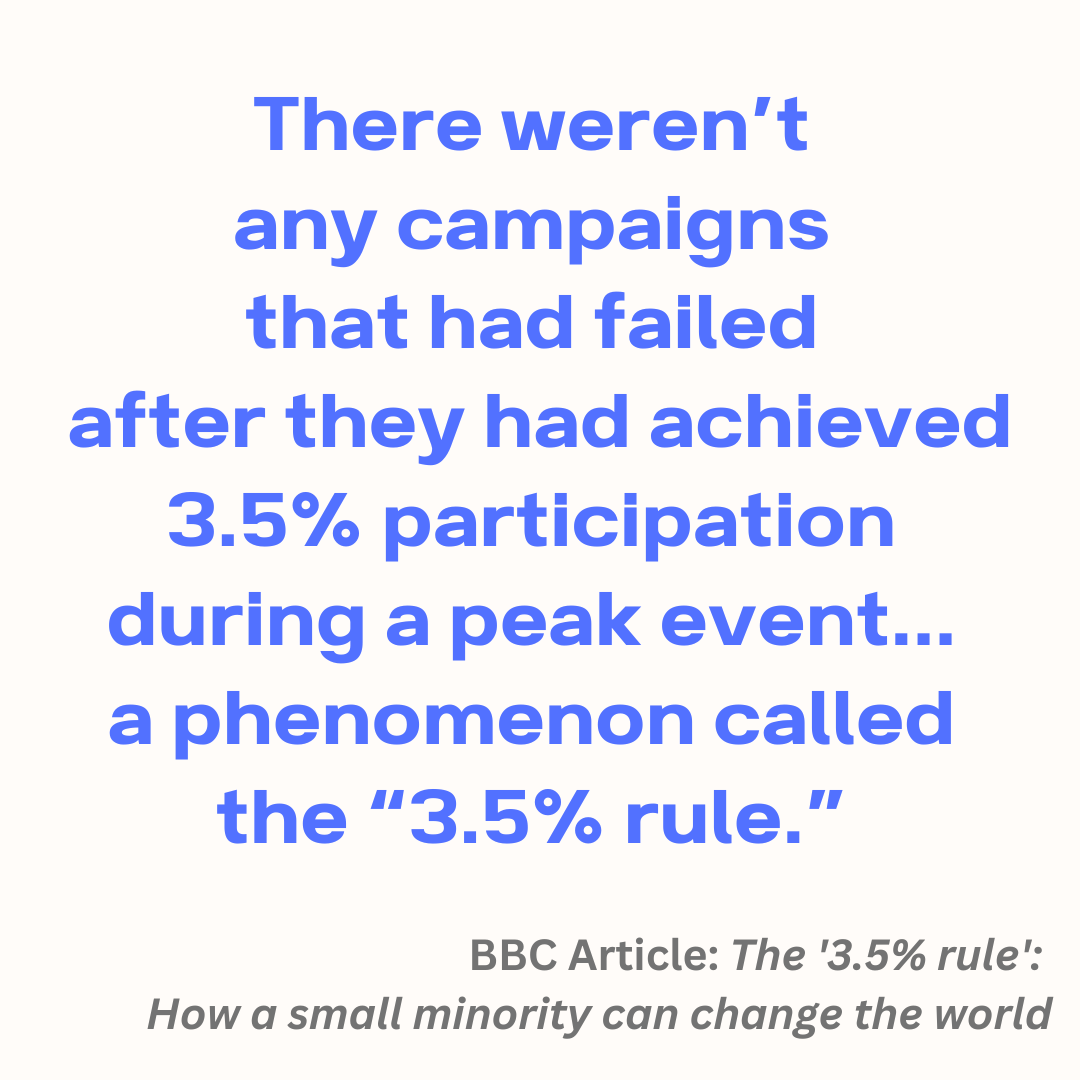
Basically, everyone who can refuses to go to work or to purchase anything for a period of time. This BBC article shows that it only takes 3.5% of the population (which would be 11 million Americans) to be successful. So, the greater the participation, the shorter the amount of time that would be needed to succeed. While these strikes are often combined with protests, I think that protests are not the best idea in the current environment (more on that below). 

How can something this big get organized effectively? 

The Women’s March in 2020 was a successful grassroots effort that came together by smaller groups and individuals aligning with the organizers. The same could happen in this instance if enough people put aside their individual ideas about how things “should” work and join onto the efforts of one common organizer. It’s not critical that everyone align on every single point. The important thing is to stop this illegal power grab and insist upon enforcing the constitutional process that is supposed to protect our democracy.

There is already a movement called generalstrikeus.com that is beginning to gather information on how to proceed. You can start by signing up there. I have no ties to this organization, but think it makes sense to leverage their infrastructure and website since it’s already in place. While their current list of demands is very broad (and in my mind, unrealistic), it was put together before this crisis and ultimately the various participating partner groups would have to work together to determine timing and demands.

What if I can’t afford to risk losing my job by not showing up? 

This is the most common concern. First of all, we know that people have to provide for those who are dependent on them and some people have jobs that the public depends on (like an ER doctor). But oftentimes people have more leverage here than they think. Do you have sick time or vacation time you could use? Consider how difficult or easy it would be for your employer to replace you quickly. Also consider your employer’s/boss’s personal feelings about what is happening. They may be supportive of you striking because it may be the quickest solution to solving something that could have even longer-term economic impact for their business. 

Likewise, think about the long-term economic impact of these illegal actions on your own personal finances. When you consider the financial burdens being created by tariffs; threats to health insurance and homeowner’s coverage; and the potential insolvency of social security, can you really afford not to participate? 

After considering all of the above, if you decide you can’t personally afford to miss work, you can still help the cause by urging friends and family to participate and by promoting it on social media. Nearly everyone can participate by not buying anything (except absolute necessities) for the duration of the strike. Those who are unemployed or retired can help too, by spreading the word or offering childcare to essential workers (like emergency personnel). 

How do I not buy anything? 

Remember the impact of the early pandemic when businesses were shut down without notice? This had a hugely negative affect on businesses very quickly. Likewise, if a large number of us refraining from spending any money (going out to eat, buying non-necessities, etc.) will have the same effect. Nobody expects you to forego basic food or medicine, but limiting what’s purchased during the strike is important, so if you can prepare ahead of time for the necessities, that will help. (Important note: Preparing ahead of time doesn’t mean “stocking up” on a bunch of non-critical items—businesses need to see a DROP in overall income for a strike to be effective, not just a small cashflow/timing difference.)

The good news is, most of us already have experience with this due to surviving all the supply chain issues during the pandemic! 

Why not protest?

Although there are lots of protests happening around the country, I think one very large protest would be detrimental to the overall cause for three reasons. 

  1. It would bring out the extreme crazies who are looking for violence (Proud Boys, etc.)
  2. I firmly believe that Trump wouldn’t hesitate to declare martial law or to order the military or law enforcement to fire on civilians. 
  3. It exposes immigrants to ICE arrests. 

A general strike will have a similar impact of grinding things to a halt without putting any individual at risk of violence or deportation. 

What about retaliation? 

Being scared of retaliation is a real concern, but all I can do is urge everyone to rise above it. There IS strength in numbers and every time a single person raises their voice, it gives others courage to do the same. Don’t short-change the importance of that. Think of all the prominent people—actors, comedians, musicians, professional athletes—who have been very vocal in their opposition against Trump. These are people who have a lot to lose and are very visible in their dissent. If they can do it, so can you. We simply need to step up and be the heroes our children and grandchildren deserve.

The Big Win

I’m saving the best for last, and that’s the long-term impact of a general strike. Elon Musk is the richest and arguably most powerful person in the world right now. Yet, even he can’t singlehandedly keep millions of Americans in their place if we band together to do this. And when we succeed at stopping him in his tracks, it will PROVE ONCE AND FOR ALL TO EVERYONE ACROSS THE GLOBE that average people, working together, wield the real power. This will be a critical moment in turning back the authoritarian tide that has been sweeping so many countries and will let oligarchs know that they can’t escape the law. And that’s when we can finally start making headway toward addressing climate change, equity for all, and global peace.

Please join the effort here: https://generalstrikeus.com

In addition, help spread the word…If you belong to any other groups on FB, Reddit, Discord, Bluesky, etc. where people are voicing concerns about what they can do, please share this. The more organizations that get on board quickly, the sooner we can stop the destruction.

Week One of the New Regime

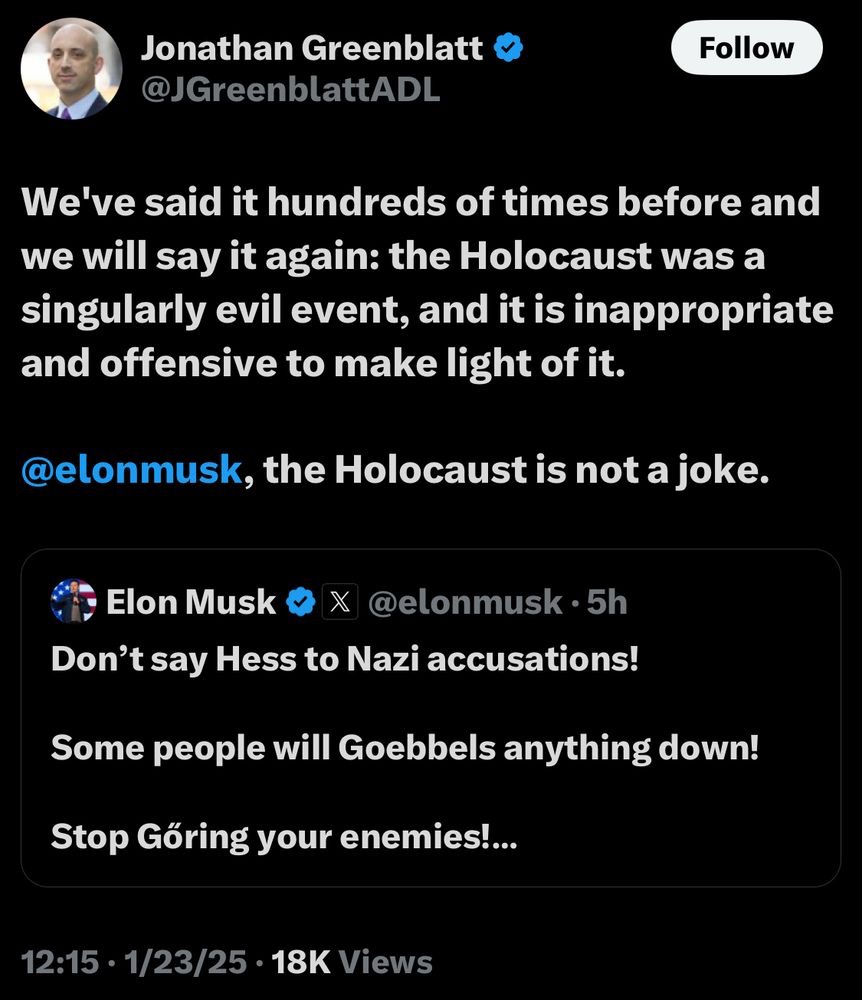
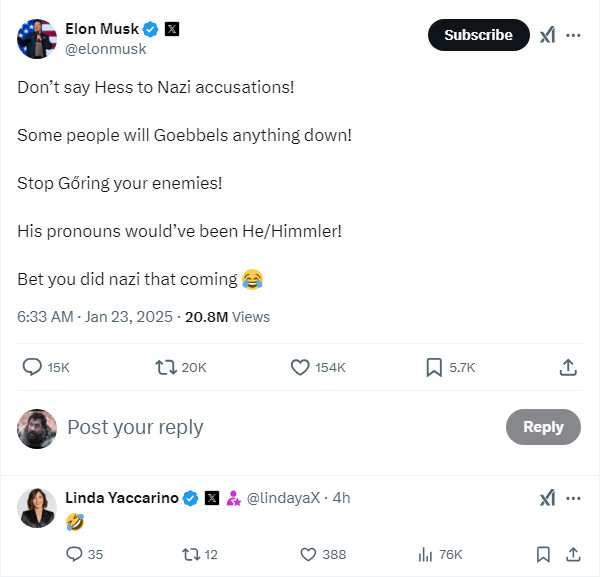
In which Stormy learns that some of her siblings can’t bring themselves to condemn overt Nazi signals.

HOW ARE WE DOING?

This has been a terribly difficult week for anyone grounded in reality with a love for democracy and humanity. I’ve talked to some people who have chosen to stay away from the news for their mental health (which I totally respect). Others are doom-scrolling and sinking into despair. 

Rather than abstain from the news, I gave myself one week to monitor Trump’s pardons and initial Executive Orders (EOs), as well as the media, legal system, and Congress’s response to those actions. If you’ve been doing the same, then you know that things look pretty bleak. Now that the pattern is apparent (rolling out Project 2025), I’m going to spend way less time worrying about the news and more time advocating for those people who are casualties of his policies.

Foremost in my thoughts this week has been my large, extended family. Some of whom are directly threatened by Trump’s Executive Orders and some of whom (to my great sadness and dismay) actually voted for Trump or are defending his policies. I have eight siblings, mostly conservative Boomers. While I knew that only one sister actively opposed Trump and that others didn’t like the man but agreed with many of his policies, I had not taken the political pulse of my family in quite some time. If I’m being honest, it’s because I wanted to believe that all of the criminal cases against Trump would have changed their view of the man. I mean, they couldn’t actually vote for a convicted felon, a convicted rapist… would they? This week I got my answer.

I sent an email to my sibs, expressing dismay at Trump’s reaction to Episcopalian Bishop Mariann Edgar Budde, who pleaded with him to have compassion on marginalized individuals living in fear due to Trump’s EOs. Trump and many other so-called Christians attacked her for preaching what is quite literally the gospel of Jesus Christ. I asked my sibs (who I know were all raised Christian like me) whether they could defend his actions. 

My brother responded by completely twisting the issue, employing the classic MAGA tactic of Deflection by Defamation, “So the Bishop is against stopping the influx of illegal children being smuggled into this country by the cartels and being sold into sex and labor slavery?” Child sex trafficking, of course, was not the topic of the Bishop’s sermon. He couldn’t seriously address my question. I believe Christians have a responsibility to try and hold other Christians accountable for their behavior—which is what Bishop Budde was doing with Trump and what I was doing with my siblings, but both had the same results.

Then, I tried reasoning with my family about the inherent danger of pardoning violent offenders, many of whom assaulted law enforcement and/or were promising retribution. From both a brother and sister, I got the MAGA “whataboutism” response that ignored my question and redirected it. Comparing apples and oranges. 

But the conversation that broke me this week started with my MAGA brother trying to convince me that Musk’s Nazi salutes were examples of him “throwing out love from his heart” to the crowd… which is a pretty ridiculous take when you look at the defiant triumphant smirk on Musk’s face. Yeah, that’s love alright… Love of fascism.

Let’s be clear, this gesture was followed by a sentence that said, “My heart goes out to you. It is thanks to you, that the future of civilization is assured.“ Given Trump doesn’t believe in combatting climate change, it’s pretty easy to see what Musk’s talking about there.

To bolster his argument, my brother also included still photos of various Democrats with their arm in the air, using another one of MAGA’s favorite tactics—false equivalency.

Of course, if Musk truly had made a gesture that was misinterpreted, he could just explain that, right? I mean, since he posts dozens of times a day on X. However, he never issued clarification statement and instead chose to mock those showing concern by making a bunch of Nazi puns. (You can’t make this shit up.) So, in that exchange, I got to learn that my brother thinks Nazi’s are okay. 

Later, I found a 2023 clip from a Tesla conference where Musk literally makes a gesture of showing love from his heart and—no surprise here—it looks nothing like his Nazi salute from this week. 

I sent this out to my siblings to further my case. My sister responded by saying that the Anti-Defamation League disagreed that it was a Nazi salute. (If you’ve been following this, you know that they initially gave him benefit of the doubt —which is not the same as disagreeing—but that statement received an enormous amount of backlash. Once Musk refused started making bad Nazi puns, they responded more forcefully. She also blamed his neurodiversity. Now, I know quite a few people who are on the spectrum—heck, my daughter Lucky thinks I may be—but exactly 0% of them “accidentally” give Nazi salutes.

Despite explaining this to my sibs, nobody admitted, “You’re right, it looks like he may be a Nazi…my bad.” Instead, several of them accused me of hate, cyber-bullying, and making them feel demeaned by bringing up these uncomfortable topics in the first place. (Sigh.)

Apparently, saying that it’s wrong to make apologies for Nazi behavior is worse than… actual Nazi behavior. 

My beloved, dear old dad was a WWII veteran, so seeing his children minimize a Nazi salute breaks my heart. And yet I know that seeing his kids argue would break his heart. I’m at a loss, though, of how to move forward. I’ve told my sibs that I love them, but I won’t stay silent about important issues for the sake of family harmony. That wasn’t a winning strategy in 1930s Germany, and it’s not a good strategy today.

As a result of all this, I don’t expect much interaction with my siblings in the months or years ahead. I’ve told them that if they break their way out of the cult, I’ll be the first to celebrate with them, but today I simply don’t see that happening. Thankfully, I DO have one sister who shares my views on Trump, and she has been a literal lifesaver to me over the last decade. (Rock on, Barbigrrrrl!) I also have scores of nieces and nephews who understand the dangers of MAGA and are trying to navigate their own strained and complicated relationships with their parents and some cousins. So my extended family isn’t gone from my life, it’s just contracted a bit.

I know that many of you have had similarly heart-breaking conversations this week… I wanted to let you know you’re not alone. But I also want to remind you that only 32% of eligible voters actually voted for Trump. He does not have a mandate to do the things he is doing, so it’s critical that everyone who opposes him be brave and vocal about what’s happening, so as not to normalize or meekly accept any of this. 

When people who have been warning against Trump for years suddenly go quiet, then the people around them start wondering, “If they’re worried about retribution or being identified as ‘anti-Trump,’ maybe I should be scared too?” And that, in a nutshell, is how fascists gain power. Therefore, I’m asking you from the bottom of my heart (note to insert correct emoji vs. Heil Hitler: 🫶🏻)… Do not let the fascists win.

What now? Stormy gears up for the long haul by creating a sanity plan

As I was in this consulting phase, another marketing colleague was telling me about their new client who ran a MedSpa type of business, offering Botox, fillers and other “aesthetic” treatments. I was surprised (and dismayed) to learn that their target market was in their 30s! And while I won’t judge anyone for personally choosing treatments that may make them feel better about their appearance, I know that to effectively sell these products to thirtysomethings, a marketer would need to inject fear and insecurity into their hearts before they would agree to inject Botox into their young faces.

In today’s uncertain business environment, it’s difficult to pass up a paying client… yet, I’ve reached the stage in my career where I’m only interested in working with people and organizations whose values, products and services align with mine. Yet, I genuinely enjoy the social aspects of working, learning new things, and making a difference.

Meanwhile, on the home front, Oskar and I were discovering that you can’t outrun Parkinson’s indefinitely—although God knows, we’ve tried. Changes in his condition, like no longer being able to drive, are now requiring me to spend more time being a caregiver (a role that, anyone could tell you, I wasn’t exactly born for). 

The progression of Oskar’s PD symptoms also led to a host of related lifestyle changes this past summer: Moving from a condo with two stories to an apartment where all our living space is on one level, renting out our vacation condo, and downsizing half of our “stuff” to fit our belongings into the new, smaller space. 

When I had time to reflect on my situation—not loving consulting work, wanting more control over the products, services or causes that my efforts were going toward, and the need for a more flexible schedule at home to accommodate my husband’s illness—I had to ask myself… Was it finally time for me to retire? And what would that even look like? Oskar’s daily challenges made the stereotypical active retirement—lots of activities and travel—less feasible, so how would I fill my time? KitKat and I started this blog more than a decade ago (can you believe it?!) and in that time, I’ve reinvented myself again and again. Yet still I’ve felt aimless and discouraged. A friend suggested to me that as I face what is likely to be a more challenging stage with Oskar’s illness, that I needed find a way to not only accept my reality, but embrace it. To live a life of purpose vs. mere tolerance.

I’m still nearly a decade away from “retirement age,” but if there is one benefit of having a spouse be diagnosed with a serious condition at a relatively young age it’s this: It forced us to financially prepare for an unknown future. As a result, we never really subscribed to “lifestyle creep” as our incomes grew, but rather, we put as much as we could into savings—so that if either of us had to retire early, we would have the freedom to do that. 

I was mulling over my friend’s advice, but with all the downsizing/moving activity this summer, it was easy for me to push out any decisions about what to do next. So that’s what I did. I also knew that once the move was complete the election season would be in full throttle, and I couldn’t make a decision about my future without knowing what our nation’s future might hold. With Biden stepping down and Harris quickly pulling together an amazing level of support, I was hopeful and excited that we might finally get our country back on track. But I awoke in the early hours of Wednesday morning to headlines that absolutely shattered half the country. 

Talk about an unknown future!

After the initial shock wore off—replaced by a profound disappointment in my fellow Americans—I was surprised to find that I was oddly accepting of the situation. While I absolutely wish things had gone the other way, I firmly believe that some people can only learn important life lessons the hard way. And, unfortunately, this appears to be one of those times for many Americans. 

Anyone who has tried to reason with a MAGA cult member knows that you can’t. It’s the definition of An Exercise in Futility. Yet, because I have family members in the cult, I nevertheless persisted. For so much of the last decade, I have felt like we were at war with the mythological Hydra: Chop off one ugly head and a couple more appeared in its place. Lies. Disinformation. Hatred. Racism. Misogyny. Homophobia. Over and over. In addition to any personal challenges I was facing, I was constantly anxious and distracted by the news and social media. I found myself ignoring my health and using alcohol to calm my nerves. I lost my sense of joy. 

Just another day of defending the truth.

Last week, with my acceptance that Harris lost the election, came a realization that that particular battle was over. No, I’m not throwing in the towel on democracy. I will continue to work toward it. However, I’m no longer going to suit up and stare down the Hydra day after day. I’ve sacrificed a decade of my mental and physical health to an awful cult and I’m not going to give them another day. One week after winning the election, the incoming administration is already proposing a number of changes designed to undermine democracy. It’s clear to me that winning back our country will require a much longer-term strategy.

So where does that leave Stormy? One of my warrior outlaw in-laws sent a text on Wednesday saying she was working on a “sanity plan” for surviving these years under a wannabe dictator. I thought that was a great idea, but I took a slightly different approach. First, by drafting a personal Mission & Values Statement. Second, by drafting a Wellness Strategy. Together, I hope they will serve as my personal sanity plan. Here’s a high-level summary:

I believe that joy and positive relationships are essential to life, but each person must figure that out on their own (and some are slow learners). I will focus on cultivating joy in my own life by bringing my daily activities into greater alignment with my values:

  • Maintain perspective – The problems of our society won’t be solved overnight or even in my lifetime. Realize that I have been given privilege and talents that I should use to help others, while also taking the time to appreciate and enjoy my one life. 
  • Encourage beauty and creativity – I will do this by spending more time creating interesting and beautiful things, appreciating art and beauty, and helping other people live more creative lives. 
  • “Do all the good you can…” – My whole career has been using my writing to persuade people and win customers, now I plan to leverage that experience to advance the causes I most care about. I also want to teach some of these skills to disadvantaged groups to help level the playing field. 
  • Reclaim my religion – As a Christian, I’ve been particularly frustrated with the Christian Nationalist movement, as it basically contradicts every lesson Jesus taught and is responsible for driving people from the church in droves. Rather than abandon Christianity, I’m going to reclaim it and work harder to make sure people understand what Jesus preached—love for one’s neighbor without distinction for race, creed, gender or orientation. 
  • Stretch and grow – I will continue to try new things and won’t be afraid of failure. Since I’m no longer chasing a paycheck, I can no longer be “fired.” This means that I really cannot fail at anything I do (so long as I learn something along the way). I also know that engaging in learning and discovery are the best ways to stay interested and interesting. 
  • Accept that you can’t do it all – There are myriad ways for each of us to be useful in this world and everyone has a different role to play. Therefore, I may as well choose projects that fuel my personal enthusiasm and renew my spirit. 
  • Rest unapologetically – I’m going to implement my Wellness Strategy and pace myself, so I can continue these activities for as long as I can. I’m in this for the long haul. 

And, because I think this is extra important for so many of us now, I’d also like to share how I intend to do this.

  • Limit exposure to 47 – This goes without saying. No more sneering orange face, no more grating, unintelligible voice. I can read analysis and transcripts to understand what he’s up to, but if I never see or hear from him again, that would be just ducky with me. Fortunately, there’s a good chance I’ll outlive him, and that will be a happy day indeed. 
  • Limit the news – Like many, I’ve become absolutely disgusted with the mainstream media for normalizing a despotic criminal and treating him like a legitimate candidate. Moreover, exposure to news 24/7 is unhealthy. Instead, I’ll be checking in once a day to get a synopsis from a few trusted sources and do my best to silence the chatter.
  • Limit social media – After the last election, I did some extreme curation of my social feeds. This was a lifesaver, and I will continue to keep my social media activity limited and positive. I want to spend more of my life offline than online. 
  • Stick with my tribe – Spend time strengthening my relationships with those who share my values. Avoid spending time with those who don’t. This isn’t the same as ostracizing those on the other side. It’s just choosing to preserve my peace. I’ll continue to work toward their deprogramming (“thoughts and prayers” anyone?), but I will not spend my time socializing with them. Unfortunately, this extends to family members. When some of them are willing to put a target on the backs of others, they cease to be family for me. If/when they realize their grave mistake and are ready to accept responsibility, I’ll be happy to welcome them back in my life.
  • Recharge and reset – Identify activities to proactively recharge my personal batteries before I “power off.” Spend time each week on creative projects to nourish my soul. Get out and attend museums, plays, lectures and other mind-broadening events. 
  • Embrace exercise and nature – Be physically active. Workout daily. Get out in nature regularly. Soak up the sunshine. Experience the weather. 
  • Focus on my health – Eat and drink in a healthy way. Reduce my sugar intake. No more using alcohol as an anti-anxiety med. No reliance on comfort meals that leave me feeling sluggish. Catch up on all the doctor’s appointments and screenings that I pushed out of the way when I was stressed or busy. 
  • Distract by diving in deep – Do meaningful volunteer work or start a side hustle or two. Learn new skills and subjects in order to advocate effectively. Keep myself distracted with useful, purposeful activity vs. doomscrolling and worrying about the future. Cross each bridge when I come to it. 

I found this exercise good for my psyche. It gives me a sense of purpose, but more importantly, it restores a sense of balance that I’ve been lacking for far too long. If last week’s election is leaving you feeling unmoored, I recommend taking a stab at your own sanity plan… and I’d love to hear about it. I want all my righteous peeps to not only survive, but thrive, in the difficult years ahead.

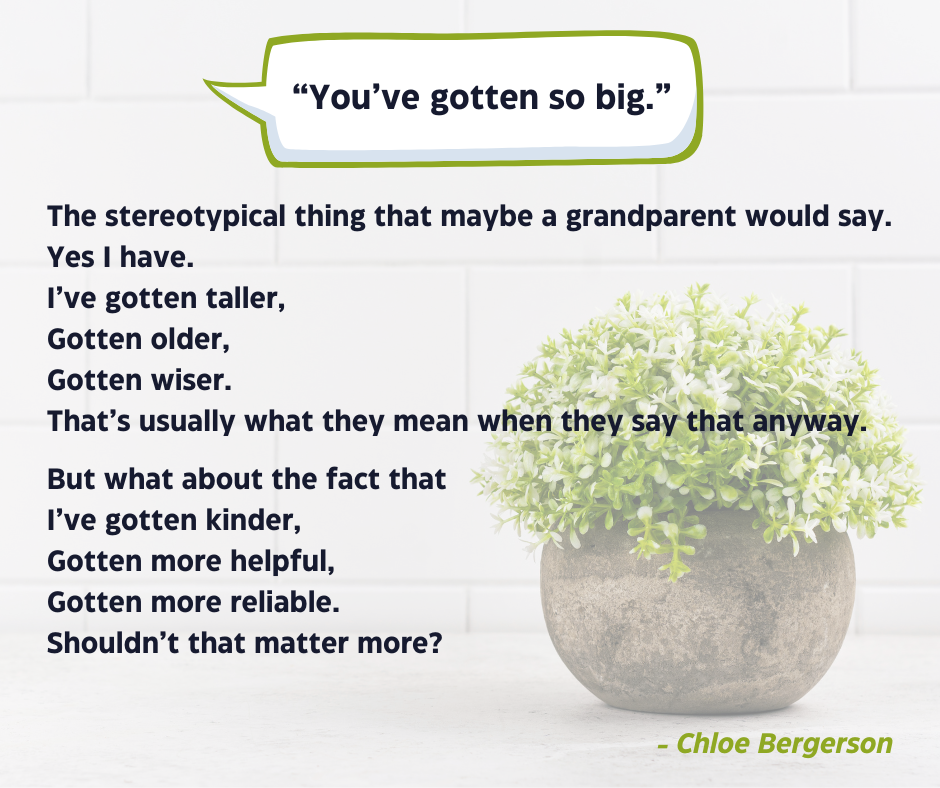
Stormy interviews Chloe for National Poetry Month

Your mom and I started this blog when you were little, so I thought our readers would get a kick out of hearing about your latest adventures in self-publishing and learning more about the young woman you’ve become.

Falling Behind is available on Amazon

The Closet Chronicles, part II: A wardrobe frustration leads to a jeanius solution

I was amused a few years back when GenZ declared the Millennials to be uncool because they couldn’t move on from their side parts or skinny jeans. Oh, the wailing and gnashing of teeth! 

Fortunately, my generation (early GenX) had already experienced the abject humiliation of being labeled “uncool” by those same Millennials years ago. As someone who is closer to 60 than 40 these days, it’s been a long time since I’ve looked to teenagers for fashion validation.

What I found particularly funny about the declaration banning skinny jeans is that, regardless of which type of denim the fashion police have declared in or out of style in a given year, those of us who have cycled through all the trends understand that the answer to “which jeans look best” is both subjective and constantly changing. 

During most of my corporate career, I worked in an office and dressed a step up from business casual. Skirts and dresses were the norm, so jeans were reserved for Fridays and weekends. Like a lot of remote workers, I took a hard turn into extreme casual wear during the pandemic, but am now trying to find a balance. In fact, after too many months spent lounging around in yoga pants and the like, I made it one of my New Year’s resolutions to put on real pants each day!

I’m proud to say that I’ve been successful with that one (I adhere to the SMART goal framework, so achievability is key)! … In my world, that means that I’m generally reaching for a pair of jeans.

And now I’m going to make a very controversial statement: There’s a time and a place (and a potentially stylish outfit) to be made from nearly every kind of denim. Not the limited options those GenZ arbiters of “cool” would have you believe.   

Bear with me here… In an effort to sell the Average American Woman way more denim than she actually needs, fashion designers have left no trend—no cut, wash, rise or embellishment—untried over the past several decades. So which pair will look best on you is NOT going to be determined by some Instagram influencer. Rather, the most attractive pair will take into consideration your age, your body, your attitude, the occasion you’re dressing for, and perhaps most important, the rest of your outfit (top, shoes, etc.). 

End of hypothesis.

For example, cool or un-, I will never get rid of all of my skinny jeans. That’s because I have a considerable number of boots, and skinny jeans are the only jeans that will balance out an oversized top and tuck into tall boots. And in January, in Minnesota, a cozy bulky sweater, jeans and boots will never not be in style. 

BUT, that being said, I also have plenty of other denim styles in my rotation: flared jeans, baggy jeans, straight-leg, cropped, wide leg, distressed, embellished, hemmed and unhemmed, and the previously lauded flannel-lined jeans. 

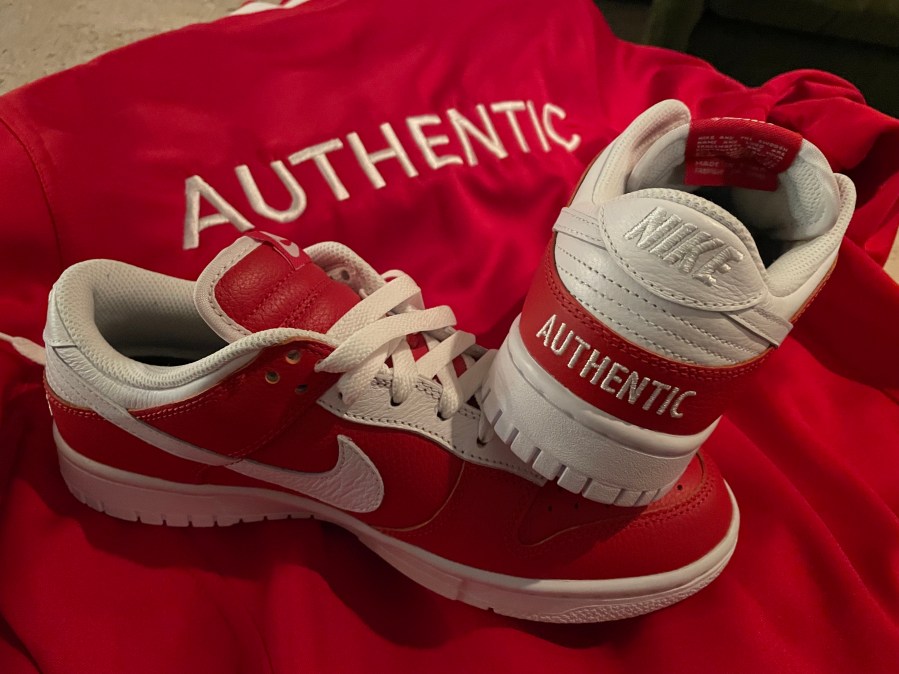
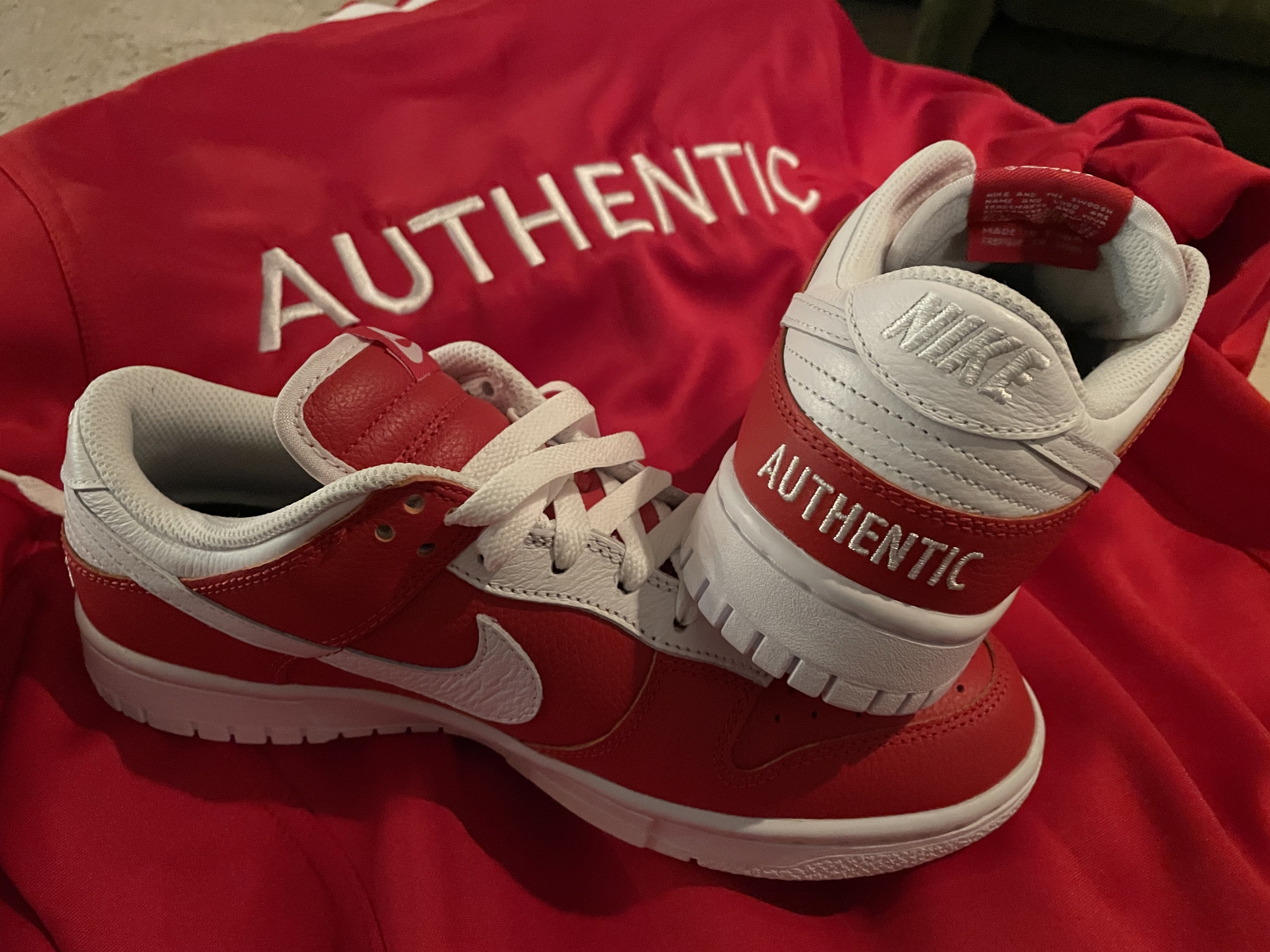
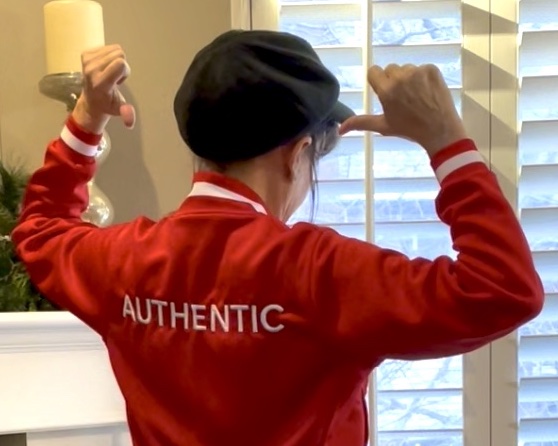
Which pair I’m going to wear is dependent on all of those other factors mentioned above, but ALL are in the rotation and are an authentic part of my wardrobe. 

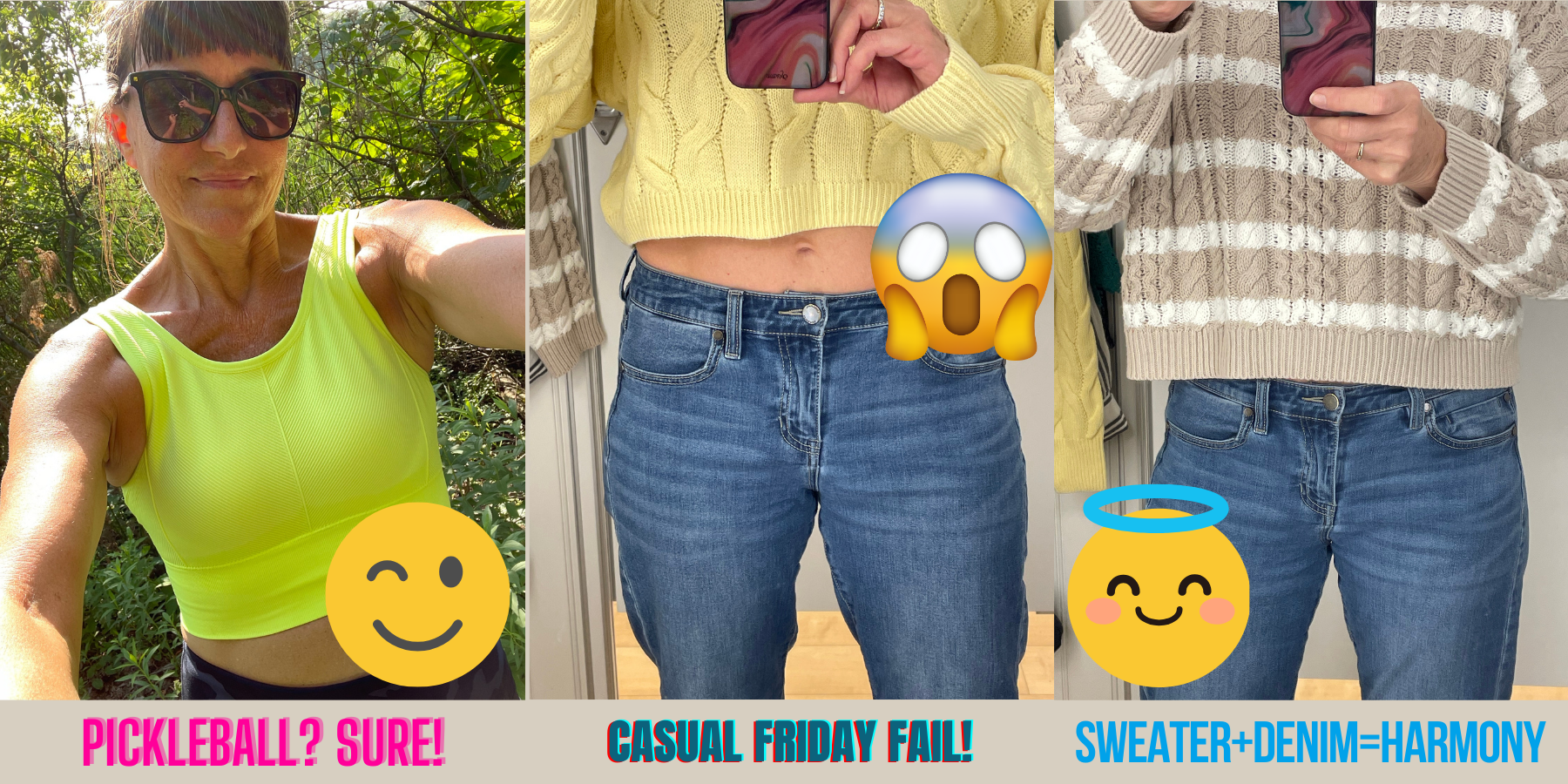
I think I speak for most women who have given birth or are over 35 when I say that we’re pretty much over the cropped-everything trend. Really, enough already! Yes, a cropped top can look nice—when paired with the right bottoms, but most people my age aren’t comfortable flashing their bellybutton outside of the gym or a beach.

Crop tops are definitely one of those styles that are tricky to manage if you’re older than 30 or have given birth—and the last couple of years it’s been nearly impossible to find tops that are both cute and work appropriate. So, if I’m wearing a shirt that is slightly cropped, I will pair it with mid- or high-rise jeans to compensate, keeping my bellybutton covered. Likewise, if I’m wearing a longer, tunic-style top, I want to pair that with minimal bulk around my waist. Yet I couldn’t always tell, by glancing at a pair, which jeans would work. Finding the right bottoms to wear with a specific top frustrated me, because—invariably—I would end up trying on several pairs each time, in search of the right fit. 

But this is where my jeanius idea comes in…

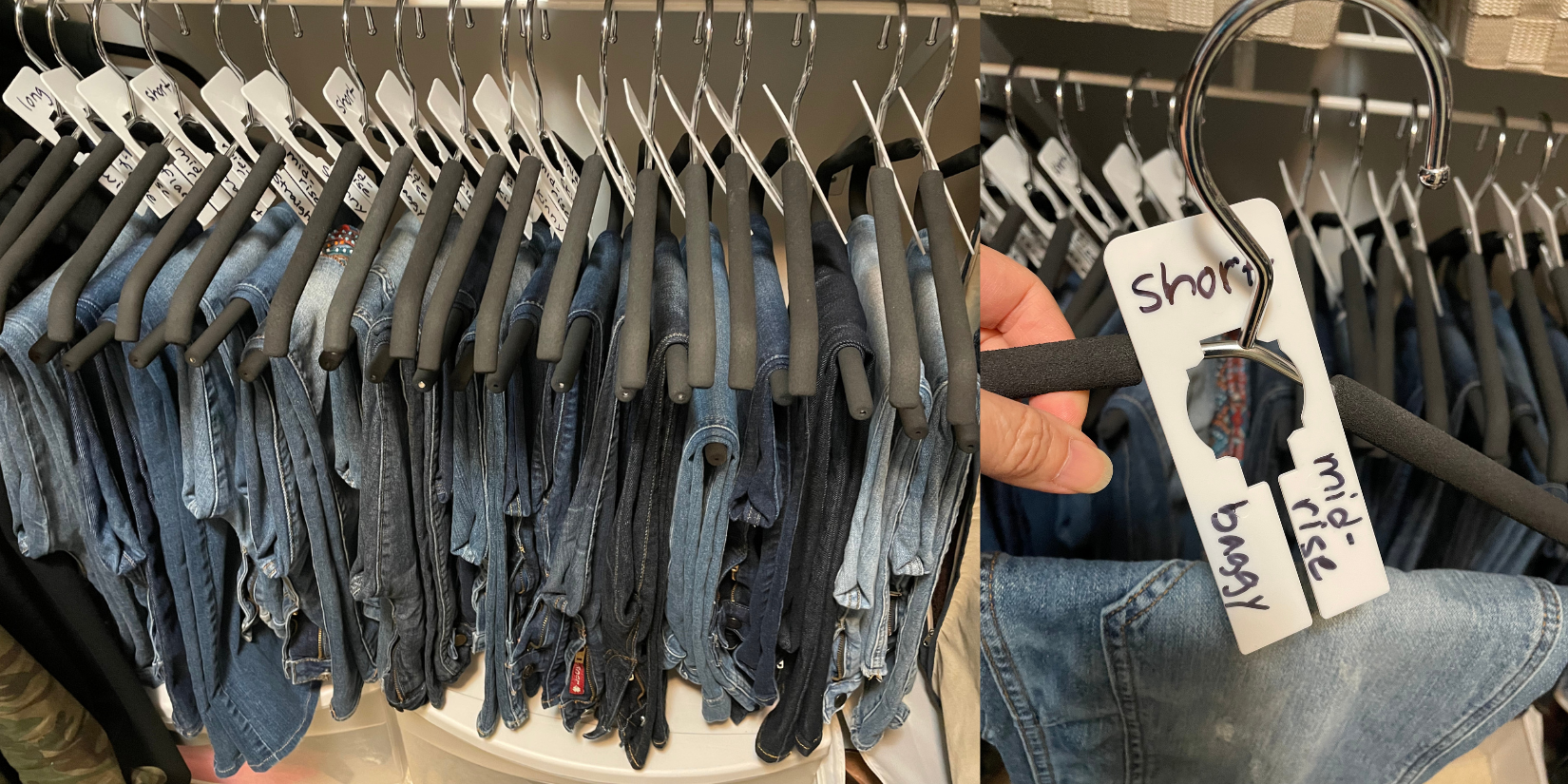
That led me to my *new* labeling system for denim. I bought a pack of plastic size disks ($9.99 for 30 on Amazon) and labeled them by rise, length and style. Voila! I now can grab a pair and know exactly how they will fit, saving me time and irritation. (In retrospect, I could have done this with cardboard tags as well, which would have been a bit more environmentally friendly.)

While doing this may seem over-the-top, it’s already saved me more time than I spent making the labels. And I’m a BIG fan of anything that saves me time and frustration. So, I wanted to share this hack—in case any of you find it helpful (and can thereby validate that I’m actually “authentically clever” vs. just weirdly compulsive.) 🤣

(I ended this blog post with the laughing emoji, because that was declared uncool by GenZ around the same time as the skinny jeans and side parts… That Stormy is such a rebel.) 🤣🤣🤣

Authenticity Comes Out of the Closet

Earlier I posted about how my goal this year was to be Authentic. Well, one aspect of my life that is coming under my personal authenticity scrutiny is my wardrobe. Like many of you, the last few years have been hard on it.

I worked (mostly) in an office, took several business trips a year, took Pilates classes, had an average social life with one or two “fancy” events per year. My closet contents reflected this pretty well, with lots of wool skirts, cashmere sweaters and tights. (Did I mention it gets cold here?) 

Each morning, I woke up asking myself, what day is this? Our three-year Groundhog Day meant 90% of my wardrobe (and jewelry) remained untouched while the following were in heavy rotation (depending on the season):

  • Athleisure
  • Jeans (but only the comfy ones)
  • Shorts
  • T-shirts
  • Tank tops
  • Sundresses/t-shirt dresses

In the winter, I expanded my “outdoor” wardrobe, buying flannel-lined jeans, flannel-lined joggers and multiple hats (after living my whole life as someone who resisted winter hats due to my bangs). Just an aside here: If you live in a cold climate, flannel-lined pants are a game changer. If you like to go walking outside, buy them, you won’t regret it. 

And, as someone whose shoe collection consisted mostly of high heels and boots, I also bought more flats (sneakers and sandals). 

KitKat wearing a blingy brunch outfit

As life has slowly returned to its “new normal,” I recognize that my go-forward lifestyle will probably never align with my pre-pandemic wardrobe. Over the last few years, I’ve offloaded quite a bit to Dress for Success, Goodwill and the local consignment shop, but there are still items in my closet that haven’t seen daylight since before the pandemic. Since I never quite know what lies ahead, I’m reluctant to give away too much. After all, you never know when KitKat might need to borrow something blingy for a Taylor Swift Drag Brunch! (Despite my low-key everyday appearance, I own a surprising number of sequins.) 

But what should my wardrobe look like? That is, what is my personal authentic style? I could heed the advice of the endless “How to dress over 50” articles that flood my FB feed, but as a content creator myself, I know that the people writing these articles are just aiming for clicks and so I give them no special credence. Most of them highlight do’s and don’ts that one must adhere to in order to “age gracefully.” Screw that. 

If there is any benefit to growing older (and there is) it’s primarily this—not caring so much about others’ opinions. I don’t want to age gracefully; I want to age defiantly—which is another way of saying I want to be authentic, I guess.

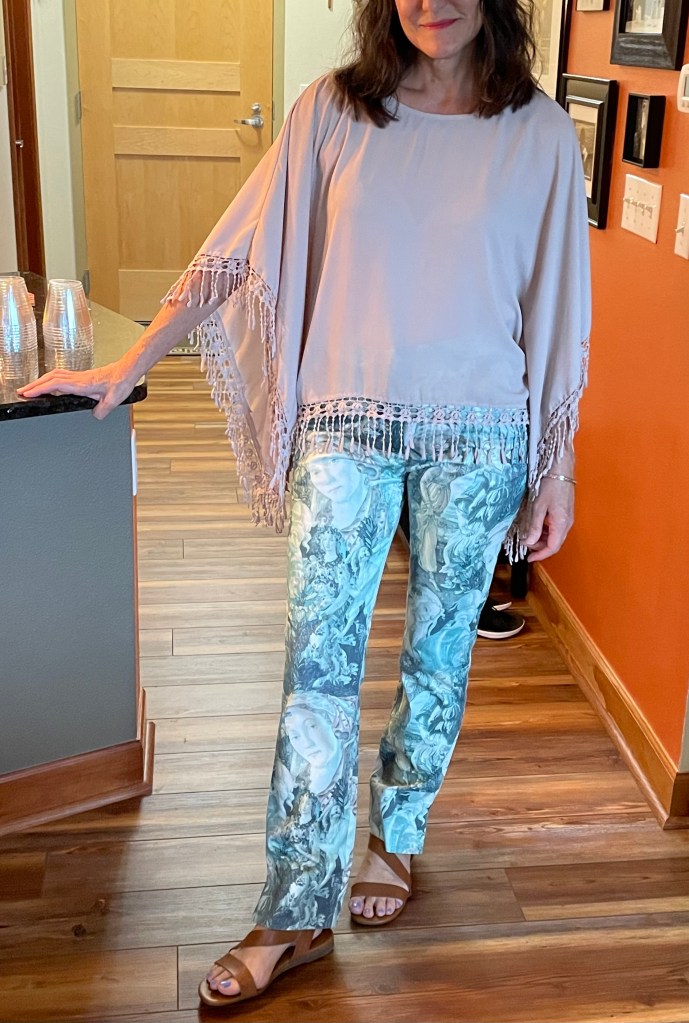
When you hold onto these weird pants for years and voila you're invited to an art opening.

When you hold onto these weird pants for years, thinking “Will I ever wear these again?”

And voilà, an art show opening appears on your calendar.

Authenticity means that I have my own opinions about what I think looks good on me, and if it doesn’t meet the style standards of the fashion influencers, I don’t really care (that’s where the defiant part comes in). Case in point: Look at the red carpet photos for any Met Gala and you will always find plenty of celebrities wearing ridiculous outfits that were carefully curated and assembled by a team of stylists. But those who convey true style are invariably those who look most comfortable in their skin. So that’s what I’m trying to achieve… 

When my kids were growing up and immersed in the middle school culture of cliques—cool kids and wannabes, I explained that as you get older you realize that the coolest people are the ones who are too busy doing cool things to worry about whether they look or act cool. I have a weirdly shaped body—no really, I do!—that I have come to accept, but also must accommodate. For example, I have broad shoulders and a large ribcage, but small breasts (which rules out most button-down shirts or any top or blazer that is very fitted). I also have unusually wide feet, which means I will never buy ballet flats or penny loafers, even if I think they look cute on other people.

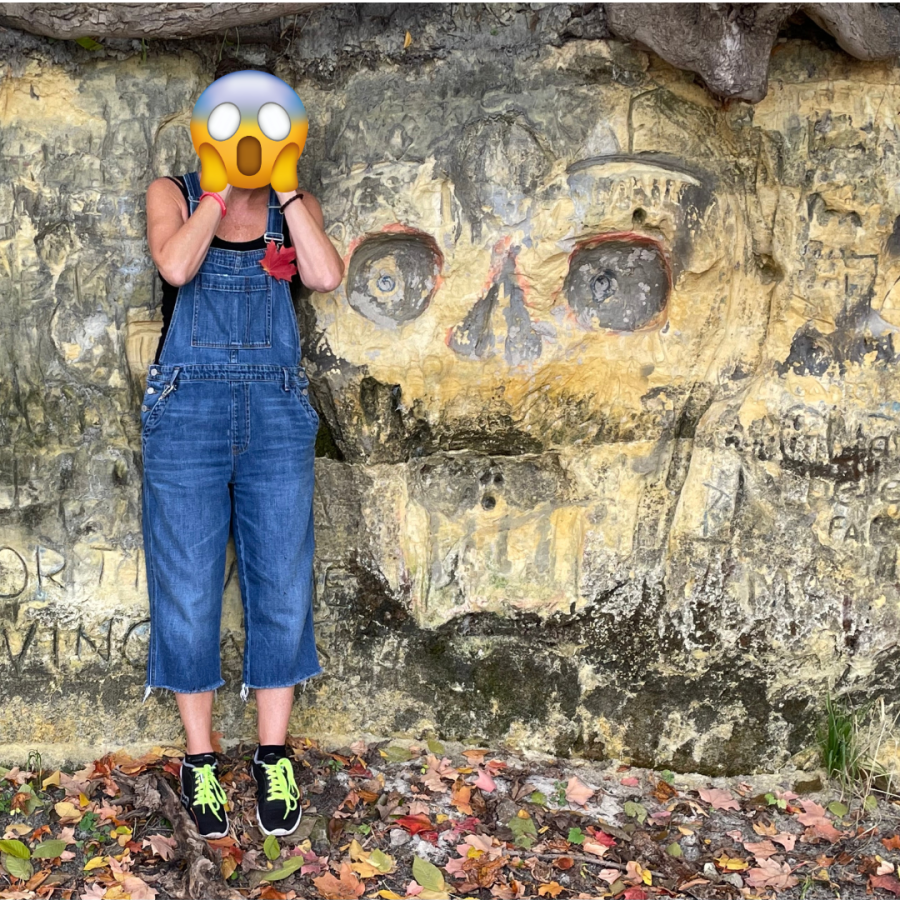
When I turned 40, I was more concerned with dressing appropriately for my age, but at this stage of my life, I pretty much know what works and what doesn’t (that’s the graceful part—I’m not going to fight Mother Nature). However, I will probably continue to wear overalls, camo prints, bikinis and cargo pants regardless of what’s in vogue or recommended for “women of a certain age.” So, I guess “gracefully defiant” is Stormy’s authentic style.

This year will be… Authentic!

I’ve mentioned before that I’m a bit of a New Year’s junkie. Looking back through the archives, you’ll find a post dedicated to the topic of renewal nearly every January (and a few others sprinkled in here and there at other times of the year). While I tend to take an “agile” approach to personal development, with new Stormy upgrades being released every couple of weeks, I really love the idea of a completely clean slate and dream about what I’d like to achieve in the coming year. 

Oftentimes, I approach the new year with an idea or mantra in mind. This year, my goals are centered around a word, and like Merriam-Webster recently chose as its Word of the Year for 2023, I am choosing “Authentic” as my word for 2024. 

Merriam-Webster’s choice seems to be in recognition of people’s increasing desire for authentic human connections in a year when AI became omnipresent. I think they are on track with that one. When you start reading AI-generated content, it doesn’t take long to realize that there isn’t a real person behind it. An “AI Assistant” has even been added as a feature to WordPress (the software I use for creating this blog), but let me assure you, since writing is therapy for me, I’ll never outsource this blog to AI… Meanwhile, indulge me by going waaaaay back for a moment, as I explain…

Why I chose authentic

Young Stormy started working at Blue Cross & Blue Shield at the tender age of 18. It felt like I was on an alien planet. To meet the dress code, I wore a skirt, blouse and heels with nylons(!) every day. I routinely interacted with people who had mortgages, kids and high cholesterol. My job duties included a variety of mind-numbing clerical tasks—making photocopies of huge stacks of insurance applications, for example; ultimately culminating in my last position: finding out why people needed health insurance so we could deny them coverage for that very thing. Ha! … Well, admittedly, that may be a cynical explanation of my role as an assistant health history underwriter, but not by much. Needless to say, I hated my job. 

While working there, I signed up for various professional development seminars that were offered on our corporate campus (they were free and considered a legitimate way to get out of doing the job that I hated, so…) One of these was for women to learn how to talk so they would be taken seriously in business. I remember the instructor specifically addressing that annoying thing some women do? Where their voices go up at the end of every statement? Making everything they say sound like a question? As though they are apologizing for having a thought and expressing it? 

Thankfully, I don’t think nearly as many women speak like that these days—I guess there has been progress made against the patriarchy since the 80s after all. But if you’re my age or older, you’ve experienced that speech pattern before. Anyway, the point I’m trying to make by reminiscing about my early working days is this: A young working woman in the mid-80s was not expected, nor encouraged, to be “authentic.” Far from it. We were encouraged, nay expected, to “fit in.”

  • “Fake it ’til you make it”
  • “Dress for the job you want, not the job you have”
  • “Play the game”
  • “Keep up appearances”
  • “Never let them see you sweat”

With standards like these, it’s no wonder “imposter syndrome” became a thing.

A shift in the corporate perspective

Nowadays, there’s more of a focus on authenticity in the workplace. Diversity, equity and inclusion (DEI) initiatives have led to greater awareness of the many adaptations (code-switchingpassing and assimilation) that my generation took as non-negotiable. Obviously, Stormy trying to fit into a corporate setting as an 18-year-old, American-born, cis-gender, white, middle-class woman didn’t require as many mental gymnastics as some of my colleagues. Over the years, I’ve had coworkers who were gay and closeted, experiencing gender dysphoria, or hiding physical or mental health conditions from their employer, and I wouldn’t wish that kind of daily mental strain on my worst enemy. And I think most people would agree that greater acceptance of diversity is a good thing—but we still have a ways to go. 

However, while I still have a non-conformist streak in me that 30 years of corporate indoctrination has been unable to squelch completely, I also don’t think every personal expression or preference requires “accommodations.” I draw a distinction between forcing someone with naturally tightly coiled hair to chemically straighten it and expecting someone to not curse excessively in the workplace. (And before my past colleagues chime in to bust me, yes, I’ve been known to curse in the workplace… However, while this may be an authentic trait, it’s not one I’m particularly proud of, so if an employer called me out on it, I would have to agree that it was reasonable for them to expect better language.) Likewise, I hate making small talk with strangers, but it’s an unspoken expectation when talking to clients, so I learned to suck it up and chit chat as required. I guess what I’m saying here is the good side of “fake it ’til you make it” is leaning into things that don’t necessarily come naturally and developing new skills and resiliency as a result… at its best, learning to embrace discomfort promotes personal growth. 

So back to my story…

At some point in my 40s, I finally had enough confidence in my own professional competence to relax and let my authentic self show through a bit more. At that point, I knew stuff. I was good at my job. I had made up for my initial educational deficiency with a bachelor’s degree, an MBA and an assortment of certifications. I had managed work teams and million-dollar budgets. I could finally “own” my authenticity, right? 

Well, for a decade, I did just that. However, the last several years, I found myself facing a new problem—one that was the opposite of the issue I faced in my youth. As a job-seeker in my 50s, I was now in the uncomfortable position of trying to downplay my experience (so as to indirectly downplay my age). This was causing a bit of cognitive dissonance: On the one hand, I was ready to fully “own” my history, and on the other, I was painfully aware that age discrimination is real. And hiring within my chosen field (Marketing) is even more youth oriented

Keeping my resume to two pages was difficult. While some experience was obviously obsolete (press check, anyone?), whole jobs—even one where I was the department head by the time I left the company—were omitted due to them being too long ago. In casual networking conversations, I dreaded the question “How old are your kids?” Peers with teenagers would look baffled when I confessed that two of my three kids were in their 30s. Starting my family early means that I now have more time and energy to devote to work and, when it comes to technology, my skills are light years ahead of my “digital native” children. Nonetheless, I couldn’t find roles comparable in pay or responsibility to those I previously held. Despite feeling 33 inside, during interviews with younger executives, I felt like a relic. And an expensive one at that. Like Adam & Eve’s pizza cutters… queue the Antiques Roadshow!

That’s why I was happy to find a new job situation last year with a professional services firm. Suddenly, my years of experience were regarded as an asset again, not a liability. I no longer felt as though I would be penalized for being authentic. I could breathe again. 

Who is Stormy?

So, as I look to the year ahead, I can finally figure out who I authentically am—and who I authentically want to be—without worrying about anyone else’s impressions, expectations or judgement. And, given my fondness for New Year’s resolutions, a bunch of ambitious goals have emerged from those two questions, “Who are you? And who do you want to be?” (For example, someone who is healthy, active, spiritually grounded, creative, etc., etc., etc.) So, while I’m not trying to boil the ocean and don’t plan to achieve my personal version of nirvana all at once, 2024 will be about moving closer to my ideal self. And my blog posts will probably reflect this larger theme, as well. But I promise you that I’ll share my adventures, observations, and defeats in addition to my successes 🤞🏻, in the spirit of keeping it all “authentic.”

Postscript: It’s not lost on me that I’m writing about authenticity on a blog that was created under a pseudonym! But in Stormy’s case, authenticity comes with some inconsistency—that’s what makes life interesting, after all! (All things in moderation…even moderation.) 😉

Endings. Beginnings. And the time in-between.

A lot has happened since the last time you’ve heard from me, but if I’m honest, most of the transformation has taken place inside my own head. Don’t get me wrong, there have been real changes as well. Most notably, the loss of my 96-year-old mother this fall. As you may recall, we had a somewhat stormy relationship the past 15 years or so (maybe that’s why I subconsciously chose that nom de plume?) so there were a lot of emotions tied to her death. 

Two years ago, I wrote a New Year’s blog about her and how our relationship was continuing to evolve with her dementia. Since then, I’ve been able to see things from my mom’s perspective and understand just how difficult the last decade was for her. My mom essentially gave us “two week’s notice” before her death, so we had time to gather around her and say goodbye. I’m happy to report that her last words to me were, “You’re wonderful,” and I’m grateful that the enduring memories I now have of my mom are ones of love and gratitude. 

So, what is the transformation that has taken place? Well, it’s closely related to my mom’s death. You see, I’ve carried the stress of my mom’s dementia for several years (and my dad’s dementia for several years before that). And I’m not the caregiver type (just ask Oskar or my kids). During the busy parenting years, I often thought about the future with anticipation. I fantasized about what it would be like when the kids left home, and I was retired. Just imagine! All that time to do whatever I want! In reality, when my little chickies finally flew the nest, I struggled with it—but work and worrying about my parents quickly filled the void. In fact, caregiving for my parents has taken up a good portion of my mindshare for more than a decade. Until this October, that is.

AKA: The Month from Hell. October was a blur of professional and family obligations (with some work commitments serving as a welcome distraction from my mom’s decline), as well as some family conflict, but once the dust settled after my mother’s funeral, I found myself bereft (that’s one of those words that doesn’t show up very frequently in daily conversation, but is nonetheless appropriate):

When November arrived, I wasn’t on a client engagement and my mom was gone. There was nowhere I had to be and nothing I had to do. I felt utterly purposeless. 

Ever since I left corporate life in 2019, I feel like I’ve been in transition. I’ve been consulting and signed on with a company of like-minded marketers in May. I consider myself lucky to have found a professional “home,” but the very nature of Fractional CMO consulting means there will continue to be gaps in my employment. I discovered with my mom’s death that too much time (to contemplate my past and my future) is not a good thing for Stormy. 

When you’re a deadline-driven, admittedly high-strung, self-diagnosed ADHD individual and have spent decades putting your dreams on the back burner, there comes a time when… you… just… forget… what they are. After all, I’d been a caregiver—first to my children and then to my parents—for more than 30 years. I earned two degrees while working and raising kids… Multi-tasking was my middle name! But it turns out that when so many of the external responsibilities that defined me fell away—Daughter, Student, Mom, Boss, Employee—all I was left with is a very uncomfortable vacuum. And Stormy, like nature, abhors a vacuum, so Stormy, unlike Nature, fills it with anxiety and existential dread. 

This led me to do some Serious Thinking, a process to which I devoted several weeks. The first realization I had was that my mom’s death significantly changed things. Suddenly, I had both the additional time and mental bandwidth for tackling something new. Second, I realized that I needed to find a way to fill my days with purposeful activity (in addition to PT consulting) if I wanted to be happy. While taking care of my mom had been extremely stressful, it was also rewarding, because I knew I was doing something necessary and worthwhile. Now, I was presented with an opportunity to do something purposeful that was also enjoyable—I just had to discover what that is. Third, I realized that life is short. I know people say that all the time, but there are specific moments where one really internalizes that understanding and this was one of those times. After consulting with our financial advisor, I concluded that my life circumstances would never be more conducive to me “doing my own thing” than they are right now. 

This article is actually just a stripped-down description of the many changes I’ve undergone this year. It’s been a big mental shift for me and feels like a new phase of my life, so I can’t tell you exactly what my future will look like. But if nothing else, it means you’ll probably see more blogging from me in 2024 (for me, writing = therapy). I have high hopes for the new year, and you know I can’t resist sharing my resolutions (accountability is everything), so plan to see more updates soon.