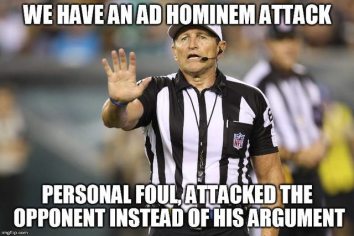
The proliferation of people calling out entitled middle-class white women—“Ok, Karen!”—has reached epic proportions lately. Granted, we’re all a little short on patience these days…what with the Coronavirus pandemic still raging across much of America, civil unrest that some days seems to be bordering on civil war, and a so-called “president” who denies the former and foments the latter. Really, it’s no wonder people are short-tempered. Yet, a lot of this tension seems to be being taken out on middle-aged white women named Karen.
Important Note: I’m not taking issue with calling out women who take their privilege for granted and use it to make life miserable for others. I’m taking offense with hijacking the name itself and turning it into a derogatory term.
The name “Karen” peaked in popularity in 1965 (the year I was born). As a result, I know a fair number of Karens and, truly, none of the ones I know embody the Let-me-speak-to-your-manager, anti-vaxxer/essential oil, racist soccer mom stereotype. So, when the trend toward labeling these women as “Karen” emerged, I would cringe a little each time I heard it—feeling bad for my friends that shoulder the burden of that moniker while thanking God for my own boring name.
What if we suddenly started calling every racist, “Amanda”? Or every homophobe, “Mackenzie”?
What’s surprising to me is that the negative branding of Karen has largely been at the hands of Millennials and Gen Z. These are the same generations who are quick to defend the underdog in nearly every situation. They’re generally more conscientious about political correctness than previous generations—using the right pronouns, including trigger warnings in their social media posts, and reminding others to not use the “r-word,” “gypsy,” or other violations of courtesy. Yet, the same people who would swoop down in an instant to defend a victim of body-shaming will think nothing of implicating thousands of innocent women whose mothers happened to choose a popular name.
As I mentioned earlier, I have no problems with calling out bad behavior or putting an entitled harpy in her place. If people referenced an odious fictional character in these situations (like using “Scrooge” to describe a cranky old miser), I’d be fine with it. Even the “Okay, Boomer” thing is different, because it’s directed at a whole generation. But to single out one name that so many women share—women who don’t necessarily act in the way that is associated with the name—seems unfair. What if we suddenly started calling every racist, “Amanda” or every homophobe, “Mackenzie”? I think there would (rightfully) be an outcry by the very same people who are so casually branding annoying women as “Karen.”
In the fast-moving world of social media, these kinds of cultural trends come and go rather quickly, so hopefully the whole Karen phenomenon is on its way out. And granted, in a world where black men are being murdered on video, wearing masks has become politicized, and our country’s leader encourages division while committing treason, the hurt feelings of some random women named Karen may not be very important. Those issues are far more serious and more important to solve. Like those Big Important Matters, it helps to put yourself in the other person’s shoes: consider racism from the perspective of a young black man, consider the pandemic from the perspective of an immunocompromised person, consider how your vote could help unite or further divide the country… But unlike those other problems, this one is super easy to fix: The next time you find yourself in a situation where you want to call out some middle-age, entitled white woman who is acting badly, go for it. Just call her by her own given name and leave poor Karen out of it.
EDITOR’S NOTE: After posting this blog, I read a suggestion online that these types of entitled women should be called, “Ivanka.” It’s brilliant. While Ivanka is not a fictional character, a lot of us wish she was—and she embodies entitlement in a way that few others will ever surpass. As far as I’m concerned, Ivanka it is.
When the Coronavirus pandemic hit the US in full-force, KitKat and I—like others around the world—went into “stay-at-home” mode. With additional time on my hands, I figured “There’s a blog post in all this…” However, I couldn’t figure out what to write about. I know that, compared to a lot of other people dealing with this situation, I’m very, very fortunate. Because—in addition to those who are literally dying from this pandemic—there are many others who are living through incredibly stressful scenarios. To name a few:
Going to work each day in healthcare without adequate PPE.
Being stuck in their homes with an abusive partner.
Not being at the hospital bedside of a loved one struggling with COVID-19.
Providing “essential services” at close to minimum wage and putting oneself at risk.
Facing sudden unemployment with no emergency savings.
Trying to work while supervising school for small children in a too-small apartment.
Small business owners struggling to keep their business alive despite being deemed “non-essential.”
Having a compromised immune system and being terrified to go outside or get necessities.
Being homeless with no way to protect oneself from illness.
Living alone and facing incredible loneliness.
Not being able to visit one’s elderly parents for risk of infecting them.
Actually, the last one of these is the only one that applies to me, but that’s a story for later. KitKat is dealing with a couple of these challenges as well, but both of us are relatively lucky as far as these things go. After living in this Brave New World of Global Pandemic for a few weeks, however, a theme has emerged that I’d like to touch on. It’s about resiliency.
You’ve probably seen memes similar to this one:
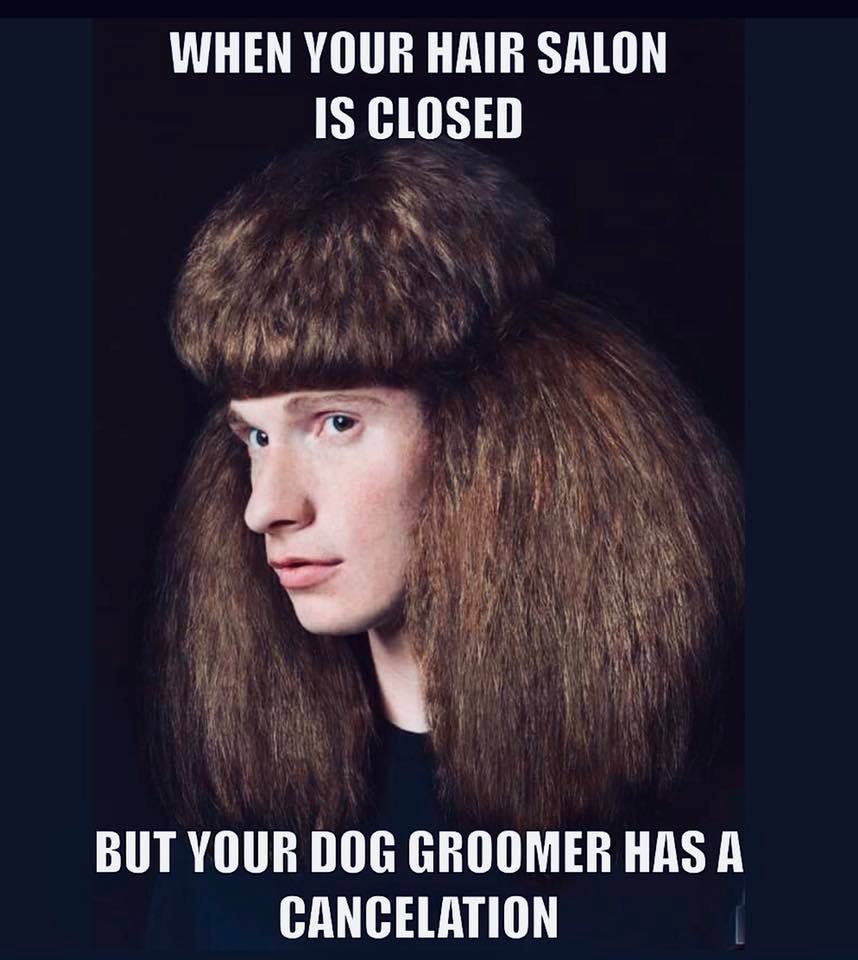
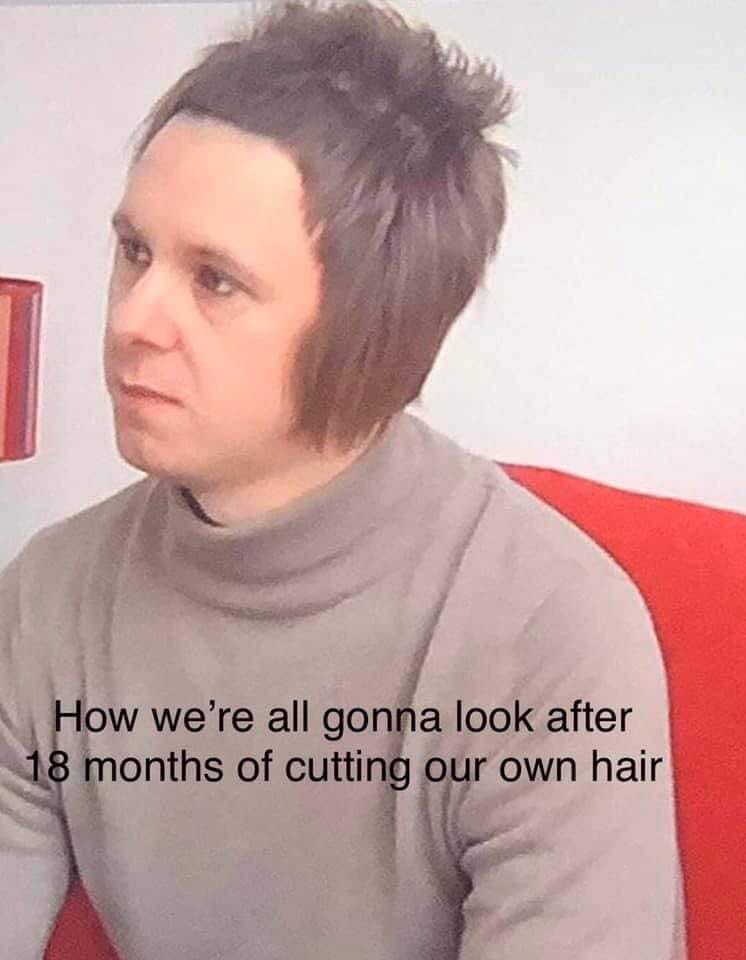
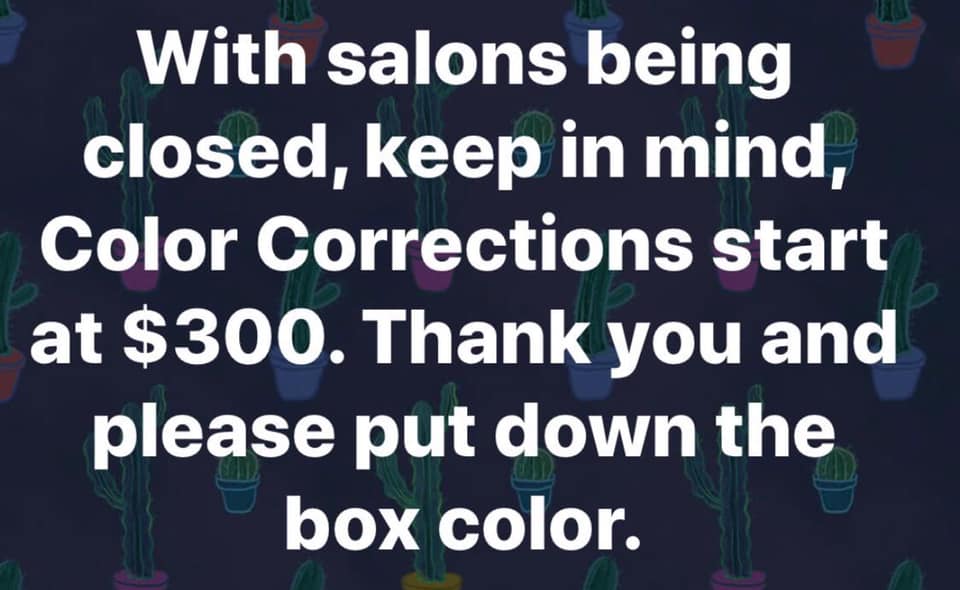
The implication seems to be that today’s youth are a bunch of wussies** compared to previous generations—particularly compared to The Greatest Generation. It’s easy to see where this perception comes from when I think of some of the haircare-related memes and messages floating through my social media feed lately:
I can see the humor in these and have even “shared” a couple. However, the underlying message—Do NOT try to cut or color your hair yourself!—annoys me.
While I appreciate the skills of a good hairstylist as much as the next person, we’re not talking about doing brain surgery on yourself here. If you’re adhering to the mandate to stay at home and find you can no longer stand your gray roots, then by all means—use a box dye and color your own hair. The world will not come to an end. In fact, millions of people who can’t afford or aren’t willing to pay for in-salon color do this all the time. You can’t pick them out on the street and, as far as I know, nobody has died from it (but you might want to Google “hot roots” first). Same with cutting your own hair. Plenty of people do it. And if you don’t like the results, hair grows back. Once this pandemic is over, you may decide to continue with the DIY or you might appreciate your hairstylist even more. But either way, you’ll learn that you can survive a temporary salon shutdown—and isn’t that empowering?
I’m not using this example to pick on hairstylists. My point is: You can do whatever you need to do to get through this. Of course, you can! I believe that this generation is no less strong than the ones that came before us. We just haven’t had as many opportunities to exercise our resiliency.
Another example: Technology. I’m one of those people who can’t live without my smartphone. But you know what? I actually could if I had to. Heck, I lived successfully for 30 years without one. I know it can be done. And, while it’s certainly a nice-to-have when quarantined, it’s also possible to live without cable TV or online streaming. One of my favorite stories involves Lucky telling me how her friends in middle school pitied her because our family was ‘too poor to have cable.’ I informed her that we could easily afford cable (we had just taken the whole family on a not-inexpensive trip to China and Japan) but chose not to have it. Her mind was blown.
Another example: Cooking. Restaurants are closed and while many people are ordering takeout/delivery to support those establishments, there are others who are fretting because they don’t know how to cook. Here’s a thought: Rather than doom yourself to Kraft mac-and-cheese and frozen dinners, try cooking. It’s really not that hard and it actually gets easier with practice. Many of you have the time, so what better way to use it than developing a skill that will serve you well for the rest of your life? Again, it’s not likely to kill you. Even a bad meal can usually be eaten—and you learn better from the mistakes than the successes. Julia Childs herself advised, “Learn how to cook. Try new recipes, learn from your mistakes, be fearless, and above all, have fun.”
Give it a shot! There’s no better feeling than know you have the ability to indulge your every culinary whim. In fact, tackling something that you find daunting is a sure-fire way to build resiliency and gain confidence in your ability to withstand challenges. And couldn’t we all use that kind of mental boost right now?
I referenced The Greatest Generation earlier. My parents were both of the GG and I have the utmost respect for the sacrifices they made. However, I don’t believe that they had some special strength imbued in them that skipped subsequent generations. I think their bravery and resilience were just qualities that they honed through use. They had to regularly flex their resiliency muscles to survive the tough times they lived through.
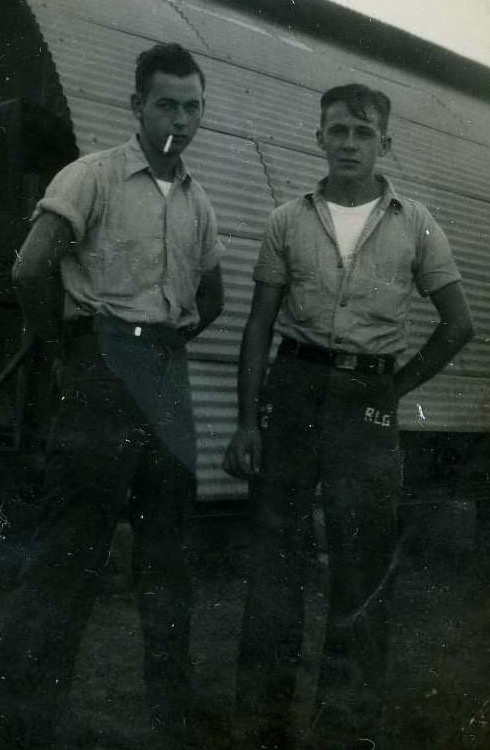
As I mentioned earlier, the last item in the earlier list of hardships applies to me. On March 7th we moved my elderly mother into Memory Care and the following week, her senior living community—like others around the country—banned visitors. During the window between move-out and visitor-ban, my sister and I were cleaning out Mom’s apartment when I came across some items of great sentimental value—my dad’s letters to his parents and my mother during World War II, when he was a 17/18/19-year-old serving his country. It was fun to read his letters and hear my dad’s voice in them. (My dad had suffered dementia for many years before he passed away in 2017, so this was a new glimpse into the man whose loss I had long since grieved.)
Stormy’s dad (at right) with a friend on Guam
When one thinks of a war-time letter, it’s easy to romanticize the dedication to the cause, the call-to-duty, the patriotism, etc., “Dearest Mother, tomorrow I face my greatest challenge. Defending my country against the evil threatening our very democracy. I pray that God guides my feet and instills bravery in my heart as I meet the deadly foe…” or some such noble prattle. That’s not what these letters contained. Here’s an actual excerpt from my dad writing to his step-dad about serving on Guam (where he guarded Japanese prisoners as well as “important provisions”—like beer and cigarettes):
“There was one other question you asked and that was what I did in my spare time. When I’m not on watch, I’m either sleeping, eating, laying down or sitting down. I’ve given up all forms of exercise except walking and that’s essential. When I first got here, I used to throw the ball around a little, but this climate wasn’t made for that, so I gave it up. It’s really too hot around here to do too much of anything. Don’t misunderstand me ’cause it’s not that I’ve grown lazy, just too much heat.”
My dad’s other letters likewise contained evidence of boredom. He wrote about the tedium of Navy life, exchanged comments about topics pertaining to friends and family back home, and begged for more mail to break up the dull routine. In one letter that made me smile, he asked his mom to find him a lighter because his stopped working (like many of his peers, my dad smoked cigarettes when he was young but fortunately had quit by the time I came along).
Again, I’m not minimizing my dad’s service or anyone of his generation. Harold, my mother-in-law’s partner, was a ball-turret gunner during WWII. He flew 35 combat missions over Germany, so to call him brave would be a serious understatement. Yet, I suspect his letters back home were probably as unassuming as my father’s, simply because that’s the kind of man Harold was. Heroic, yes, but modest and humble. He just did what was required of him at the time. And when it was no longer required of him, he happily went back to farming.
Both my father and Harold had hard childhoods. Both lost their own dads when they were young children. Both grew up in poverty. No doubt, these earlier life challenges helped build within them the resiliency that later served them well in dealing with the challenges of WWII.
And our time is now. We’re all being called upon to help defeat a common threat and to succeed, all of us need to do what is required. There is heroism in that, too, even if all we’re required to do is stay away from each other. By helping each other get through this crisis, we are building our own resiliency. And let’s not overlook the true heroes among us. The healthcare worker in New York City who shows up each day despite not having adequate PPE is no less heroic than Harold flying those combat missions over Germany. These brave, selfless people are serving others despite a very real threat to their health. We all owe them a debt of gratitude, and we certainly owe them the respect of adhering to social-distancing guidelines so we don’t overwhelm (or further overwhelm) our local healthcare systems.
This pandemic got me thinking of my favorite passage from the children’s classic, “A Little Princess,” by Frances Hodgson Burnett. The main character, Sara Crewe, contemplates whether she is actually a decent person or whether it just appears that way because she’s lived a charmed life and has never had her character tested:
“Things happen to people by accident. A lot of nice accidents have happened to me. It just happened that I always liked lessons and books and could remember things when I learned them. It just happened that I was born with a father who was beautiful and nice and clever and could give me everything I liked. Perhaps I have not really a good temper at all, but if you have everything you want and everyone is kind to you, how can you help but be good-tempered? I don’t know how shall I ever find out whether I am really a nice child or a horrid one. Perhaps I’m a hideous child, and no one will ever know, just because I never have any trials.”
If you’ve read the book, you know that after Sara says this her life becomes rather wretched—testing her in ways she never could have expected. Yet she perseveres in dealing with her new challenges without becoming “horrid” or “hideous.” She discovered—like many of us are learning now—that the only way to build resiliency is by practicing it.
A couple of months ago, I posted a blog about what I thought the Democrats needed to do to defeat Trump. That post was based on my career in marketing and proposed how certain marketing best practices could be employed by the DNC to strengthen their overall campaign against Trump. While writing the post, I knew it was lacking a specific course of action. However, I was interested in gaining feedback from others to further my thinking on the topic. To that end, I pushed the blog out via several channels—LinkedIn, Facebook, Twitter—and as of this writing, it’s had over 500 views. (I think this is a solid number, considering it was posted to a brand-new blog I had created—one with no existing followers, SEO or paid marketing behind it.)
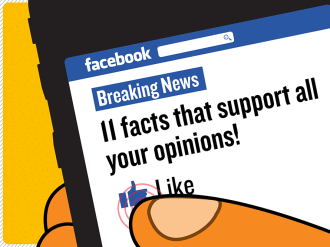
Given our contentious political climate, I expected lots of push-back from my post, but I didn’t get any comments from Trump supporters. This was disappointing, since I was interested in understanding their perspective. My social following tends to include many like-minded people (what Republicans would call the DNC Echo Chamber), so it’s not surprising that I did hear from numerous liberals. They nearly all agreed with my overall assessment of the situation and expressed a similar feeling of helplessness about how to reason with people who were supporting 45 in light of so much damning evidence against him.
An outsider’s inside view
However, the most interesting exchange I had on the topic was with a good friend of mine who is a 40-something white, male executive. This demographic is much maligned among liberals, but I think it’s an important group to understand because they still hold the most power in this country. I was particularly interested in my friend’s view because 1) He was born/raised outside the US where he experienced being a racial/religious minority firsthand, 2) he’s been in the US for long enough to be very informed about both politics and business and 3) he’s not a citizen, so therefore didn’t vote in the 2016 election. This gives him a uniquely objective viewpoint on what’s happening in our country.
We had a very spirited conversation via text. At one point in our conversation, I texted, “…I have no respect for Trump supporters for backing someone who is 1) so stupid and 2) destroying our democracy by ignoring the Constitution and colluding with foreign powers.”
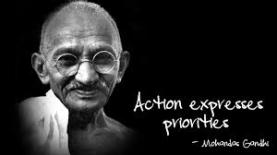
His response to that really made me think. And truthfully, after reflecting on it overnight, it caused me to reframe the problem I identified in my earlier blog. He responded (paraphrased a bit for clarity), “The difference between you and them is that they also value not having a stupid president. They also value no collusion with foreign governments, they also value the Constitution, but they value all of those things secondary to the other values, like ensuring a conservative court, etc.” His opinion was that I likely had more in common with Trump supporters than I’d like to admit. But because they placed a higher value on certain issues, and then voted based on those priorities, we now found ourselves on opposite sides of a growing chasm.
It seems elementary in hindsight, but this discussion around priorities was really a revelation to me. My friend’s view, that perhaps Trump voters didn’t endorse his full agenda but just one or two key issues that drove their voting, gave me a glimmer of hope that our country may not be as divided as I had previously thought. After all, we all prioritize in that way. In a world with too many problems to solve, we all pick and choose which battles we want to fight. It just seems that when it comes to Republicans and Democrats, we view each other’s choices very differently.
The varying levels of commitment to a cause
Let’s begin by acknowledging that there are multiple ways to support any cause and that each requires a different level of commitment. For example:
Vocalizing your support or opposition of an issue in conversations with peers
Voting for policies that support certain causes
Donating money toward supporting a cause
Volunteering time or energy toward supporting a cause
Taking action in their personal life related to the cause
Young Stormy had many bunny friends, both real and imaginary.
Let’s dive into a specific example—animal rights. Personally, I like animals, both
domestic and wild. I’ve had dogs, bunnies, birds and even a hermit crab for pets. I would never personally intentionally harm an animal and I don’t like for other people to harm animals. Yet, I’ll admit that I’m not a vegetarian. I eat meat regularly (as long as it comes from what I consider to be ethical farming practices). At the same time, I’m conflicted about hunting. I don’t personally hunt or like hunting. However, I don’t object to others who hunt (because the deer or duck hunters I know use the meat and it would be hypocritical of me to condemn that when I eat meat myself. However, I am disgusted by trophy hunting, which I classify as strictly killing animals for sport. Yet, while I profess to care about animal welfare, I will readily admit that I don’t regularly donate to animal rights charities because I prioritize other causes ahead of them.
You can see from this example that, although I believe in animal rights, my level of commitment to that cause is all over the place. And while I have friends who are much more dedicated to animal rights than me—they provide foster care for shelter animals and contribute time and money to related charities—I still get along fine with them. That is, they don’t condemn me for my relative lack of support of their cause.
The fact is, it’s human nature to prioritize issues that affect us or our loved ones personally. For example, I have a husband with a disability and a daughter who was adopted and is both gay and Asian. Because these people are precious to me, I tend to prioritize issues around Parkinson’s Disease, adoption, healthcare, minorities, immigrants and LGBTQ people more highly than I do many other equally worthy causes.
I think we all inherently understand that others have to prioritize their beliefs. You could take any issue Democrats collectively care about: immigration, healthcare, climate change, gun control, etc., and you would find the same varying levels of support and prioritization among voters. For example, it makes sense that the face of climate change, Greta Thunberg, is a 16-year-old activist. Her generation will have to live with devastation that won’t as directly impact your average retiree.
Liberals regularly extend slack to each other about which causes they throw their time and money behind, so long as they are all voting blue.
Yet, as a whole, Democrats don’t grant this same dispensation to Trump voters.
I’ll admit, I am 100% guilty of this. From my anti-Trump perspective, I believed that anyone who voted for Trump agreed with everything he stood for. Even though I personally have never agreed with every issue on either party’s platform but nonetheless have voted in every presidential election since I was 18.
How shared values can diverge in the real world
When my friend pointed out that, in all likelihood, Trump supporters were only concerned with one or two specific issues that they were prioritizing above all others (e.g., a strong economy or adding conservative justices to the Supreme Court), a light bulb went off. If Republic voters weren’t necessarily toeing the whole party line, then maybe there was hope?
I remembered a conversation from last spring when a Republican-voting relative of mine was diagnosed with cancer and debating where to go for treatment. His note included a little slam for his more liberal relatives: “Isn’t healthcare choice wonderful? Single payer? WTH?”
I was taken aback by his attitude, because when my husband had been given a devastating medical diagnosis years before, we had the opposite reaction. We, too, were grateful to have good insurance and choices in how to pursue treatment. But it drove home to us how awful it would be to face a similar diagnosis as one of the 27.9 million nonelderly individuals without health insurance.
In other words, my relative and I both shared the belief that “good healthcare is important.” However, he prioritized his desire to keep his affordable employer-provided insurance above the right of everyone else to have even a basic level of insurance coverage (assuming that extending insurance to everyone would result in higher costs or decreased options for him personally). Whereas I considered us fortunate to have good employer-provided insurance for my husband—and viewed that as a privilege that shouldn’t come at the cost of others being uninsured—he considered it critical to his personal survival and worth fighting for.
In voting for Trump, Republicans may believe that “the end justifies the means,” while liberals will argue that these same individuals have “sold their soul to the Devil.” However, once I wrapped my head around the idea that most Trump voters probably don’t support everything he stands for, it changed my view of the challenge facing Democrats.
Branding is what other people think, not what “the brand” thinks
Since this started as a conversation about marketing, I want to explain a fundamental principle of branding. That is, a brand only exists in the minds of the public. It’s the sum of everything a person knows about a company: its products, its services and its messaging about itself. Most companies spend lots of money to carefully craft a brand identity that will be embraced by their customers, but ultimately, the consumer is the one who will determine whether they are successful. If the company aligns to its brand in ways that extend beyond the marketing message, chances are good that the public’s perception of the brand will be close to the company’s intention. But if there is inconsistency, the consumer will put more store in the company’s actions—what they know to be true—than in its marketing message.
And the same applies to both Republicans and Democrats.
For example, while Democrats brand themselves as the compassionate party—the ones who are tolerant and care about others—many Republicans reject that branding because it goes against what they have experienced in their conversations at Thanksgiving Dinner or while scrolling through their Facebook feed. They see widespread condemnation of anyone who voted for Trump and consider the Democrat’s self-branding as the caring, tolerant party to be the height of hypocrisy.
Right or wrong, most Americans believe they are “good people”
Psychologists are aware of something called the “self-enhancement effect” which is people’s tendency to rate themselves “above average” when comparing themselves to others. While we generally cast ourselves in a positive light relative to our peers, above all else we believe that we are more just, more trustworthy, more moral than others. Consider the implications of this: If a Republican’s self-concept is that they are NOT racist, greedy or a white nationalist, how do you suppose they will react to the angry remonstrations of their family and acquaintances? In my experience, they will respond with bitter accusations of their own. The least likely reaction is that the Republican will undergo an immediate self-analysis and conclude, “Gee, you’re right. I AM awful for voting for Trump. I’m going to make amends by voting blue in 2020!”
Yet, most Democrats are just so darn angry about the situation our country is in that we WANT to blame everyone who helped put Trump in office. It makes us feel better in the short-term. However, to succeed in defeating Trump, I’m going to suggest another approach. Don’t engage in political discussions that appear to judge someone else’s priorities (even if you vehemently disagree with them). In other words, we need to resist from bashing Trump supporters. Instead, place all of your focus and attention on those who are being marginalized and help uplift them. Flip the conversation so that you’re appealing to your opponent’s self-concept of being a good person. For example, if there’s a new story that triggers your political ire, don’t launch into a diatribe blaming your brother-in-law and the other idiot voters who elected Trump. It might feel good in the moment, but it will only cause those individuals to further entrench themselves in their position. Rather, bring them into the conversation about how we as Americans can help those who are hurting.
We all prioritize our friends and neighbors—what’s happening in our own communities—above the suffering of others. It’s a human coping mechanism that allows us to function despite the many injustices in the world. But it’s also harder to ignore the plight of others when you begin to know them as fellow human beings. So, use that knowledge to get Republicans to see how Trump’s policies are harming others by personalizing the struggles of those who are negatively affected.
After all, if we’re going to live in a democratic society, we have to trust in the process. That means sometimes Democratic priorities will move forward and other times Republican priorities will prevail. At the same time, we still have a duty to protect the democratic process—so keep the spotlight on Trump’s impeachable offenses and on the victims of his policies. But do it without implicating or condemning those who—in their minds—were just choosing the lesser of two evils when they voted him into office. Even if you believe they deserve that condemnation, it simply won’t move us toward the end game of getting rid of Trump. So, with the new election year just a couple of short weeks away, we need to ask ourselves: Is it more important to get Trump and his minions out of office or is it more important to “punish” family and acquaintances that voted for him?
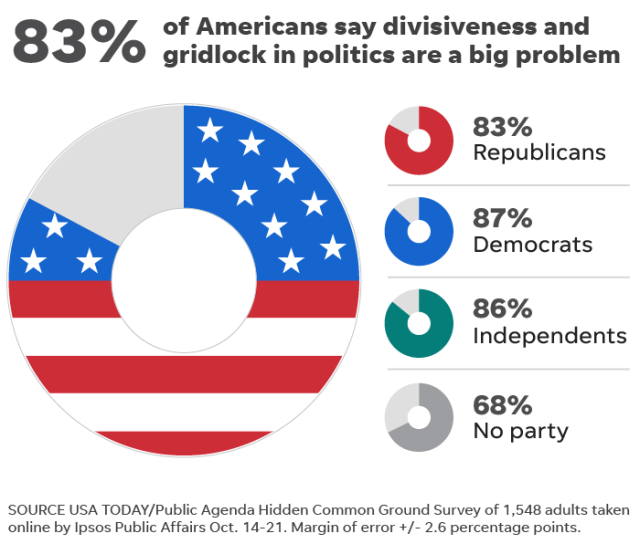
I believe that continuing to direct anger at Trump supporters is likely to make things worse for Democrats, not better. And despite my personal feelings on the issue, that’s a chance I’m no longer willing to take. Many recent polls have found that Americans on both sides of the political spectrum are troubled by how divisive our country has become, so let’s focus on fixing that problem…together. I believe that a new leader—one who doesn’t thrive off the chaos they’ve created—will naturally emerge as a result of all of us choosing to prioritize kindness and unity in 2020.
Postscript:As a strong believer in personal redemption, I wanted to suggest in this message that reframing the current political situation would allow those reading this to put aside their differences and once again reunite with estranged friends and family members this holiday season (visions of “A Christmas Carol” dancing in my head). However, I think the damage to our country— and to our individual relationships—is deeper than that and will take longer to heal. Still, much like Ebenezer’s nephew who invites Scrooge to Christmas dinner year after year, only to hear “Bah Humbug!” in response, I’ll keep trying. After all, eventually Scrooge said yes!
It’s Stormy and I’m baaaaaack. I threatened to resurrect this blog a while back, but when your fandom reaches the very corners of the globe, staging a comeback is not to be taken lightly. I mean, KitKat’s comeback blog was saying goodbye to her father after a long and difficult illness. You can’t get more heartfelt and significant than that. Consequently, if I turn around and post about something inconsequential, like cleaning my fridge or sewing repairs, it could be considered a bit tacky… However, the lack of having something monumental to say could force my silence indefinitely, so I’m going to succumb to the mundane if only to get past this hurdle. Because, above all else, this blog is supposed to be a representative slice of life from the two of us as we schlep through our everyday existence…and sometimes, dear reader, that existence is pretty meh.
However, I do actually have a rather significant life event to share. As you may recall, in early 2017, I left my previous job of 10 years to pursue a new opportunity at a growing company. This was something I had not been planning to do, because as the spouse of someone with Parkinson’s Disease, I thought I needed stability. However, Oskar’s successful brain surgery in 2016 had me rethinking my future, and I thought it would be exciting to take one last stab at leading a marketing function.
My most recent employer hired me at a pivotal time in the company’s growth. The CEO had been systematically fine-tuning the company over a number of years. And once all the product and service issues were addressed, he turned his attention toward sales and marketing—with the ultimate goal of making the company attractive to a potential buyer and selling it. I knew this going in, but it was still a whirlwind experience. I learned a lot and enjoyed what I was doing, but I was stretched far too thin to continue this blog. I also had developed an impressive variety of repetitive stress injuries, including carpal tunnel in both wrists and cubital tunnel in both elbows. Any non-critical typing was not a good idea, so less than a year into the new position, I decided to say goodbye to this blog.
So why am I writing to you now? Because the times, they are a changin’… at least for Stormy. Professionally, the last two-and-a-half years have been a very exciting and gratifying experience for me. Our team not only positioned the company for a successful sale—we were able to command a record price within our industry.
However, after the freedom and autonomy of my latest gig, I knew that I didn’t want to go back to working in a public company for the long term. After a successful transition to the new owners and with the full support of my spouse, I decided it’s time for something new.
The goal of my new schedule is flexibility. I want to spend some “quality time” with Oskar while he was still healthy enough to enjoy it with me. And so far, I’m enjoying the luxury. Think about it: Time is probably one of the most precious assets we have, but most of us don’t have enough time to do the things we want to do, because of our family and job commitments. And all too often we squander the time we do have because we’re too exhausted after working a full day to do much besides veg in front of the TV.
Oskar and my boat… Less work means more time for both!
So, what exactly have I been doing with all of my new-found time?
Systematically catching up with busy friends that I haven’t seen in a while
Spending more time at my cabin (and reconnecting with my neighbors there)
Planning my next few arts and crafts projects
Cooking more
Exercising more
Eating and drinking more (unfortunately—but that’s the topic for another blog)
Spending more time with my elderly mother
Framing up what I want to do for my consulting business
Doing some consulting for my old company (i.e., my first consulting “client”)
In the one-off category:
I cleaned my fridge (including wiping down the shelves!)
I defrosted my freezer
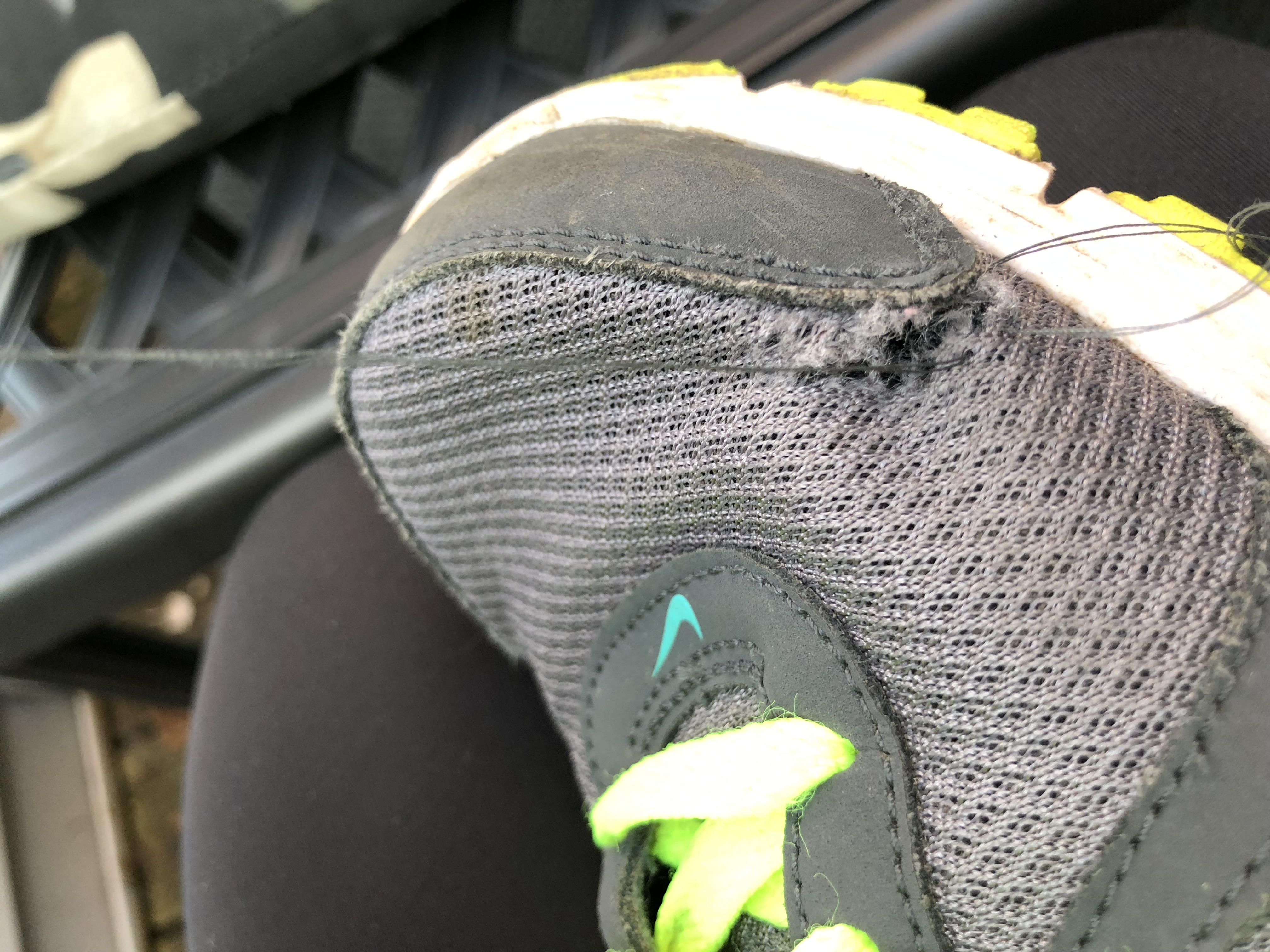
I sewed up a hole in my tennis shoes (normally I wouldn’t get around to something like this and would just wear them until they needed to be tossed. However, my newfound time–and sense of frugality–is making me more mindful of such things)
I made a batch of smoked maple bourbon cherries…and some homemade vanilla ice cream that coupled them with caramel swirls
I’ve donated a lot of my professional wardrobe to Dress For Success
I took a workshop in Encaustic Painting (my soon-to-be new favorite medium)
KitKat and I had a fall sleepover at my urban cabin, which led to us creating a “challenge” for ourselves for the month of October (more on that next month)
All of my shoes wear out in the same spot, due to what Oskar wisely refers to as my “island girl feet” (i.e., fat feet). Hoping that a “stitch in time” saves a new pair of shoes?
It has been an interesting transition—and for the most part, an easy one. I actually feel like I have time to attend to the various parts of my life, and my stress level has dropped dramatically. I definitely feel like I’m starting a new chapter, and I’m excited to see what life has in store for me. Part of me thinks that as the days grow short and cold, I may regret this move and wish I had more on my plate. But I know that anything worthwhile is easier said than done and I’m determined to make this new phase of my life the best one yet.
Sometime last summer while walking with KitKat, I asked a question that had been on both our minds, “Do you think it’s time to kill the blog?” The first year we launched this blog, we posted 47 times. This past year, we barely mustered up three. It’s not for lack of desire or even lack of material. It’s just that… things…change. When KitKat took a new job at a start-up and had little time to write, I picked up the slack. I didn’t mind it, as I enjoy writing and I had the time to do so. Then I started a new job myself, and suddenly I was spending all my free time working. In addition, my elderly parents were requiring more of my time. Suddenly, what had been an escape started to feel like an obligation.
My personal goal with this blog was always growth. I wanted to learn more about the blogosphere and my own discipline of writing. I also wanted to work out some personal issues through my writing. I feel like I did both of those things successfully. In many ways, I feel like I’m a completely different person than I was in 2013 when we launched this thing. And so it’s fulfilled its purpose.
I believe “to everything there is a season” and that we’re entering a new season—older and wiser. I’m adjusting to my new job, but I know it’s going to continue to take a lot of my time in 2018. My beloved father passed away on Christmas Eve and I know that I’ll need to spend more time helping my mom this year as well. So, it’s time to end this chapter, but I have no regrets about either starting this blog or ending it. I’ve learned a lot along the way…about myself and about KitKat. I hope you’ve enjoyed our occasional rants and raves and that you keep in touch. Although we’re killing the blog, we may keep the FB page going for longer. Just to keep in touch. Peace!
I’ve relapsed. It’s Sunday and I’m sitting on my balcony, drinking my morning coffee, lost inside my own thoughts. I’m still in my pajamas at 11 a.m. and it’s exactly what my “condition” calls for.
Most of you have heard of “Seasonal Affective Disorder” (S.A.D.) which Wikipedia defines as “a mood disorder subset in which people who have normal mental health throughout most of the year exhibit depressive symptoms at the same time each year, most commonly in the winter.” Anyone who lives in Minnesota is well-acquainted with this condition and people who live in the South have at least heard of it.
However, there’s a corresponding condition that’s been afflicting me since the days first started growing longer and that’s Seasonal Affective Disorder’s unruly cousin who settles in during the school break—“Summer Anxiety Dysfunction.”
This is brought on by the acute awareness that there are approximately only 15 weekends of potentially beautiful weather in which to pack a year’s worth of summer socializing. People start looking at their calendars in early May to plot potential gatherings: Which weekend should we have the barbecue? Which weekend should we do the pool party? Which weekend do we invite our friends to the cabin? Which weekend do we go boating?
Next, layer in the family commitments: Graduations, weddings, Mother’s Day, Father’s Day—and in my case Lucky’s, Oskar’s and my birthday. Our wedding anniversary (30 years!), my mother turning 90 and ending the summer with my parents’ 70th wedding anniversary.
As if this isn’t complicated enough, there are other events to be considered. Festivals, for example. In Minnesota, there are one or more town/city festivals every weekend, as well as art fairs, beer tastings, outdoor movies/theater/concerts-in-the-park and farmer’s markets.
And if you’ve got kids at home like KitKat, you can add in scheduling around sports tournaments and summer camps.
While these activities are mostly fun and I enjoy them, as an introvert, I reach a point where all the activity is enough to send me to my “quiet place” with a drink in hand.
At this mid-way point in the summer, I’ve already attended the following:
My Sweet Ride… Due to circumstances I can’t quite explain, I’ve only ridden this 3x over the last two summers. 😦
Whew! When you combine my weekend activities with a demanding new “day job” you can see why I’m exhausted…which brings me to my current relapse. Last weekend, we took Lucky up to see Blossom and then headed to my sister’s cabin. The girls came out and spent the day with us and there was much boating, tubing, paddling and sunning… After all that activity, I was spent… I. Was. Spent.
Consequently, while dragging myself through the work week, I couldn’t conjure up one ounce of energy to plan anything for THIS weekend, even though the forecast was for a beautiful couple of days. Yesterday dawned as the nicest Saturday for boating yet, but we didn’t have anyone lined up to go out with us, so Oskar and I just had a lazy outing on our own—we stopped at my brother’s beach and sat in lawn chairs at the edge of the river and soaked in the sun. It was glorious.
Then we came home, had a drink on the balcony and headed out for yet-another dinner on an outdoor patio. Afterward, we came home and watched a movie. It was just what the doctor ordered.
It goes against my Type A nature to occasionally let a summer day drift by in that way, but I don’t want to be so busy planning my summer that I miss enjoying it.
And, in compiling the bulleted lists above, it’s clear that I’m pretty blessed and have a lot of fun things to look forward to—should I choose to do them. But I also know that if I call a time-out to regroup, that’s okay, too. Sometimes a little laziness is good for what ails you.
In my last blog, I mentioned that I had started a new job and referenced a quote my daughter had sent me. In part, it said, “Let go of the idea that you must always be who you have always been.” When I read that again today, it stuck me as interesting, because it’s directly tied to the title of this post.
Incidentally, the latter is the title of a book by Marshall Goldsmith. I suspect it’s a good book, but I will confess that I usually only read the cover fly and first chapter of business books. I can usually distill the key message from that (“Who Moved My Cheese?” = People don’t like change. Boom! Done.) And then I move on to something else.
(Incidentally, several people have made a business out of that very skill. I should have capitalized on that sooner.)
The premise of the book from which I took my title is basically referencing the Peter Principle. The fact that you may have had solid skills that contributed to your success at one level in your career may become irrelevant as you move up the next rung on the ladder. I was explaining this concept to a former employee when I left my last position, and the truth of it has smacked me in the face multiple times since I started in my new role.
She’s come undone She didn’t know what she was headed for And when I found what she was headed for It was too late
It’s too late She’s gone too far She’s lost the sun She’s come undone
Undun – The Guess Who
I’ve been in Marketing for ages, and I’ve led marketing teams and have been the lead marketer in the organization—all at previous companies. But each of those instances evolved over time so I knew solidly what I was doing.
With my new job, I became the lead of an existing (and somewhat dysfunctional) system. Lots of new people in a matrixed organization. I love the company. The people are friendly and competent, but the company itself is in a growth-plus-plus-plus mode in a booming industry, and all of that adds up to a very frenetic pace and high expectations that I am struggling to adjust to.
Let me be clear, here, I have never been a laid-back coworker. You can ask KitKat or any of my former colleagues, I work very hard and intensely with little time for chit-chat around the water cooler. I usually skip lunch or grab a handful of nuts while reviewing something. That’s my natural work mode, and although I’ve sometimes been criticized for not being “social” enough, it’s worked well for me. When I shut down from working, I’m usually able to turn it all off and enjoy the other aspects of my life.
When I started my new role, there was a several month backlog of work to be done and a couple of years’ worth of unmet expectations on top of that. I’ve been challenged to get on top of things and get some functioning processes in place. None of the marketing tasks themselves have challenged me—after nearly 30 years, I should know what I’m doing—but the politics, expectations and lack of resources are much harder to navigate. Consequently, my work days are even more intense (to the point where I haven’t taken a lunch break since I started and am afraid to schedule an overdue doctor’s appointment due to it messing up my work week). And I never shut off. Evenings and weekends, I’m either working or worrying about work. It’s not healthy and I know it’s not sustainable.
KitKat has been a tremendous help in reminding me that I’m still new and will get things under control once I better understand the company and its people. But I still have moments of despair where I worry that I’ve made a terrible mistake. KitKat’s in a similar boat, but with school-age kids that need to be factored in to the picture as well. I admire her ability to carve out little moments for recharging with her friends.
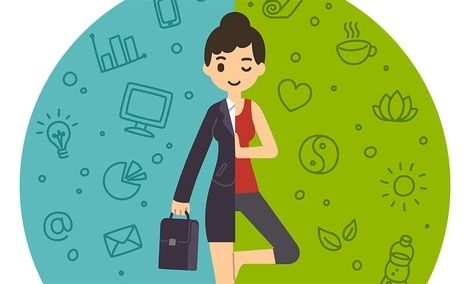
The situation actually reminds me of a post KitKat authored at one point, “Learning to Live in the Maybe”…although that’s not the lesson before me. My lesson is “Learning to Live with the Undone.”
This is not an easy thing for a Type A control freak. Marketing by nature is a discipline where you are never “done”…. Your work is only limited by your imagination and skill and time—not dollars and people. You can always crank out another social media post or write another case study. Even an organization with ZERO budget can do SOME marketing if they have a clever enough staff. That’s why I have always been attracted to it and I’ve always been okay that there was more I could be doing. But that’s different than leaving IMPORTANT things UNDONE. And that’s what I need to embrace now.
In my new role, I need to focus on getting the CRITICAL things done and anything else is gravy. I also need to remind myself that I’m doing the best I can and “happiness matters.”
I had often thought about this comment with respect to President Obama (not our current Commander in Cheeto, who I believe has no real regard for the importance of the office). I always thought that it would be challenging to be the President, with so much at stake and so many issues to work on and to be able to enforce ANY type of work/life balance. I admired the way that Obama was able to be such an effective president without sacrificing his health or family (although, like most presidents, he left office with considerably more gray hair). And I’ll extend this admiration to other past leaders from both parties—men who, I believe, were dedicated to doing what they think was best for our country, even if I may have disagreed with them on individual policy decisions from time to time. It’s a tough gig.
Now, I don’t have the responsibility of the Free World on my shoulders (although I’m sure I could do a better job of it than the Cheeto), but for me and my world, it’s a similar balancing act. Will I rise to the occasion or let it bury me? What got me here won’t get me there—I need a new set of skills. I need to develop them and see what I’m made of. I still have confidence that I can do that, but I need the support of KitKat, my family and others to remind me that if I’m doing my best, that’s pretty damn good—and I deserve to take a day off once in a while.
We’ll see what the future holds—I hope the next time I write you about work I’ll have a better handle on my work/life balance, but I know that’s easier said than done.
When KitKat and I launched this blog four years ago, we decided on a posting cadence of biweekly, thinking that between the two of us, we could manage an update to this blog once a week. We met that goal for the first six months and it’s been downhill ever since.
We’re more than two months into the new year and I have yet to post my annual “New Year’s” post, brimming with optimism and resolve. Never fear, I HAVE made a few resolutions and have actually made a fairly drastic change in one aspect of my life: I’ve started a new job that is consuming my thoughts and free time.
This was a big deal for me. When I started at my last job, after leaving the company that KitKat and I worked at together, I thought I would stay there until I retire. With my husband’s Parkinson’s Disease, I was anticipating the need for a flexible work arrangement at some point as his condition required me to provide more assistance. I thought that by building some job equity with my company that they would be willing to work with me on a flexible arrangement when that time came. However, when Oskar’s surgery transformed our daily lives by giving us back his mobility, I realized that I had other options. Although I liked my coworkers and my job (well, most of them, most of the time), there was limited opportunity for me to advance.
Early this year, I accepted a new job. The company and my role are interesting and I’m enjoying it (although fully aware I’m in the “honeymoon period”). But the best part about making the switch was remembering that it’s never too late to make a change. After interviewing, I felt a bit nervous—everything sounded good about the position, but it meant going from a comfortable situation where I knew what I was doing to something unknown. And that scared me a little. Then I decided if I was a bit scared, that was a sign that I should rise to the challenge and accept the job. And KitKat had bravely made a job change a few months earlier and encouraged me to make the leap. So I did.
The day I started, my daughter Lucky sent me a quote from her aunt’s Facebook wall, it read:
“There is no statute of limitations on starting over. Re-invent yourself every day. Be the girl who walks barefoot and listens to the blues. Tomorrow, wear a trench coat and speak fierce truths. Be a phoenix. Be ashes. Burn down. Resurrect. Let go of the idea that you must always be who you have always been.”
Then she added, “You’re about to rise from the ashes…” 😉
I loved that because I needed the reminder—and I loved that my daughter sees me as someone who can continue to evolve and grow, even at my “advanced age” (wink). I think, ultimately, that’s the theme of this blog: KitKat and I reminding ourselves—and each other—that we can be whomever we choose and strive to be our best, truest version of ourselves, regardless of the other claims on us…by our families, our jobs and society as a whole. And encouraging others to be their best, truest selves.
That’s what I want for my children, and that’s what I want for myself. And even though it’s sometimes “easier said than done,” it’s ultimately worth it.
I’ve been thinking about two of my favorite Christmas movies during this uncertain post-election season. Now, it’s no secret that neither KitKatnor I were rooting for our President-Elect to win. In fact, we were both plunged into a depression that required a fair amount of co-counseling—and wine—to overcome. While neither of us is resigned to a Trump presidency, we realize that we need to find a way to cope during the next four years and this post is my attempt at that.
KitKat and I are both members of the not-so-secret secret group, “Pantsuit Nation,” that’s comprised of Hillary supporters (or at least, non-Trump supporters). And in the days since the election, it’s been interesting to note that a shared conviction that Trumplethinskin is a narcissistic, evil Cheeto doesn’t necessarily mean that those who oppose him are lockstep in all of their viewpoints. There has been a fair amount of finger-pointing, liberal angst, fear and—alongside the shame and blame—also some impressive conviction and positivity.
Which brings me to my two favorite Christmas movies… These are Frank Capra’s masterpiece, “It’s a Wonderful Life,” and the musical “Scrooge,” based on Dickens’ classic, “A Christmas Carol.”
The first time I saw “It’s a Wonderful Life,” I was 21. I was at a party on Christmas Eve and sat riveted to the TV. This was partially due to my introvert nature, but also because of the movie itself—I was entranced by Jimmy Stewart’s performance. I still watch it every year and love the quirkiness of the plot: The bravery and loyalty of young George Bailey. The sauciness of Mary Hatch. The unbelievable engineering of a retractable dance floor in a high school in the 1920s. The integrity of a grown George Bailey who turns down an impressive salary from the film’s villain (but still holds onto the high-quality cigar given to him by the same)… I love George Bailey because to me he represents the millions of decent people who do the right thing day after day with no expectation of reward or fame.
However, I think the most remarkable thing about the film is the fact that—in a very un-Hollywood-like twist—the villain never gets his come-uppance! In the movie, dastardly Old Man Potter nearly gets George sent to prison for embezzlement—and although George is saved by the contributions of his many friends at the end of the film, there is no indication that Potter is ever identified as the culprit who took the missing money. There’s no denouement where Potter is indicted and sent to Sing Sing. To the contrary, we’re led to believe that he remains unrepentant, despite George’s tribulations, and life in Bedford Falls goes on much like before. Except with a renewed outlook for George Bailey.
And for some odd reason, I like that. I guess because it smacks of reality. The lesson here isn’t to do good because some day “the bad guys will get theirs.” It’s merely to do good for the sake of being good. And this brings me back to the “Pantsuit Nation.” There are numerous posts by people who have encountered hatred and prejudice merely for being themselves—black, gay, Muslim, women—and they’ve turned around and responded with love and forgiveness: The father and son who shoveled their racist neighbor’s driveway. The woman who bought coffee for the homophobe behind her at Starbuck’s. And dozens more examples of people responding to hatred with love. And in a country where the haters seem more emboldened than ever, this is what keeps me going. This is what gives me hope.
My other holiday favorite, “Scrooge,” appeals to me for a completely different reason. Everyone knows the story: Over the course of his visits from three ghosts, a crotchety old miser comes to the realization that he’s been living his life all wrong. Redemption is a powerful thing and none of us are beyond the need for it. But to me the best part of the movie isn’t the fact that Scrooge has a change of heart—it’s how readily his acquaintances accept and celebrate his new-found enlightenment. They don’t say, “Screw you, Ebenezer—I’m not going to forgive the time you charged me 20% on that loan!” Instead, they all embrace the new-and-improved, forgiving, kinder Scrooge and rejoice in his better-late-than-never humanity.
If our country could internalize these two lessons, it would be a game changer:
Combat hatred with kindness—everywhere you see it. There is nothing that will disarm a hater more quickly than being responded to with love.
Readily accept any person’s attempts to be “better,” whether they are seeking to understand another’s viewpoints or making a small gesture of reconciliation—accept it graciously.
I’m not suggesting that we ignore or discount acts of hatred, prejudice or violence… It’s very important that we acknowledge these for what they are, but don’t let them be the last word. Let the last word be love.
God bless us, everyone!*
* Note: There is no disclaimer here. “Everyone” means everyone.
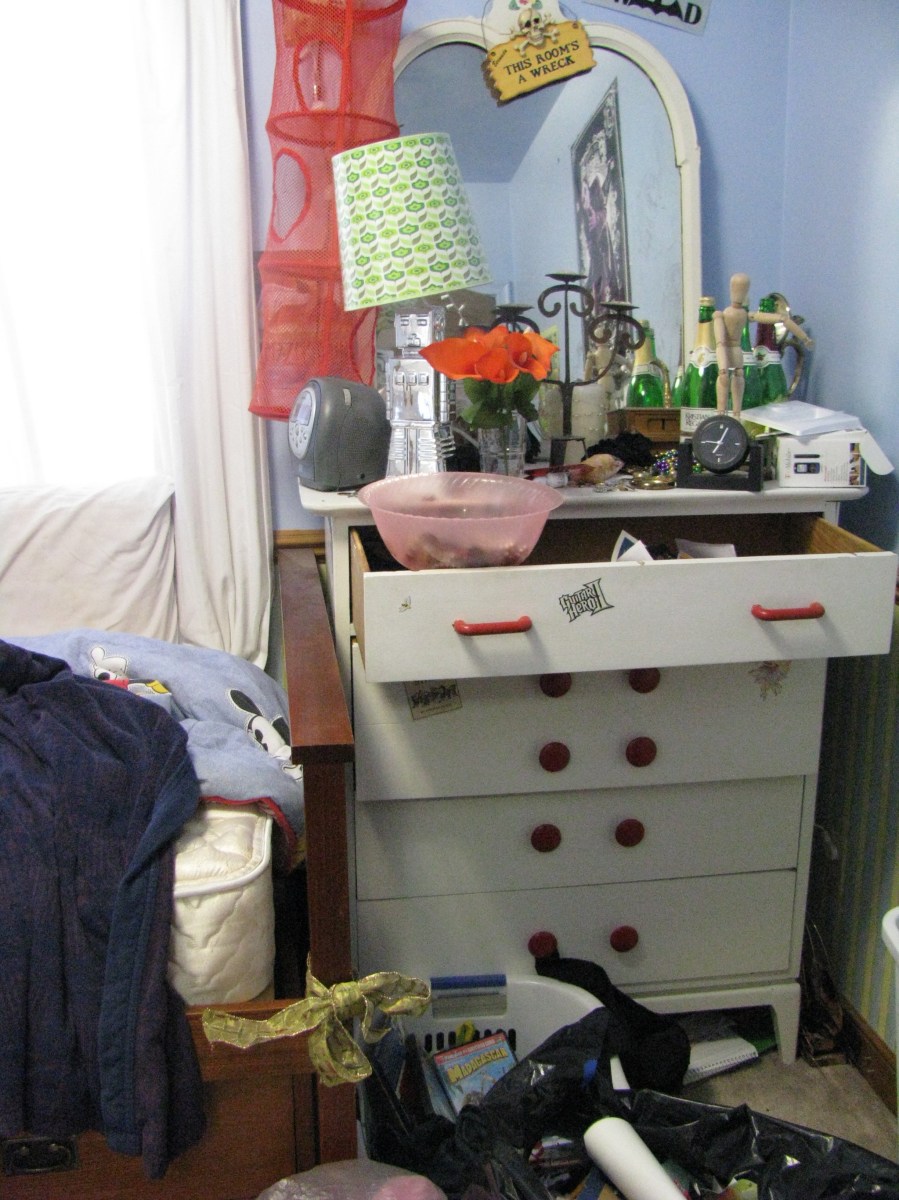
Last month I was sitting with KitKat, having a glass of wine and catching up, when I glanced down at her coffee table. The New York Times bestseller, “The Life-Changing Magic of Tidying Up” by Marie Kondo was sitting on top of another book (ironically titled, “A Beautiful Mess”).
I had read reviews of the book and its controversial “KonMari” method for determining what to keep and what to discard—so I asked KitKat what she thought of it. She said, “I haven’t had a chance to read it, and I won’t get to it for a while since I’m leaving on vacation. Why don’t you read it and report back to me?” I accepted the assignment and am sharing my findings with all of our readers for your collective organizational edification. KitKat, what do you think of these tips?
Highlights of the Book:
Go big or go home – Unlike many books on organizing that advocate tackling decluttering bit by bit (for example, one closet or drawer at a time), the author insists that the key to success is to do your whole house at once. “Tidying is a special event, not a daily chore,” she states. (If this sounds daunting, keep in mind that Marie Kondo is a professional declutterer based in Japan. This is important context because the average Japanese home is much smaller than the average American home so the average Japanese person has fewer possessions.) Even though this sounds ambitious, her rationale makes sense. By doing your entire home at once, you’ll experience the benefits of organized living and won’t want to revert back to your cluttering ways. Whereas if you just tackle clutter one drawer at a time, you’ll never experience the “life-changing magic” of an organized home.
KitKat: I understand how this would make sense. Take for example, cleaning. I never get to enjoy the true experience of a clean home since I only have time for a room or two each cleaning. By the time I get through a full round, the rooms I started with are messy again. The few times I splurged on hiring house cleaners, it was a magnificent feeling walking into a completely clean house. (I may have actually heard background music and saw glowing lights as I entered my home those magical days.)
“Getting rid of clutter would eliminate 40% of the housework in the average home.”
-National Soap & Detergent Association
Does it spark joy? – This is the aforementioned controversial method of determining what to keep and the part of the book that most reviews focus on. Although a bit limiting, it’s an interesting way to look at one’s possessions. (Disclosure: I don’t think a toilet plunger will ever spark joy for me, but I intend to keep one around anyway.) A better way I’ve heard this stated is, “Don’t keep anything that isn’t beautiful, useful or preferably both.” This is my new litmus test and in my newer, smaller home, I’m working on “upgrading” my possessions rather than adding to them.
KitKat: It sounds like a logical test but I am not sure it would be that straightforward for me. Depending on my mood the day I do it (if doing it all at once, as advised), I will either have nothing left in my house or I will get rid of nothing. I function on extremes.
Sort by category, not location – Kondo’s method recommends that you start by discarding all items of a similar type and that what’s left should be kept together, not necessarily where the items are used. This seems practical in a small Japanese apartment, but maybe less so in a three-story home.
KitKat: So if I was sorting vases, they would all end up on one floor in one room? My hair accessories would have to live with my daughter? All kids’ entertainment lumped together? I don’t think this one would work in my house. For both visual pleasure and family peace, we do better with separation.
Lucky needs more clutter like Stormy needs another pair of boots
Don’t force your clutter on other people – My girls could tell you all about this one. Lucky, Blossom and I are approximately the same size for tops and every time they come see me, I’m offering them my clothing discards. For some reason, it’s easier for me to part with something that I like (but never wear) if I’m giving it to one of my daughters. But the truth is, they’re in a very transient stage of their lives and the less “stuff” they have to move with them, the better.
KitKat: Agree! My grandma keeps sending me old artwork and cards and my mother-in-law brings a new bag of stuff she found cleaning out her place with her each time she visits. As everyone else is decluttering, I am drowning in stuff.
Thanking items for their usefulness – One of Kondo’s more interesting points is that it’s hard to get rid of something if you don’t understand its purpose in your life, but its purpose may not be what you think. For example, you bought a beautiful sweater on sale but every time you go to wear it, you end up taking it off again. It’s beautiful, but for whatever reason, the color doesn’t suit you. This is the kind of thing people have trouble getting rid of. Kondo suggests you hold the item, recognize that it’s purpose may not have been to keep you warm, but rather to teach you that you shouldn’t buy chartreuse clothing, even if it is 100% cashmere and 75% off. Thank the item for the lesson it has taught you and let it go.
KitKat: Thank you super-expensive, camo mini-skirt for teaching me that there is a time where age comes into play with what you wear. You have done your duty and now it’s time to find a millennial who can pull you off.
Sorting clothing – Kondo recommends putting every item of clothing you own on the floor to see what you have and decide what to keep. I don’t have enough floor space for this.
KitKat: I am with you, Stormy. I couldn’t test this one out. My clothes-to-floor ratio doesn’t work out, even if done in categories of clothing.
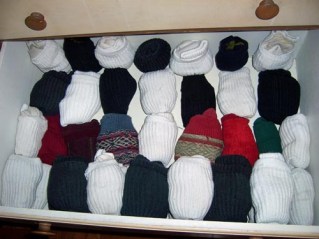
Treat your socks with respect – One of the more amusing chapters was on the topic of socks, which featured this gem: “Never, ever ball up your socks.” The author described her conversation with a client who had done just that, “Look at them carefully. This should be a time for them to rest. Do you really think they can get any rest like that?” She then explained that socks and stockings in your drawer are essentially on holiday from the difficult chore of protecting your feet and the time they spend in the drawer is their only chance to rest… As much as I like the idea of my socks having a secret life in my drawer that is unknown to me, I opened my sock drawer quickly at several random times throughout the day and was never able to catch any of them with an umbrella drink in their hand, so I’m questioning this one a bit.
Who knew KitKat was a sock sadist?
KitKat: I can’t do this one. One of my weird pleasures when sorting laundry is finding matching socks and then balling the pair up. It’s the only part of folding laundry I enjoy. When I end up with no single ones, it’s like I won the game. If a sock doesn’t have a match to become a ball, it has to sit on the dryer waiting for its mate. (Another bonus of this method is I don’t get called into my kids’ rooms during our rushed morning chaos because they can’t find matching socks.)
Unread books: Sometime equals never – If you have a book that’s been lying around for more than a month, thinking you’ll read it someday, you’re lying to yourself. Just get rid of it. (Note: This may apply to the book I’m reviewing, KitKat!)
KitKat: Very true. I love reading and am usually searching for new books to read. But if I haven’t picked it up in a month, then it hasn’t caught my interest enough. Usually the fiction books are devoured, while self-help books on getting your shit together, self-improvement, or organizing all lay around mocking me.
Decorate your closet with secret delights – This was just an interesting note that if you have something you love that doesn’t fit anywhere else in your house, you can decorate your closet with it. Love posters of kittens or your Best Thespian certificate from high school? Put them in your closet! I actually have some little star shaped mirrors that I put in my walk-in closet (to remind myself that I’m a superstar, naturally) and of course, this is a perfect place to keep a vision board.
KitKat: I have kept my vision boards there! It is a perfect spot. I also put up photos I rip out of magazines of cool ways to style my hair or pull together an outfit. I used to keep them in a file, but never looked at them. Yet I didn’t want to throw them away because they inspired me. Now I actually sometimes even try to pull off the looks I see when opening closet doors.
Your possessions want to help you – Again with the anthropomorphism. Kondo must spend a lot of time alone, because she has a very rich imagination. She believes that “Everything you own wants to be of use to you. Even if you throw it away or burn it, it will only leave behind the energy of wanting to be of service. Freed from its physical form, it will move about your world as energy, letting other things know that you are a special person, and come back to you as the thing that will be of most use to who you are now, the thing that will bring you the most happiness.”
KitKat: Hmmm. She may have have poured one too many glasses of wine at this point in her writing. Plus, I don’t want to imagine that the energy of the life-sized doll I “decluttered” when my daughter was at camp is haunting us.
The big payoff – One of the more grandiose claims of the book is the transformational power of tidying. The author asserts that once you’re no longer distracted by the clutter in your house, you’ll be able to see other parts of your life more clearly and may end up changing self-defeating personal habits, your unfulfilling job, maybe even your deadbeat spouse! 😉
KitKat: The clutter does distract and overwhelm me. Then, add in holiday decorations or bags of items collected and waiting to go up to the cabin, and I have actually lost it from being inundated by all the stuff. If I had time, let’s say I could send my family away for a month or have a paid week off to focus just on decluttering, I think it would be transformational—at least for my temper.
Stormy’s Summary – Having downsized a year ago, I find that much of what the author says is true. It’s amazing to think about how many things my husband and I got rid of that we have not missed one bit. I hope those objects were able to “spark joy” (or at least be useful) to someone else and sending them off to their new homes enabled us to make room for some new things (not necessarily “stuff,” but concepts, hobbies, habits) in our new life.
KitKat: We took your extension ladder and it was very useful. We used it to change the light bulb in our cabin garage that was out for over a year, so we could see the ping pong table we added. And the light sparked a lot of joy (and competition).


 The name “Karen” peaked in popularity in 1965 (the year I was born). As a result, I know a fair number of Karens and, truly, none of the ones I know embody the Let-me-speak-to-your-manager, anti-vaxxer/essential oil, racist soccer mom stereotype. So, when the trend toward labeling these women as “Karen” emerged, I would cringe a little each time I heard it—feeling bad for my friends that shoulder the burden of that moniker while thanking God for my own boring name.


 Given our contentious political climate, I expected lots of push-back from my post, but I didn’t get any comments from Trump supporters. This was disappointing, since I was interested in understanding their perspective. My social following tends to include many like-minded people (what Republicans would call the DNC Echo Chamber), so it’s not surprising that I did hear from numerous liberals. They nearly all agreed with my overall assessment of the situation and expressed a similar feeling of helplessness about how to reason with people who were supporting 45 in light of so much damning evidence against him.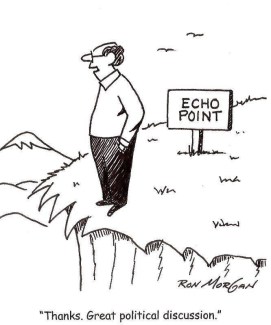
 I think we all inherently understand that others have to prioritize their beliefs. You could take any issue Democrats collectively care about: immigration, healthcare, climate change, gun control, etc., and you would find the same varying levels of support and prioritization among voters. For example, it makes sense that the face of climate change, Greta Thunberg, is a 16-year-old activist. Her generation will have to live with devastation that won’t as directly impact your average retiree.
 For example, while Democrats brand themselves as the compassionate party—the ones who are tolerant and care about others—many Republicans reject that branding because it goes against what they have experienced in their conversations at Thanksgiving Dinner or while scrolling through their Facebook feed. They see widespread condemnation of anyone who voted for Trump and consider the Democrat’s self-branding as the caring, tolerant party to be the height of hypocrisy.
 After all, if we’re going to live in a democratic society, we have to trust in the process. That means sometimes Democratic priorities will move forward and other times Republican priorities will prevail. At the same time, we still have a duty to protect the democratic process—so keep the spotlight on Trump’s impeachable offenses and on the victims of his policies. But do it without implicating or condemning those who—in their minds—were just choosing the lesser of two evils when they voted him into office. Even if you believe they deserve that condemnation, it simply won’t move us toward the end game of getting rid of Trump. So, with the new election year just a couple of short weeks away, we need to ask ourselves: Is it more important to get Trump and his minions out of office or is it more important to “punish” family and acquaintances that voted for him?

 I believe “to everything there is a season” and that we’re entering a new season—older and wiser. I’m adjusting to my new job, but I know it’s going to continue to take a lot of my time in 2018. My beloved father passed away on Christmas Eve and I know that I’ll need to spend more time helping my mom this year as well. So, it’s time to end this chapter, but I have no regrets about either starting this blog or ending it. I’ve learned a lot along the way…about myself and about KitKat. I hope you’ve enjoyed our occasional rants and raves and that you keep in touch. Although we’re killing the blog, we may keep the FB page going for longer. Just to keep in touch. Peace!
 Most of you have heard of “Seasonal Affective Disorder” (S.A.D.) which Wikipedia defines as “a mood disorder subset in which people who have normal mental health throughout most of the year exhibit depressive symptoms at the same time each year, most commonly in the winter.”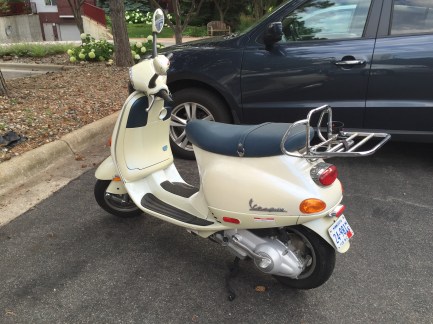

 The situation actually reminds me of a post KitKat authored at one point, “
 Now, I don’t have the responsibility of the Free World on my shoulders (although I’m sure I could do a better job of it than the Cheeto), but for me and my world, it’s a similar balancing act. Will I rise to the occasion or let it bury me? What got me here won’t get me there—I need a new set of skills. I need to develop them and see what I’m made of. I still have confidence that I can do that, but I need the support of KitKat, my family and others to remind me that if I’m doing my best, that’s pretty damn good—and I deserve to take a day off once in a while.


 Easier Said Than Done