Why ProTrump is NOT Prolife

A lot of prolife Christians are in a quandary over Donald Trump. They realize he’s a fool, yet know that he’s likely to appoint a conservative judge to the Supreme Court, which is a necessary step if they hope to overturn Roe v. Wade. As a result, many are conflicted about how to vote on November 8th.

guiltNow Stormy has been prolife for as long as she has been aware of the issue. In grade school, back in the post-Roe v. Wade late-70s, a women’s group visited our parochial school classroom to tell us about the issue of abortion. But they didn’t just bring pamphlets and rhetoric, they brought “visual aids” in the form of embryos and fetuses in glass jars preserved in formaldehyde. (Were they aborted? miscarried? I don’t know the details, I was only about 10 or 11 at the time.) All I can tell you is that peering at their tiny features in different stages of development affirmed to me that 1) they were tiny people 2) it was impossible to tell at what stage they went from being “a blob of cells” to tiny people. One of them even had a bruise where his/her head was hitting the glass—a very “human” reaction that I could relate to as a fairly rough-and-tumble girl who was usually sporting a few bruises and scrapes herself.

Obviously, no school could get away with this today. Not even a Catholic school. Parents would declare it traumatizing, although if society is deeming these babies to be mere tissue, than it shouldn’t be any more traumatizing than looking at gallstones in a science class. But I digress. My point in telling you this story was only to point out that I’m writing this as someone who is opposed to abortion in all but the most extreme cases.

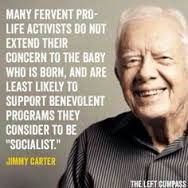
jimmySo, as a prolife Christian who has voted on this issue myself in the past, I’m not experiencing any such conflict. Why? It’s simple. Trump is not prolife. Being prolife extends far beyond appointing conservative judges or regulating against abortion. It means respecting life. It means working to ensure that everyone has health insurance and access to affordable birth control. It means fathers stepping up to take care of their children. It means creating sensible gun laws to safeguard against senseless violence. It means offering compassion to victims of war. It means respecting and supporting people with disabilities. It means expanding education to strengthen future generations.

republican_jesusUltimately, being prolife means respecting, affirming and supporting life—at all ages and stages. It means advocating for life every. single. time. Trump has proven over and over that the only life he cares about is his own.

The number of abortions is at its lowest point since Roe v. Wade due to a number of factors, including education and better access to birth control. These are the kinds of issues pro-lifers need to focus on—and vote on—in the next election because the values that Trump preaches ultimately show a lack of respect for human life…a “looking out for Number One” mentality that inevitably will only lead to more loss of life.

The family you choose…

At the beginning of summer, my company lost a dear colleague unexpectedly. This woman was the kind of person who had friends everywhere—at all levels within the business, in all geographies—and it sent everyone into shock and mourning. Fiona had relocated to the US from our UK office but was born and raised in Ireland. During the last decade, she worked mostly in Minnesota, spent a couple of years running our India office, and patched together a wide network of friendships that included coworkers and even clients. During her brief hospitalization and subsequent death, the closest of those friends gathered together with her parents who had flown over from Ireland to help plan her services, settle her affairs and share a decade’s worth of memories, laughs and tears.

At her memorial service, someone referred to these closest friends as the “family Fiona chose” to surround herself with when she was far away from her actual family back in Ireland… and that phrase stuck with me… I think we all do this, to some extent. Even when our actual families are just down the street.

friend signThere is an inherent difference between family and friends—at least in my introverted view of the world. While regular friends are a great addition to one’s life, they can invoke a bit of anxiety for an introvert: Do I seem friendly enough? Am I being “fun”? Am I acting like a dork? (Shades of junior high.)

Family is another matter. They’re stuck with me—in all of my dysfunctional glory. If a family member drops by unannounced, I throw open the door without worrying that the house is a mess. If there’s a lull in the conversation, I’m not compelled to fill it. They can see me without my make-up or with a stain on my shirt and I won’t lose sleep over it. We can bicker about something, but I know they’ll love me anyway. Sometimes, however, despite our love for our families, we don’t always share the same views or interests. And so we may not hang out with them the way we would a friend. But when friends and family come together in the same person, it’s a beautiful thing.Clean

I have lots of acquaintances, but I have a smaller number of “friends” and an even smaller subset of friends that I would classify as “family I choose.” But when I realize someone has reached this hallowed status, I try not to take them for granted.

KitKat, for better or worse, has reached this status. We’ve known each other for 18 years and know the ways in which we’re different and the ways in which we’re exactly the same. I can always trust her to “give it to me straight” when I need a dose of reality. At the same time, if I’m anxious or upset about something, I know she’ll say exactly the right thing to calm me down. Since KitKat’s the oldest girl in her family and I’m the youngest in mine, our relationship gives me the chance to be the big sister and her the chance to be the little sister… Because, alas, I’m four years older, I’ve undergone certain milestones first. Both the good (marriage, children) and the bad (turning 50). For all of that, it works well. After all, I’m capable of giving awesome advice (even if I don’t always follow it myself) and KitKat is great at helping me envision a better version of myself.

I’m blessed to have a few other friends in this category as well—and also a couple of family members who I think would still be “chosen family” even if they weren’t already sharing the same last name.

shenanigans
This one is dedicated to Fiona. 🙂

At my colleague’s memorial service, it was clear that her chosen family knew they were special to Fiona. She made a point of living her life that way. Her death was a reminder to make sure my own “chosen family” understands what they mean to me.


Chasing rainbows

I know what some of you are thinking… “I started reading this blog because Stormy and KitKat promised they are more messed up than me. But now all I’m getting are introspective posts on world politics, brain surgery and death. I want to know how is Stormy handling being 50? What about the move? Is she still crazy?”

So for those of you looking for some shallow reading—the beach blanket chick-lit version of this blog—Stormy is happy to oblige. It’s the middle of summer and I’m exhibiting my usual, “Wait! Slow down!” despair as I contemplate the dwindling number of free weekends in which to schedule my summer must-dos. For example, I’ve had my boat for four summers now, and have yet to get KitKat and family out on it!

popeye-I-am-what-I-amI’m also in a weird mental place right now. There is so much that’s going well in my life, but for some reason I’m feeling aimless and dissatisfied. Do I need a new job? Do I need a new hobby? Do I need to just quit bitchin’ and appreciate my blessings (my money is on the latter). I need to figure out what the next phase of my life looks like.
It turns out that being 50 is okay (well, I’m actually 51 now). I still can’t believe I’m in this decade, but I just try not to think about it (denial is my friend) and keep doing what I’ve always been doing and wearing whatever I like. I believe in being comfortable and true to myself, yet I don’t want to get a lecture from my girls (“Mom, what are you wearing?… Really?”) so I try to temper my need for self-expression with a little common sense. I trust that they’ll tell me if I push the limits too far.

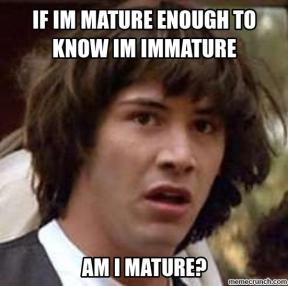
mature?I had an epic revelation the other day: I looked at my husband and said, “Woah. I just realized that I’m as mature as I’ll ever be. I probably am not going to mature any more than I am!” He laughed, but I pointed out the irrefutable truth of the situation: By the time a person turns 51, that’s pretty much it. That individual isn’t going to get a whole lot more mature. For some reason, I found that oddly comforting…knowing I’ve reached an age where I no longer have to worry about trying to be older or more sophisticated or younger or hipper. I am what I am (a favorite saying of both God and Popeye). In other words, this is it, folks. Move along, there’s nothing more to see here.

On a brighter note, Oskar and I are celebrating the anniversary of our move into our downsized digs. This was a monumental effort last year—I still get exhausted just thinking about it. On the other hand. I L-O-V-E LOVE our new home. It’s the perfect size. It’s in a perfect location. I love having a new space to decorate. I also love having very little maintenance work. And although I had a tough transition in seeing my little chickies fly the nest, now that we’re out of their childhood home, I love living the life of an empty nester. It’s sort of like being newlyweds again except now we have more time (we were only married for a little over a year when I got pregnant with my oldest) and more money.

shark5Which brings me to the last update—you’ve already read about my husband’s successful surgery, so the big question on everyone’s mind (well maybe not, but it’s on my mind, at least) is what’s next? I wish I knew. I know myself well enough by now that I realize I always need some type of project to keep me focused and happy, and right now I don’t really have that and I feel like I’m floundering as a result. It’s an uncomfortable feeling, and I’ll keep searching for that “thing” that will make me feel grounded. I’m not sure if it will be work, school, a hobby or volunteer work, but I’ve always lived my life like some species of shark—that is, I need to keep moving or I know I’ll drown—so I’ll keep chasing rainbows until I find that emotional pot of gold. I haven’t figured out the answers yet (another example of “easier said than done”), but as soon as I do, you can be sure I’ll let you know!

Test driving the new brain

In my last post, I explained the process my husband was undergoing for brain surgery. I’m happy to report that the results are better than either of us were expecting. I’ve described his off and on periods before, but this video shows his results better than I can explain. The “task” is to go back and forth between two pieces of tape as fast as he can. In the first snippet, he is completely “off,” no DBS, no meds. In the second, both are working together.

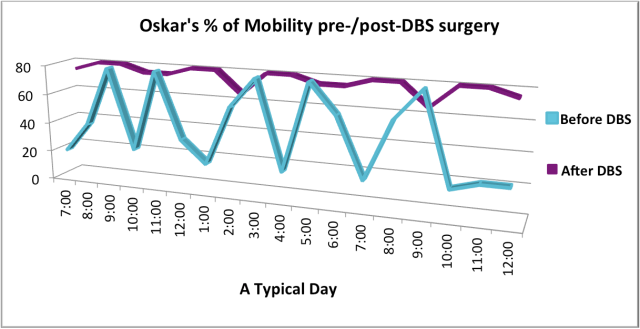
The beauty of his DBS device is—even when his meds are “off”—he still has about 70-75% mobility, compared to about 20% without the device (see the chart below). As you might imagine, this has been life-changing. (Editor’s note: That’s not a word I use lightly—I once wrote an article about getting braces as an adult and the magazine publisher wanted to edit it to have me say it was life-changing but I refused to put straighter teeth in that category. My teeth weren’t horrible to begin with and it was really more of a vanity thing.)

For the first couple of days we were stunned—we kept waiting for Oskar to go “off” to the extent he had previously on previous occasions and it never happened. Well, actually it did one evening…sort of. When we were out for dinner later the following weekend, Oskar felt the familiar slowness associated with being truly “off.” We were both a bit depressed about it—thinking the results had been too good to be true—only to discover when we got to our car that he had accidentally shut off the device. He pressed the on button and surged back to mobility. It was truly a miracle.

Oskar and I realized over the next week or so that many things that had been difficult or impossible for him to do while “off” were, once again, on the table…such as:

  • Driving
  • Cooking
  • Going to Target (invariably, if Oskar tried to go to Target while his meds were on, they’d crash on him just as he was needing to maneuver the checkout line/payment process)
  • Visiting his deceased mom’s elderly partner, Harold (see driving, above)
  • Riding a bike
  • Hiking
  • Standing while waiting for a table at a restaurant
  • Taking walks around the park
  • Sight-seeing

Actually, that last one was my realization when I thought, “What better way to test-drive the new brain than by going on vacation?” We had had a grueling, busy winter and were ready for some fun in the sun, so we booked a spontaneous trip to California to visit some friends and Oskar’s little sister—and to see how much of a contribution his DBS device would make to our vacation.

DBS_chart

The vacation was enlightening. The first night, we stayed with my high-school friend Dot and her husband. We had a fun afternoon and dinner out, catching up on Dot’s new hobbies (painting and pottery—which reminded me that I have to make time for more art in my own life) and her husband’s acting career.

The next day, after going out for breakfast, Dot was chained to her home waiting on an important delivery, so I decided to take Oskar on the hike we had done with Dot and my girls on our last visit, in a park near her house. I remembered the trail as being fairly long, but not too strenuous, and it had beautiful views of the LA area. Still, it was the type of hike that Oskar would have had problems with in the past—so I wanted to see if the “New Oskar” could handle it. We found the trailhead and headed up the path. The trail went up…and up…and up… I kept asking him, “Are you okay?” “How are you doing?” “Do you need to rest?” and each time he said, “No, I’m fine…” And here’s the thing: He WAS fine.

The next day, we went to meet Oskar’s little sister and her husband. They’re both scientists working for a biotech company and have a lovely home in Thousand Oaks. We had dinner at an interesting outside restaurant in the Santa Monica mountains. The next morning, we sat out in the backyard contemplating how to spend the day. (Interesting observation: Oskar’s sister and husband have a lovely backyard, complete with swimming pool, but don’t spend much time in it. “Do you entertain out here?” I asked, thinking of my love for outdoor parties. “No, not really” was the reply. It was a clear geographical difference—in Minnesota, it’s nearly mandatory that if it’s nice, you’re outside. No debates. We don’t have a lot of nice, warm weather, so we cherish every sunny day, and nobody knows how to celebrate the beauty of summer like a Minnesotan. California, on the other hand, sees so many nice days that its residents TAKE IT FOR GRANTED. This is nearly an unforgiveable sin, but our hosts did a good job of indulging our craving for Vitamin D.)

We grabbed a bottle of champagne and headed to an oyster food truck that parks along the ocean in Ventura. We ordered a variety of oysters—raw, fried, baked—and had a picnic on the beach. It was awesome. Oddly, my sister-in-law had gone running on the beach past the food truck many times, but had never stopped for oysters. So our visit prompted her and her husband to try it out. How many great experiences do we all overlook in our own hometowns, and how many cool things might we discover if we looked at our city through the eyes of a tourist?

Afterward, we went to a microbrewery and continued our day of indulgence. Later, we went up the coast and met an old college friend of Oskar’s at another microbrewery. (Do you see a theme here?)

IMG_3109The next few days were spent in the Santa Barbara wine country and one day consisted of a long day trip up to Big Sur and Carmel. All along our trip, I was evaluating how Oskar was handling things. He was able to drive more than he normally would (although I drove most of the PCH, he took the wheel for most of the route home).
On our last full day, we visited a number of wineries. We noticed that for the first time since Oskar’s DBS device had been switched on, he was experiencing some noticeable “off-time.” This tempered our “New Brain—New Life!” outlook a bit, and we were both a little quiet and reflective. What seemed too good to be true apparently was.

We returned home and back in his everyday environment, Oskar quickly rebounded to his new-and-improved self. We decided that Oskar’s off periods while on vacation were caused by a little too much beer and wine, combined with him taking a more lax approach to his medication schedule.

The vacation had mixed results… We learned that Oskar’s surgical success didn’t mean he was cured, but we also discovered that it was possible to turn back time to a point where Parkinson’s didn’t rule our lives. And we have to admit, we’re pretty excited about that!


Well, it’s not rocket science…

Right now, I’m sitting in a hospital waiting room as my husband has brain surgery. The road here wasn’t short. When he was diagnosed with Parkinson’s 13 years ago, we investigated treatments but found that there weren’t many options. The gold standard for Parkinson’s Disease is a drug called carbidopa/levodopa that Oskar has been taking for a number of years. As I’ve written before, it’s not a predictable treatment—sometimes it works, sometimes it doesn’t. Moreover, the longer one takes carbidopa/levodopa, the more likely one is to experience dyskinesia: Unintended movements caused by a surplus of dopamine in the system. These can be annoying (like when Oskar dropped my favorite mug) or potentially dangerous (for example, while driving).

For more advanced Parkinson’s patients, there is one surgical option—Deep Brain Stimulation (DBS)—but it isn’t a cure and the procedure can only be done once, so it’s usually not recommended until the disease is more advanced.

In recent years, Oskar started to reach a dosage level that brought on the dyskinesia. While the excess movements didn’t bother either of us much initially, it was becoming quite pronounced and, when he considered that along with the increasing frequency of “off” times, Oskar decided it was time to explore DBS.

Oskar volunteered to participate in a clinical study for a new device and underwent a series of tests to see if he was a good candidate for the surgery.

One of his consults required him to go off his medication overnight so that he was completely “off” while being evaluated. Then, they had him run through a series of motor tests to record his movements on video and time how long it took him to perform certain tasks. Then they let Oskar take his medication and he re-performed all of the tests with the carbidopa/levodopa in his system.

Now, I have seen my husband in both his on and off states hundreds of times, but the truth is I don’t pay attention to him much when he’s off. Oskar generally doesn’t like me to help him when his meds are off and it’s frustrating to watch him struggle and a bit depressing to see him sit there motionless. Truth be told, he’s not the best company when he’s off, so I usually go do other things while he waits for his meds to come back “on.” However, during the medical evaluation, I watched intently as he went through all of his motor tests both “off” and “on.” The difference was amazing. When he was off, he had a pronounced tremor, a blank expression, a softer voice, and very slow movements. When his meds came back on, you could see the relief flood his face. The tremor was replaced with dyskinesia, but he was more relaxed and able to do most of the motor tests with ease and greater speed. But throughout both on and off states, he kept his sense of humor and grace and reminded me once again what a classy guy he is.

The dramatic change in his motor skills was good news, though, because how well a person responds to the medication is an indicator of how they will respond to the surgical procedure.

brain surgeryOskar’s first surgery (on the left hemisphere of the brain) took 6 and a half hours. This was time he spent mostly awake with a halo screwed into his head, while the surgeon drilled a dime-sized hole in his skull and placed an electrode into his brain, looking for the optimal spot. The surgical team would test the location by having Oskar move his hand and leg and listen for the sound of the electrical impulses going from the brain to the muscle—basically listening for static. It took them five “pokes” to find the right location, but his surgeon was pleased by the results once they hooked him up to the transmitter because Oskar responded to very low levels of stimulus.

Before the procedure, family and friends offered their support—Do you need anything? Do you want someone to sit with you in the waiting room?—and I was actually a little confused by it. After all, this was a voluntary procedure expected to have a good outcome; it wasn’t an inoperable tumor or something… But as the hours wore on I started to get concerned; I hadn’t expected such a long time in surgery. My default coping method is denial, but that strategy requires one to keep busy so the real concerns don’t creep in. And that’s hard to do when you’re sitting in a hospital waiting room, alone, with a spotty wi-fi connection. After the successful completion of surgery number 1, I was grateful for KitKat’s company as I downloaded the day’s events to her over a glass of wine that evening.

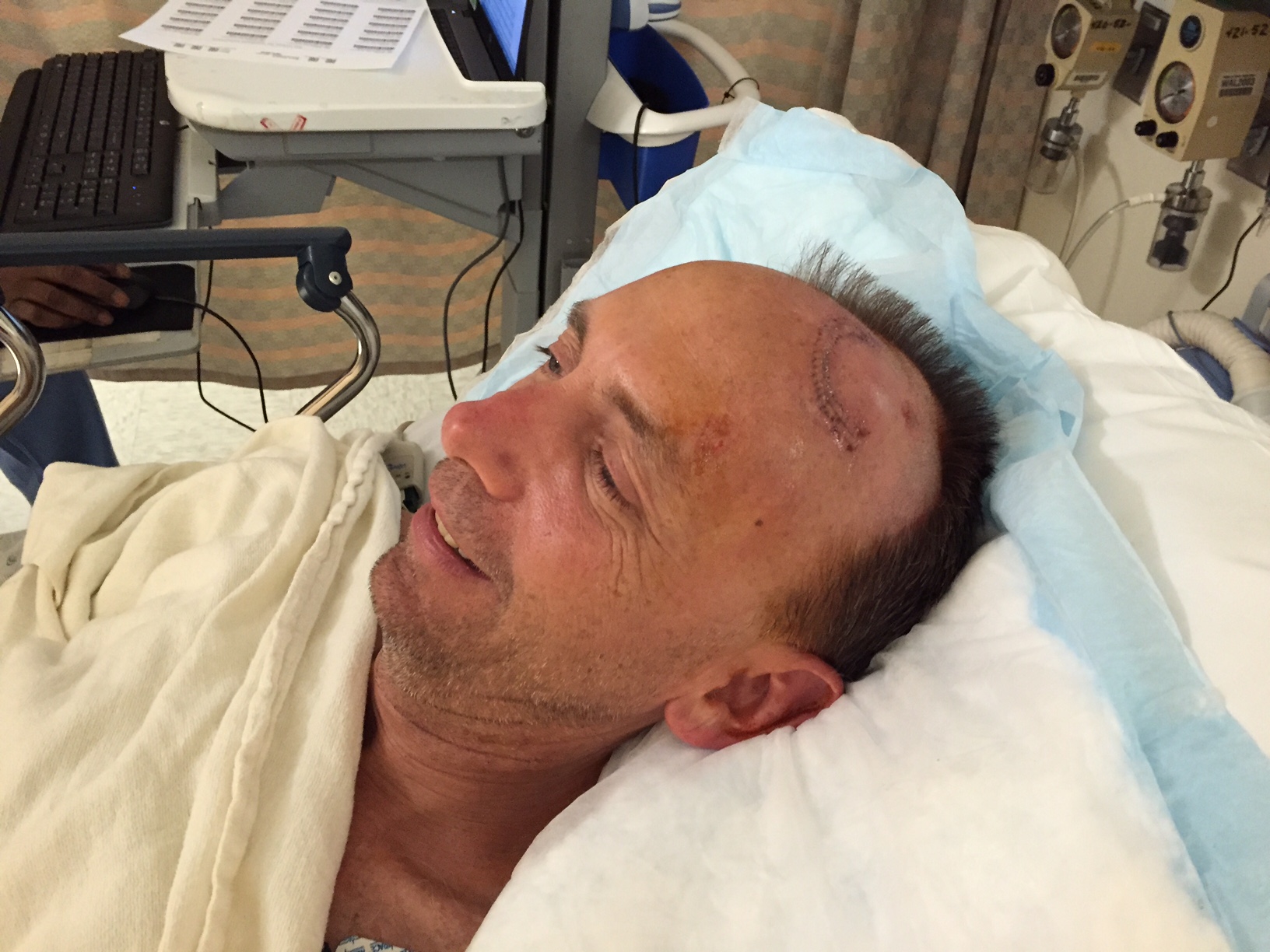
Writing this in real-time, Oskar just completed his second surgery (for the right hemisphere) last week. This time, they were able to place the electrode on the first “poke,” although they took two more passes at it to ensure they had the proper placement. Although both procedures were somewhat exhausting and wore him out more than he was expecting, we were glad to get past them. All jokes aside, it was brain surgery, after all. We’re anxious to get through his final surgery later this week (implanting the transmitter in his chest) to see how much of an improvement he gains when they switch everything on later in March. The large scars on his head seem like a small price to pay for the increased mobility he hopes to gain.

It's a good thing scars on guys are "rugged and sexy"...
It’s good that a guy’s scars are “rugged and sexy”…

And there’s nothing like spending time in a hospital to remind you how fortunate you are. During these procedures, we both crossed paths with a number of people facing bigger challenges than us, and those encounters served as a humbling reminder of how lucky we actually are. We’re very optimistic about the outcome, but are trying to temper our hopefulness with reasonable expectations.

I don’t know what the future holds in terms of Oskar’s DBS results or how it might change our future, but I’m curious to find out. Yet, one thing Parkinson’s has taught me is to take it one day at a time—so you’ll find out when I do…a few months from now.

2016: Stormy’s year to “Choose Different”

New Year’s and its related resolutions are a perennial theme for KitKat and me. (YES, we’ve been doing the blog long enough now to have “perennial themes”—and the fact that this blog started out as a resolution proves my point, I think…)

From vision boards to attitude adjustments, we’re both a bit obsessed with self-improvement. Or at least identifying our shortcomings on a regular basis (ha, ha). Seriously, with how much I think about these things, I should be perfect by now. But as you probably realize, thinking and doing are two different things.

While I can be decisive and even a little impulsive, and I sometimes abandon my efforts when they don’t yield immediate results, I’m also a big believer in adopting the approach of the tortoise over the hare—slow and steady wins the race—and over time, small incremental changes can have a large impact on my life. Case in point: the bachelor’s degree that took me 11 years to earn.

Most of the time, it’s just about the choices you make.

Back when KitKat and I worked together, I had a 2 p.m. pop habit. (I suppose I should explained to some of our unenlightened readers that “pop,” not “soda,” is the proper nickname for carbonated beverages like Pepsi, or in my case, Diet Coke.) Each workday at 2 p.m., I’d saunter down to the break room and stick my two quarters in our company-subsidized (boy, in those days we were livin’ large!) vending machine. You could almost set your clock by my daily pilgrimage.

diet coke imagesWhen I left that job, I was unemployed for a while and quickly got over the need for my 2 p.m. caffeine jolt. However, on my first day with my current employer, I found myself in the breakroom at 2 p.m., dollar bill in hand (no subsidized vending machine there!) and as I was about to slide my money into the slot, I asked myself, “What am I doing?” Here I had successfully broken myself of a habit that was unhealthy and I nearly resumed it based on…what? A habit? A memory? I made a conscious decision NOT to buy the pop and have consumed very little since then—about 10 cans a year vs. the previous 60 or so.
GR_headerbooksThis remembrance inspired my resolution for 2016. What could I accomplish by simply making different choices? I was reading Gretchen Rubin’s book “Better Than Before” about the process of creating and breaking habits—if you’re a self-improvement junkie it’s a must-read. Around the holidays I received her e-newsletter, which included an article about choosing a New Year’s theme instead of a resolution. This theme would consist of a word (or words) that would guide decisions for the upcoming year: “Health,” for example, or “Learn.”

As someone with new-found time on my hands after our recent downsizing, I wanted to get in touch with activities I wasn’t able to pursue when I was taking care of a house and three kids, so I originally was going to make “Discover” my theme for 2016. Then I realized that word wasn’t broad enough to encompass the other changes I wanted to incorporate into the year ahead, so I revised my theme to “Choose Different.” This has a few meanings for me: One is synonymous with “Discover”—because I still want to explore new interests. But “Choose Different” also reminds me to challenge my dysfunctional thinking patterns and alter behaviors that haven’t been serving me well.

Apple
Srsly? I chose a variation of an old Apple slogan for my New Year’s theme? How derivative!

We’re only three weeks in, but so far it’s yielding some positive results. One change I made was to force myself to be less of an introvert at work. It’s something I’ve told myself I needed to do a dozen times before, but a 360 review coupled with a tongue-lashing by a coworker friend convinced me I needed to make a change. Well, it hasn’t killed me and it IS improving some relationships at work, so I’ll keep plugging along until it feels natural. There are other examples as well, and I’m curious to see where this theme might take me in 2016. I guess that is one of the benefits of getting to 50. I can see the horizon ahead and know that even if I don’t get to my self-actualized destination overnight, I can become a better version of myself along the way…simply by making smarter choices most of the time. Are you making any changes in the new year? Please share in the comments…

Living fearless

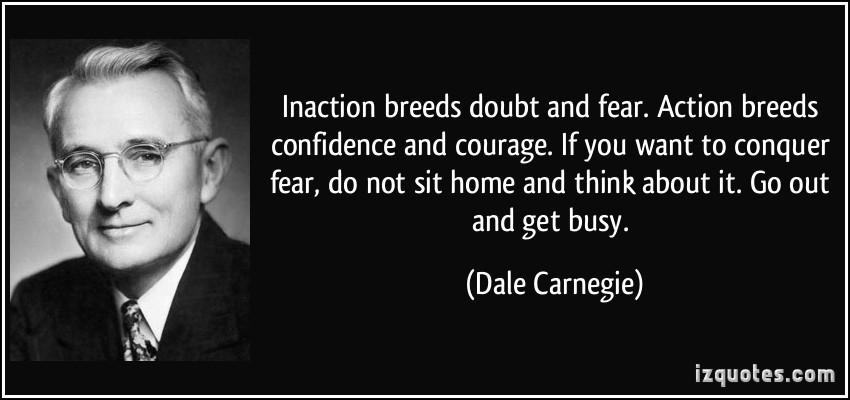
Sometime in my early 30s, I had an epiphany about fear. I had wanted to adopt an orphaned child (not an infant) ever since I was a kid myself, but when I finally got to the stage in my life where I could afford the process, I had doubts. I already had two wonderful biological children and a happy marriage. What if I adopted a kid who was deeply troubled and screwed all of that up? This fear was holding me back.

Meanwhile, a guest speaker at church told us about a mission trip she had taken to work with Mother Teresa in India. I won’t describe the story that changed my perspective (I’m sure it would lose something in my retelling) but the upshot of it was I realized I needed to have faith in a good outcome and plunge ahead despite my fear.quote-inaction-breeds-doubt-and-fear-action-breeds-confidence-and-courage-if-you-want-to-conquer-fear-dale-carnegie-32059

Those of you who have met my daughter Blossom know that I was immeasurably blessed by my leap of faith.

A conscious choice to “Be not afraid”

Fast forward a few years to when my husband was diagnosed with Parkinson’s Disease. A highly individualized illness, some people end up in a wheelchair in five years. Others still work for 15 or 20 years. About a quarter of those diagnosed end up with dementia. There was plenty to fear, but we made a conscious decision to not immerse ourselves too deeply in what “could be” and just focus on what he still could do in the here and now. So far, that decision has served us well, and we’ve been pleasantly surprised by the relatively slow progression of his disease.

I recently was alluding to some challenging family issues, mainly concentrated around my elderly parents, and I’ve determined that the source of these difficulties comes back to this same issue: Fear. My mother is living in fear more and more as she gets older. It’s causing her world to contract and leaving her confused and angry. It’s challenging for her adult children because the fear colors her perception—and our concern about her well-being is interpreted as attempts to take away her freedom.

We have nothing to fear but fear itself… and daycare costs

There are many times our lives require us to overcome our fear in order to move to the next phase: Going away to college, moving out on your own, interviewing for a job, asking someone on a date, proposing marriage, deciding to bring a child into the world, letting your children strike off on their own, learning to trust your adult children, learning to trust that things will work out, and finally trusting that, even when death is inevitable, God is by your side.

baby_moneyHaving a baby is a common example. Many young couples fear the responsibility of parenting. With news articles estimating that it will cost  a quarter of a million dollars to raise a newborn to age 18, it’s no wonder. Yet most of us plow ahead anyway—adjusting our lifestyles along the way—and consider ourselves the richer for it (even while our bank account takes a nosedive). Which brings me to my next point:

Bad things still will happen on occasion…but you’ll be okay

Living a fearless life doesn’t mean that you’ll experience smooth sailing from that point on. Some of the things you fear may actually come to fruition. But there is power in forging ahead anyway and usually you’ll find that 1) Most of the time the thing you feared doesn’t actually happen, or 2) On the rare occasion the bad outcome occurs, you’ll cope with it the best you can, learn something in the process and feel even stronger when you emerge on the other side. And because you’re now living a fearless life, you’ll view these episodes as infrequent storm clouds in your otherwise sunny life.

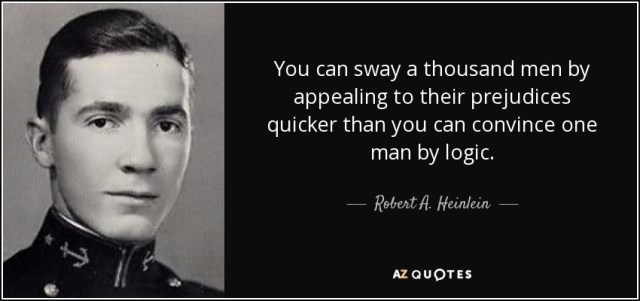
quote-you-can-sway-a-thousand-men-by-appealing-to-their-prejudices-quicker-than-you-can-convince-robert-a-heinlein-41-65-49Recent terrorist activity seems to have activated our society’s collective fear response and the result is ugly. The birth of this country was not a fear-based decision. Our forefathers (and mothers) had good reason to fear the quest for independence—after all, one man’s revolution is another man’s treason—but the shimmering ideal of a free nation was too enticing not to move forward despite their fears. Most of us lucky enough to be born in this country are here because we have ancestors that didn’t let fear stop them from leaving their homes behind in pursuit of a better life. As we watch our neighbors react to terrorist attacks by proposing fear-based restrictions on innocent people in the name of “protecting ’Merica” let’s remember that nothing could be LESS American.



A Charity Case or a Case for Charity?

It’s a bad sign when KitKat asks me, “…any blog ideas?” which happened just this morning. If you look back at our postings, you can see that the longer gaps between posts are when we’re waiting on KitKat. Of course, this is justifiable because she has school-age kids and other obligations that keep her very busy. I have way more time to write. Usually, KitKat’s thrilled to have the blog-ball in my court because it gives her more time to work on her next post. But even she can tell I’m in a serious drought—and when she starts gently prodding me, I know it’s time to settle on a topic and get to work.

It’s not that life has been boring. On the contrary, there have been a lot of serious issues consuming my thoughts lately. However, both KitKat and I have noticed that the more something is on our mind, the harder it is to organize our thoughts on the topic and write about it. Consequently, you’re not going to hear about my challenges with my parents (although I’m sure that will be a future topic), or my thoughts on the recent terrorist activity in Paris (my brain will never be able to organize such a cowardly, inhumane act into a coherent post).

Paris_attack
There’s plenty of fodder for a blog post in this situation, but I can’t eloquently articulate this level of evil… I don’t think anyone can.

I’ve mentioned before that I’m an introvert and the worst part about that is it it’s easy for negativity to get stuck inside my head. That’s what’s been happening lately, and I know what I need to do in order to counter that: Turn negative inward thoughts into positive outward actions.

For the last couple of years, ever since my youngest flew the nest, I’ve been aware of a lack of purpose in my life. Raising three kids has been my primary activity for the last 26 years and now that they are largely independent, I’ve felt a void. I’ve been seeking out a volunteer opportunity where I could feel like I was doing something worthwhile and after a couple of false starts, joined a program that provides mentors to unemployed/underemployed women.

My first mentee match was unusual, to say the least. I looked up my match on LinkedIn before meeting her—a native of Zimbabwe, spoke multiple languages, won several scholarships, was working on an advanced degree, had previously been Miss Africa, and had started a couple of businesses and non-profits. I met her and we had a great conversation; however, I wasn’t sure how much I could help her. She was a force to be reckoned with and it was clear she would go far in life. In fact, she made me feel a bit inadequate about my own achievements: I had done far less with far more. We tried to coordinate our mentoring sessions but she had too much going on in her life to meet with me. (She was interested in public policy and had been chosen for an internship with the United Nations—seriously!) So while I was happy to have met such an ambitious young woman, I didn’t get much personal satisfaction from “helping” her.

Enter Ellen, my second match via the mentoring program. As with my previous match, I tried looking her up on LinkedIn beforehand, but there was no profile to be found. We met at a coffee shop. I was surprised to see that she was older than me. And then she told me her story. Her first son had died quickly of a brain tumor at the age of four and that sent her into an emotional tailspin (which anyone who’s a mother can understand). She became divorced and later became pregnant and had another son. She never married the boy’s father but supported him by cleaning houses. (After losing her first child, she wanted to make sure her schedule allowed her to be there for her son, as caring for him was her top priority.) Now her son had graduated from high school and she wanted to find a better paying job with benefits so she could start saving money for retirement.

floppy-disk-iconNow here was someone I could help. We talked about how to translate the skills gained from her house-cleaning business into marketable experience—managing a staff, scheduling, selling her own cleaning products. We talked about online applicant tracking systems and how to best present your information to potential employers. (When I suggested that in addition to completing the online application, she also should attach a PDF of a nicely formatted version of her resume, she asked, “You mean put it on a floppy disk?” That’s when I knew I had my work cut out for me.)

volunteerAt our next meeting, she excitedly told me about a job interview she had the next day. I told her what I knew about the company and helped her research the position online. I gave her tips on what to do/not do during the interview and stressed the importance of sending a thank you note afterward. Driving home, I thought about how the mentor/mentee relationship was benefitting both of us. Although I have been frustrated with my job of late, from Ellen’s perspective I was living the glamorous life—a well-paying job, an experienced team, global responsibility, fulfilling work—and I was reminded how fortunate I am to have all those things.

Meanwhile, I realized that the value I was bringing to Ellen wasn’t in the employment-seeking pearls of wisdom I was bestowing on her (those could be found in any job-hunting book), but in the faith and encouragement I was bringing her: From my vantage point, she was a strong woman who had overcome a lot of challenges and was willing to work hard. I believed in her success, but she needed encouragement.

At one point she said to me, “There’s no dignity in being a housecleaner” and I immediately disagreed: “You provided for you and your son by doing honest, hard work—there’s plenty of dignity in that!” And hearing it from me, she started to believe it as well.cleaning supplies

I’m happy to report that Ellen got the job for which she was interviewing. While it’s starting at the bottom of the company and her shift begins at 3 a.m., she was thrilled to have benefits and hopes to work her way up to a customer service job with regular hours. With some help and support, I have no doubt she’ll get there.

And I gained something from the mentorship as well. I learned that getting out of my own head for a while is as restorative as any vacation—not to mention cheaper—and what I take for granted can make a difference for someone else.

Lions and soldiers and refugees, Oh my!

This past week, my sister made the type of comparison that is becoming all too common, particularly on Facebook. She had posted an article about the crisis in Europe related to the overflow of Syrian refugees. A photo of a small child who drowned while his family was trying to flee to Greece had touched her heart and she was asking her FB friends where the outrage was for this situation—comparing it to a month earlier when a Minnesota dentist’s slaying of a beloved lion had sparked outrage in the FB community that went on for days and days.

I'm just as saddened by the death of what's-his-name with the cool spots.
I’m just as saddened by the death of what’s-his-name with the cool spots.

If you don’t live under a rock, you probably heard about Cecil the Lion. And if you live in Minnesota, like us, you literally couldn’t escape the story because it featured a local villain. My sister had gone to Dr. Palmer for dental work. My coworker lives in the same neighborhood and gave first-hand witness of how the vilified dentist was being stalked by the media around the clock. His crime was illegal trophy-hunting and when the story broke, it appeared that most Americans didn’t realize trophy hunting was a pretty common occurrence among a segment of hunters with the means to pursue it. I was a little perplexed at the sudden outrage myself. I don’t approve of trophy hunting, but it’s been going on for years. Was the game changer the fact that he killed a lion with a name? Why didn’t anyone protest over the 40+ animals (lion, rhino, polar bear, etc.), that he had shot earlier? Or how about the other rich “sportsmen” doing the exact same thing, legally, every day?

However, while I agree that my sister’s point was valid (i.e., that many Americans’ values are out of whack), she made a grave error in how she posed her concern. By drawing a comparison between the toddler’s death and the lion’s death, she actually diverted focus from the refugee situation—because commenters immediately started defending their outrage about Cecil the Lion.

The situation was a classic example of a scarcity mentality that seems to be taking root on Facebook. That is, living as though there is a scarcity of outrage, a scarcity of common sense, a scarcity of compassion. In other words, assuming you can have compassion for a lion OR for Syrian refugees, but not both. Applying a “This OR That” logic.

In this, she’s not alone, and there’s nowhere it’s more apparent than on Facebook. A few recent examples:

When the Supreme Court legalized gay marriage, the White House displayed some colored lights to celebrate the ruling. Immediately the posts criticizing the action started popping up: “Why didn’t the White House shine special lights on Veteran’s Day to acknowledge the sacrifice of our troops?!” Hey, that’s a nice idea, too. Let’s do that. But you don’t need to take away something nice for gay rights in order to do something nice for our military. You can do both!

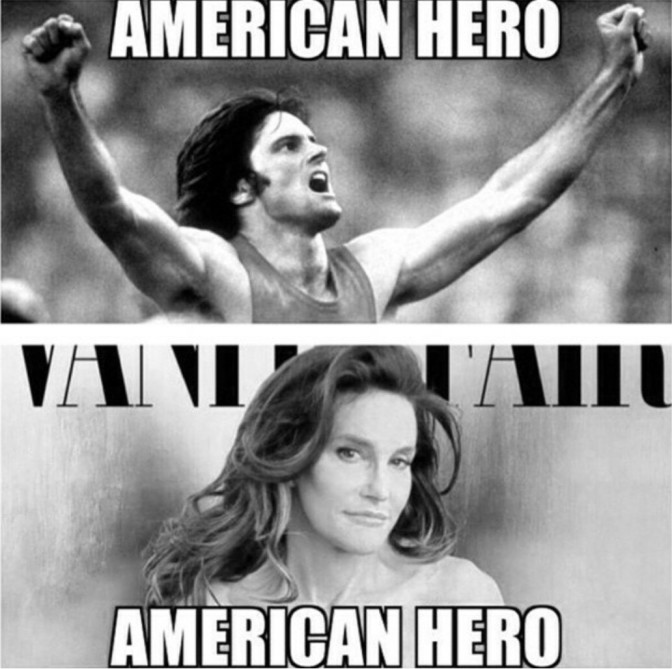
Granted, not your typical American hero...
Granted, not your typical American hero…

Another example, Bruce Jenner’s transformation to Caitlyn Jenner and some articles that lauded her gender transformation as “brave”… The scarcity crowd immediately started posting photos of combat veterans and countering, “Caitlyn Jenner isn’t brave, these guys are brave!” Well, can’t they BOTH be brave? A different kind of braveness, to be sure, but really, can’t they both be considered brave for their respective actions? Why do we have to belittle one to applaud the other?

And don’t get me started on the whole Black Lives Matter/All Lives Matter/Cop Lives Matter issue. Of course they matter! They all do! But trying to raise awareness about serious issues facing the black community does not mean that those raising the issue are against cops* or dismiss the value of “other lives”… Those aren’t mutually exclusive positions and as Americans, we don’t have to subscribe to the notion of limiting “whose lives matter.” Or rationing how much outrage we can apply to an injustice. Or meting out the level of support we’re willing to give someone going through difficult times. It’s time that we stop these divisive arguments that diminish us as a society and embrace an abundance mentality.

Yes, it’s awful that Cecil was slaughtered AND yes, we should try and provide aid for refugees in Europe. Yes, it’s great that gay people can finally marry AND let’s give a little more recognition to the soldiers protecting our freedom. Yes, Caitlyn Jenner did a brave thing in acknowledging her inner struggle AND yes, let’s make sure our combat veterans have all the support and medical care they need when they return home. Let’s say yes to ensuring black people are treated fairly in the justice system AND yes to ensuring the safety of the cops who are doing their best to make that happen AND yes to protecting you and your loved ones as well.

Ultimately, all a scarcity mentality will get us is a shortage of everything we need as a society, because scarcity tends to feed upon itself until it eats away at everything good. Our ultimate redemption will only come in our ability to embrace an abundance mentality that says, YES. We have enough compassion for all—both This AND That!

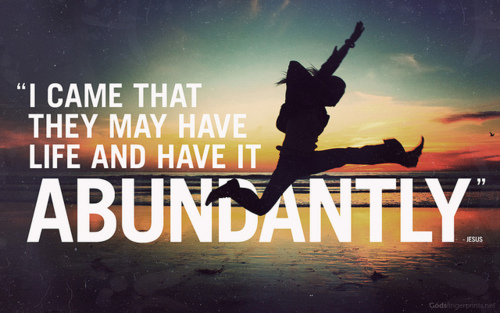
abundance

*I acknowledge that there will always be some wingnuts who genuinely mean harm. My stance on that is to monitor them closely, but don’t fan the flames of their obsession.

Stormy learns to “move it or lose it”…but mostly loses it.

bicycleWhen you last heard from me, two months ago, I thought I was through the worst of moving…However, downsizing is a gift that keeps on giving. We had a month of overlap with our properties which allowed us to make a few updates, but also dragged out the “fun.” We’re not home free quite yet, but we’ve been through enough where I can see a shimmering oasis of calm ahead, and I’m driving toward it with single-minded dedication. Here are some things I learned along the way:

Moving is when you learn who your friends are – The physical act of moving was an exhausting one after 25 years of accumulation. A well-meaning friend suggested I hire someone to pack everything up, but that was impractical for my situation. Each item needed to be evaluated—something that movers couldn’t do: Should it go to the new place? Do the kids need it? Could any of my family use it? Should we donate it to charity? Is it garbage? Sometimes the answer came quickly: Of course my bunny collection is going with me. No, we don’t need the cassette tapes. But others were tricky: I love my curio cabinet and TV stand, but there’s no place to put them in the new unit. And—in a situation I’m guessing was not unique to us—we eventually ran out of time and began throwing things willy-nilly in boxes. (This explains why, at our new condo, I spotted a box whose labeled contents included “Wii box.” Not the Wii IN the box, mind you, but rather a box for a video game system we bought in 2008, that my youngest has since taken to college. Really? Moving a box for an obsolete and relocated gaming system? Really?) As I was lamenting all the work involved in this process, I was genuinely touched when several friends offered sincerely to help move, pack and unpack. There’s a joke about finding out who your real friends are when you need to move—but it’s a joke based in truth.

https://www.youtube.com/watch?v=R2u0sN9stbA

We all have too much stuff and the 80/20 rule generally applies – Attempting to unpack was a lesson in humility. Who needs all this stuff? I thought of an article I read where a photographer took photos of people with all of their possessions laid out beside them. I was embarrassed by the sheer volume of riches I take for granted. We were buried in boxes for a solid week and had to move some into a storage unit just so workmen could get at our floor to replace it. Yet, somehow we managed to find the really important stuff—and survive without the Belgian waffle maker or ice cream maker. I’ve tried to live by Thoreau’s mantra, “He who owns little is little owned,” but clearly I’ve failed. My stuff is dictating how I live right now. I’m totally owned.

Organization is expensive—but worth it – People have varying tolerances for clutter, but I’ve found the older I get, the less I can tolerate living in a mess. My brain jumps from thought to thought and I become mentally exhausted trying to find things. One day, I returned home to find that my husband had been unpacking and attempted to organize the kitchen. Here’s his idea of a good location for a pantry:

If you can guess what's up there... well then maybe YOU can make me dinner!
If you can guess what’s up there… well then maybe YOU can make me dinner!

Yes, it’s the cupboard above the refrigerator, where one usually stashes the roaster, the crockpot and other rarely used items. I had to text a photo of this to several girlfriends for sympathy and laughs before pulling out all the foodstuffs and relocating them to a more accessible location. (By the way, re-doing unpacking is even more annoying that regular unpacking.)

After four trips to The Container Store, I’m starting to bring order to my chaos, but at a price. That stuff ain’t cheap. But at least it matches, which brings me to another lesson:

Warning: Companies that make plastic totes are evil – That’s right, I’m talking to YOU Rubbermaid, Hefty, Sterlite… At one time, I had a vision of a perfect storage area with nicely matching totes, either clear or nicely labeled, but I’ve come to understand this Nirvana will never be realized unless I’m willing to buy all 20 totes at once. Why? Because companies that make totes change their design every two weeks. So if you buy a few at a time (like most normal people), the next time you go to buy them, they will be different—color, size, lids, something. (And good luck if you need to only replace a lid—it’s just not happenin’… Accept it and get on with your life.)

Summer is fleeting, take the time to enjoy it – The worst thing about moving in the summer is missing out on what is an already too-short season in Minnesota. Therefore, my husband and I have been trying to work in little bits of summer fun wherever we can: an impromptu boat outing, dinner on a rooftop patio, even listening to a local band performance while unpacking (our new home is next to a park, so we can hear music from the amphitheater when our windows are open). It was particularly inspiring when one of the bands started playing the theme from “Rocky.” Any daunting task seems more doable when accompanied by “Gonna Fly Now” performed by a live orchestra outside your window! … It’s a trade-off between wanting to make my current living situation more tolerable now and not wanting to wake up in my beautiful new home in September, wondering where my summer went. Somehow, I’ll find that balance, but it’s easier said than done.